

Semi-random musings, poems, and visual images from the journey


It’s almost trite to describe the turn of the new year as bitter-sweet. And yet it still rings true. That inner warmth you get reviewing last year’s highlight reel (“you wanna check tape?”). Heck, your iPhone compiles it for you. And then there’s the hopeful aspect of what’s to come in the next. Maybe a little travel. Finish writing that book, perhaps? But one also can’t help but look back with longing at another annum gone and all too quickly. It seems that the many gripes you heard as a kid from the oldsters were true. Unwanted and annoying details about time’s acceleration and missed opportunities and colon fiber, doctors and lack of sleep. It was all dead on. God love ’em. And also fuck them for being right! But I’m one of them now. As my 60th approaches and the choke of my engine grows a bit spongy, I find myself veering nostalgic. I know, I know. They say “nostalgia” is the longing for things as they never were. And with that I would mostly agree. But hear me out. It’s not exactly what you’d think or even what I would have thought as a younger self. The “Twilight Zone” will help me explain…
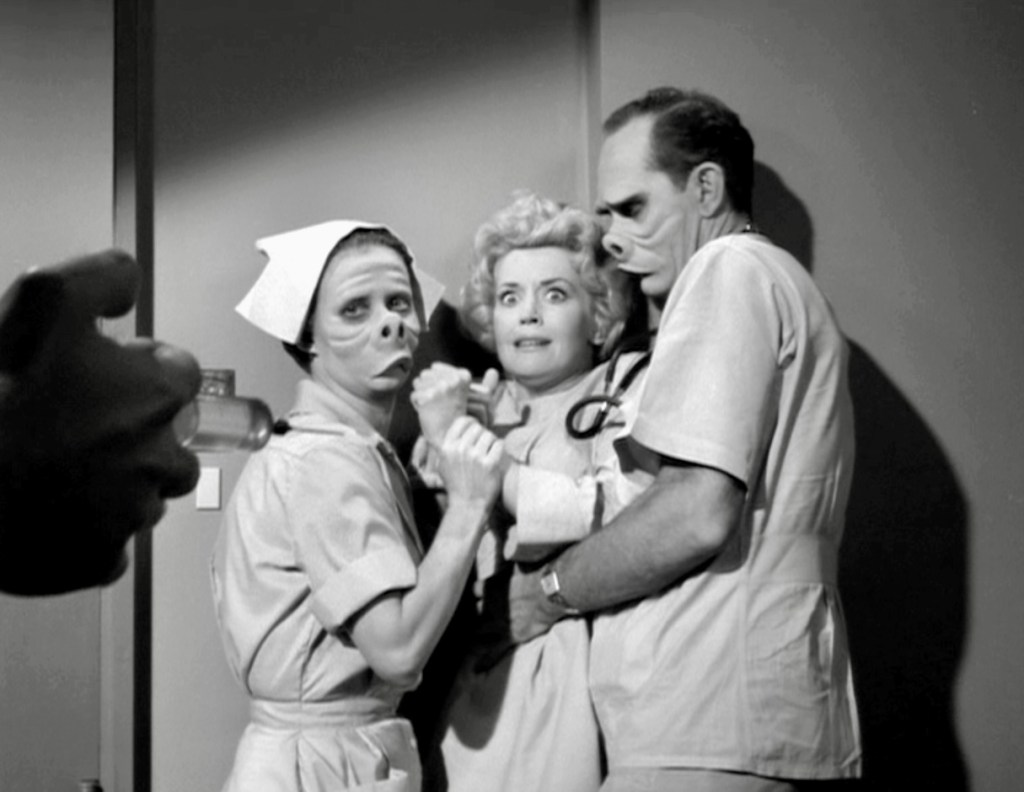
You see, I was born during the last year of the making of the original series (1959-64). These episodes are not depicting the era of my youth. I didn’t come of age in under the pall of a post-atomic Cold War paranoia. And although they still blasted air-raid sirens with some regularity during grade school, I never was asked to hide under my desk, and my parents never discussed building a bomb shelter. Vietnam was but a vague notion to me even though one of my uncles had served. My earliest major memory is watching the 1969 Apollo-11 moonwalk with my mom on the TV in our den. I recall that it was in black and white and that it was excruciatingly boring. Politically, it was the 1972 election that stepped up. Still, it left me only wondering why we had a Nixon sign on our lawn when my best friend’s parents boosted McGovern. I mean, we were on the same street, right? Watergate was the true beginning for me. You couldn’t get away from it. Not in the DC area, anyway. My sister dressed up for Halloween one year as an insect — a Watergate bug. Ha-ha! And when they filmed a scene for “All the President’s Men” at a (rather undistinguished) house in the neighborhood, it got our attention. It was during this period that I first saw the “Twilight Zone” in syndication. Like most, we were accustomed to watching reruns, such as “Leave It to Beaver” and “Bewitched” and “Dragnet” and “Dark Shadows.” But there was something so alt-world arresting about Rod Serling’s twisted and spooky short-stories brought to life on TV. I think that’s true regardless of where or when you are first exposed. And therein lies the first component to my nuanced TZ nostalgia: firsts. First crush, first beer, first car, first love, first concert, etc. There are no do-overs for a first anything. Sorry, that’s life…

The second aspect of this nostalgia beast has to do with youth itself. Specifically, it is youth as it relates to potential energy. When you are young, most things are still in front of you, yet to be done. Sky’s the limit. You’ll study. You’ll date. You may or may not marry. Have kids, perhaps. You’ll get a job and then climb, climb, climb. Oh, the places you’ll go… a coiled spring… a human rocket… to boldly go where no man has gone before… just keep your hands and feet inside the vehicle… because I feel the need for speed! And so on like that. But in the context of this post, it means that we are seeing “Twilight Zone” for the first time when we are at/near our fullest potential. We are being shown secrets and given riddles to solve just when we are contemplating our first big steps into the world. And that is a powerful combination. That the actors are top-notch and that the lessons still fresh are major factors in the shows enduring appeal. That they reward repeated viewings is another testament, though I would emphasize that there remains an unrivaled impact of that first encounter with a great TZ episode…

And that brings us to the third element. Call it magic. Call it a miracle. Either way, I’ll attest to it. Rod Serling made 156 episodes of his show, each one heavily dated and yet also timeless. And I’ve been watching them in syndication since my pre-teen years off-and-on for decades. More recently, I can’t help but fall into the rabbit hole of the “Twilight Zone” marathon on NYE and New Year’s Day. And yet somehow, someway, there are episodes that I have not seen! Still others I know I’ve seen but can only vaguely recall. Just yesterday, I saw three novel ones. This has me wondering if they’re using AI to craft “new” episodes from old actor footage. It boggles my mind. How can this be?! I watched “Probe 7, Over and Out” (1963). I thought it had Elizabeth Montgomery but it was Antoinette Bower (both lookers!). An Adam and Eve story set on another planet after a space crash. New beginnings. Seems there really is nothing new under the sun. Another was “Spur of the Moment” (1964) about a woman with middle life regrets. She rides horseback wearing all black and chasing her younger self wearing white, also on horseback, trying to warn her about an impending mistake. But it’s to no avail. If only. I could text message my younger self, but he wouldn’t get it either. The third was “The Old Man in the Cave” with James Coburn (1963). It’s a post-atomic tale about the tyranny of computers versus the hubris of man. Sounds pretty timely, right? Because it is. How can these shows be so old and yet also feel new and relevant??
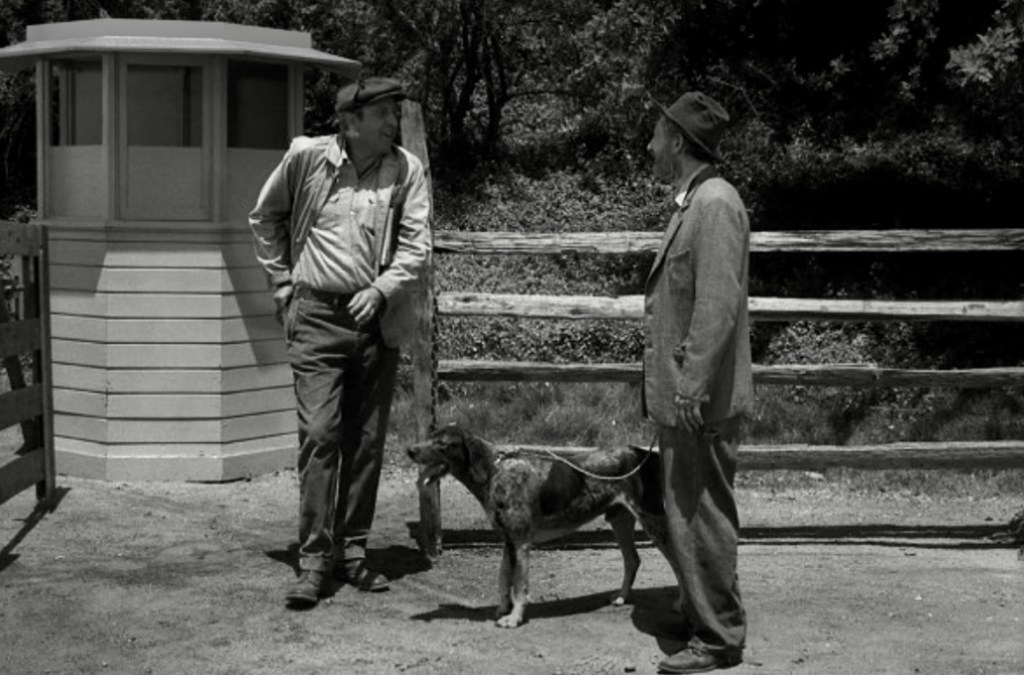
I prefer to think of nostalgia as a transient emotion or fluid mental state that’s hard to pin down. It shifts and morphs, reversing polarity and changing valence states. At one moment warm and uplifting but then suddenly melancholy. We are happy to have had those days, those first-time shows, yet we know that they will never be quite the same again. I think it’s actually the frisson of surprise and possibility we want to relive rather than any specifics. When I ponder the nervous excitement of my first crush, Sally Duscha, in the third grade, it isn’t so much the details of her that I recall but that ziggy feeling she gave me. A true gift that I hope I had occasion to give to someone else. The butterflies I felt thinking of what might happen if I ran into her. It’s the electrical current, at least in my mind, that arced between us. That’s what we miss, I think, when looking back. It’s in the new and unknown. Both the uncertainty and the hope. All possibilities splayed out like a Tarot deck. Life, like the plot to any story, is ultimately a narrowing down of choices or potential outcomes (unless you have a dream sequence!). At these nostalgic moments, what we long for is the full pack of playing cards.
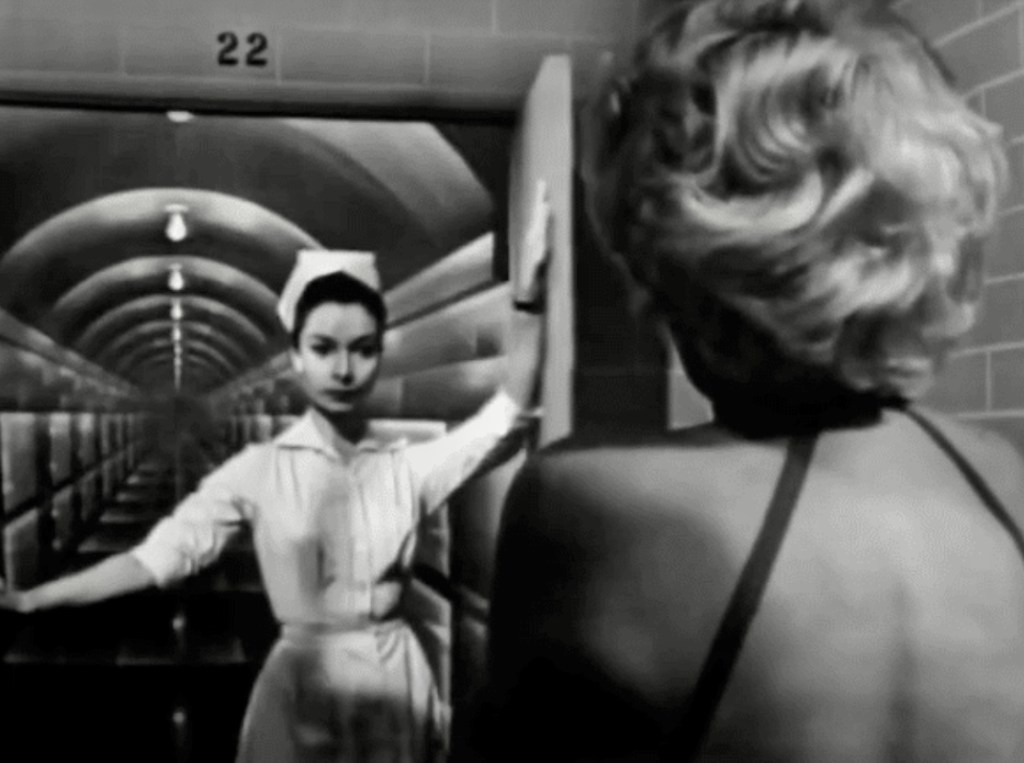
But there is one final element. It was there all along. It’s always there. And forever will be. Death. We all will die. You. Me. Everyone we love, have loved, and will ever love. We all must someday move on to another zone, Twilight or otherwise (ideally, the Calzone Zone!). When you see a young Jack Klugman or Burgess Meredith on the screen, you have a sort of transient time-travel experience. A portal. Almost like stumbling unexpectedly into an old friend and the automatic smile it triggers. But then, just as quickly, you realize that they are no longer with us. Their time, as ours will, has passed. And so it seems to me that this show deals with human frailty and mortality better than just about any other that I’ve seen. The positive feelings are balanced with a wistful, low-level mourning. An intuitive mourning for those no longer with us, and these now deceased or aged actors stand-in for our lost loved ones. We also grieve the loss of our own youth and, in a way, our own ultimate demise. We do this unconsciously, in anticipation, since we know we are no different; as there right before our eyes, on the signpost up ahead, is the unliving proof. Thus nudging us to make the most of our short time in this world. And in discovering episodes that I’ve never before seen, it makes me want to, almost, start to, once again, believe in God. And so, to whom this may concern, please keep them coming!
Happy 2024!!



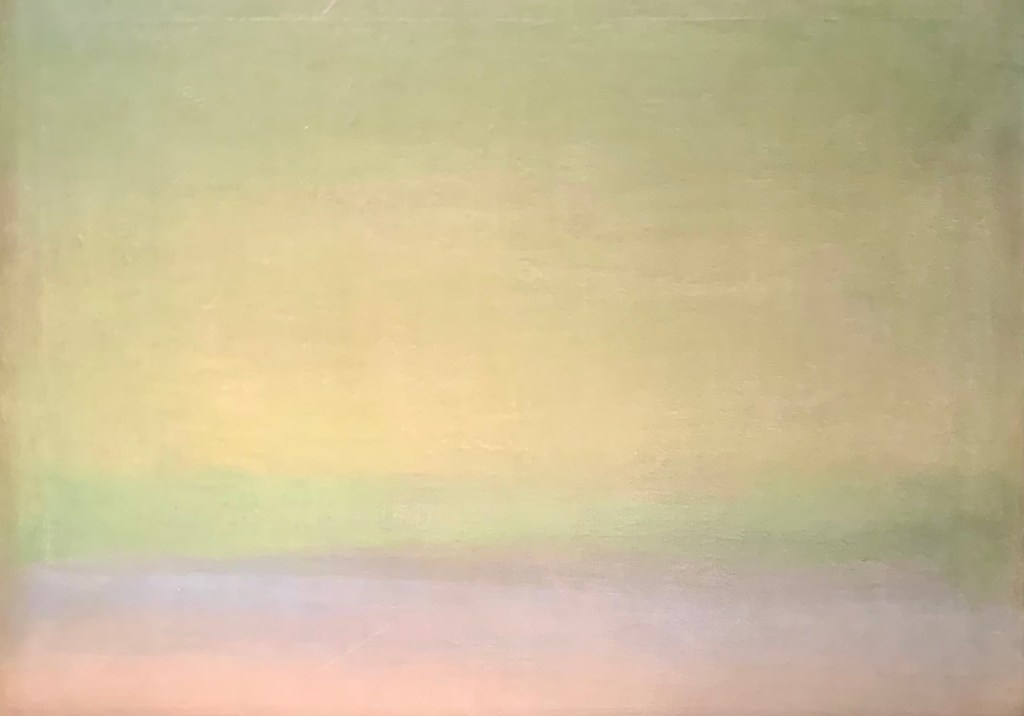
New idea: why not chop up famous works into their smallest auctionable units? I think this half could be passed off as a Rothko-style color field painting and fetch a nice price. With its palette of pastel colors that pulse and suffuse into one another, what’s not to like? Set the reserve price at 7.25 million and let the feeding frenzy begin.
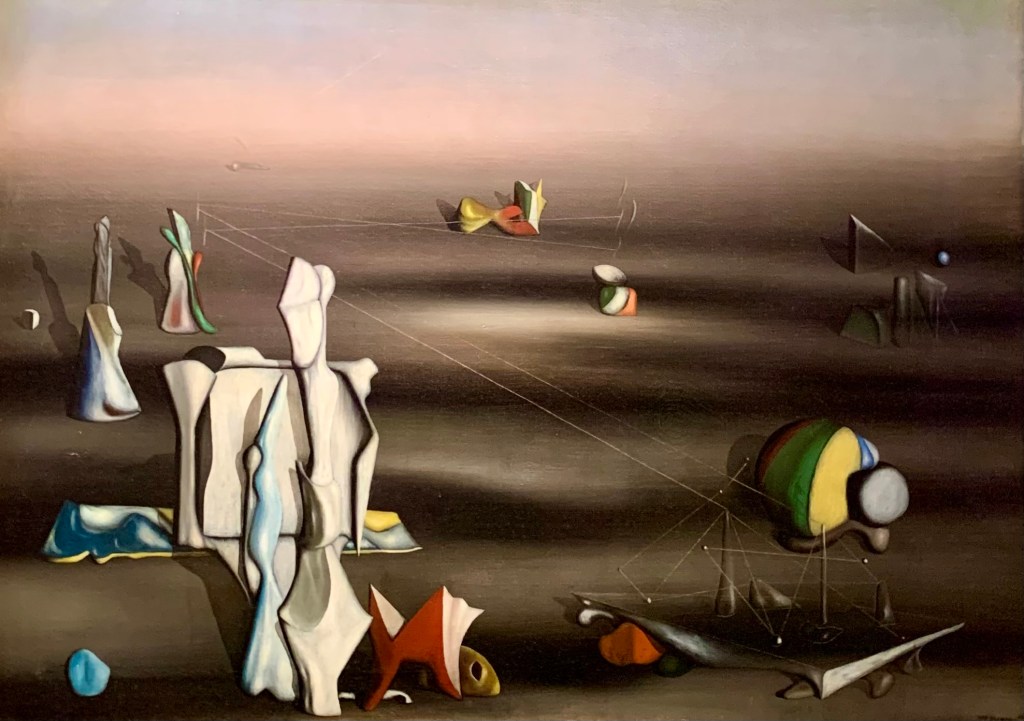
The lower half of this painting has strewn biomorphic forms in a sparse quasi-lunar landscape that the Sotheby’s auction catalog described as “representing a timeless, metaphysical space.” It’s a veritable playground for androids and “Star Trek” nerds — Hieronymus Bosch meets Arthur C. Clarke. We might list this one at 12.75 million for a total take of at least 20 million (minus fees). And who would ever know, as nobody reads this blog!
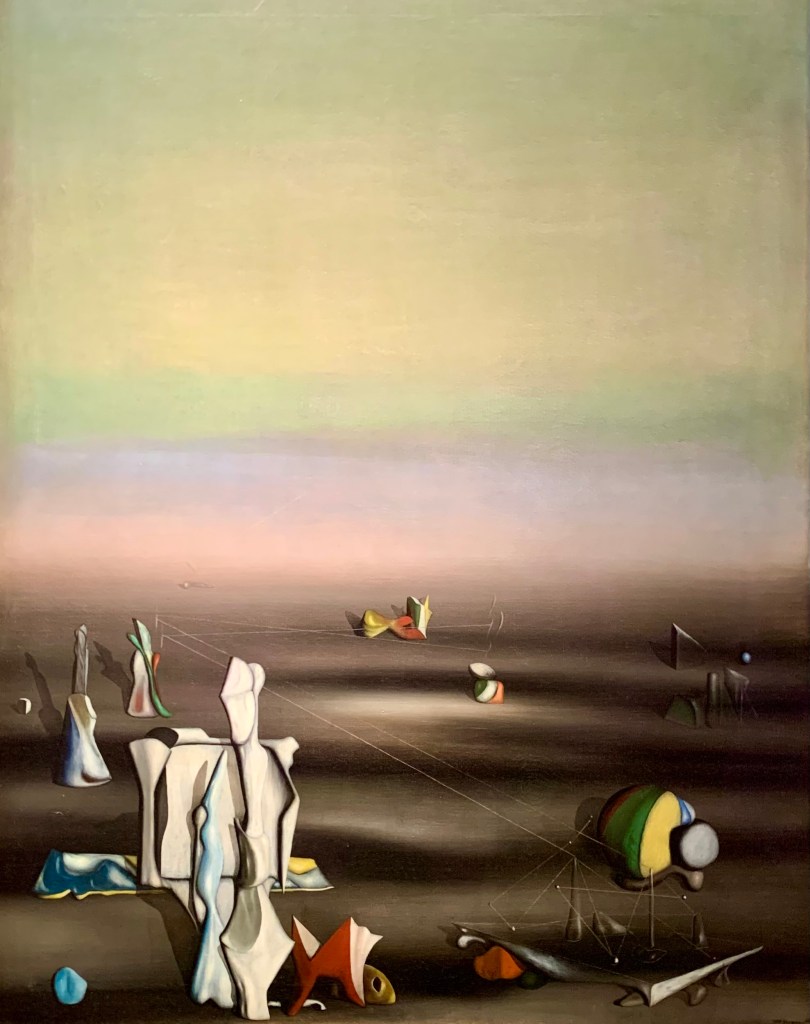
And above is the full-monty, the Tanguy and Tonic. Two pictures in one, for my money. An artful derivative. An aesthetic default swap. AAA rated by Moody’s and S&P. Can’t possibly miss. Unless…
(From Sotheby’s auction website) Yves Tanguy (1900-1955) was a French-American surrealist painter who was invited by Andre Breton in 1925 to join the Surrealist Group. In the 1920’s and 30’s, he developed his distinctive style before emigrating to the United States in 1939 at the outbreak of WWII. Already married at the time, he had a torrid affair with art collector and gallerist Peggy Guggenheim. Their relationship ended with his second marriage to the American artist and poet Kay Sage. They moved to the artists’ colony at Woodbury, Connecticut and there they were surrounded by the likes of Alexander Calder, Andre Masson, and Arshile Gorky. Apparently they got not just heavily into the paints but also the cups. Nothing new there. I’ll bet the sex was messy and hot. Dare say, tangy!
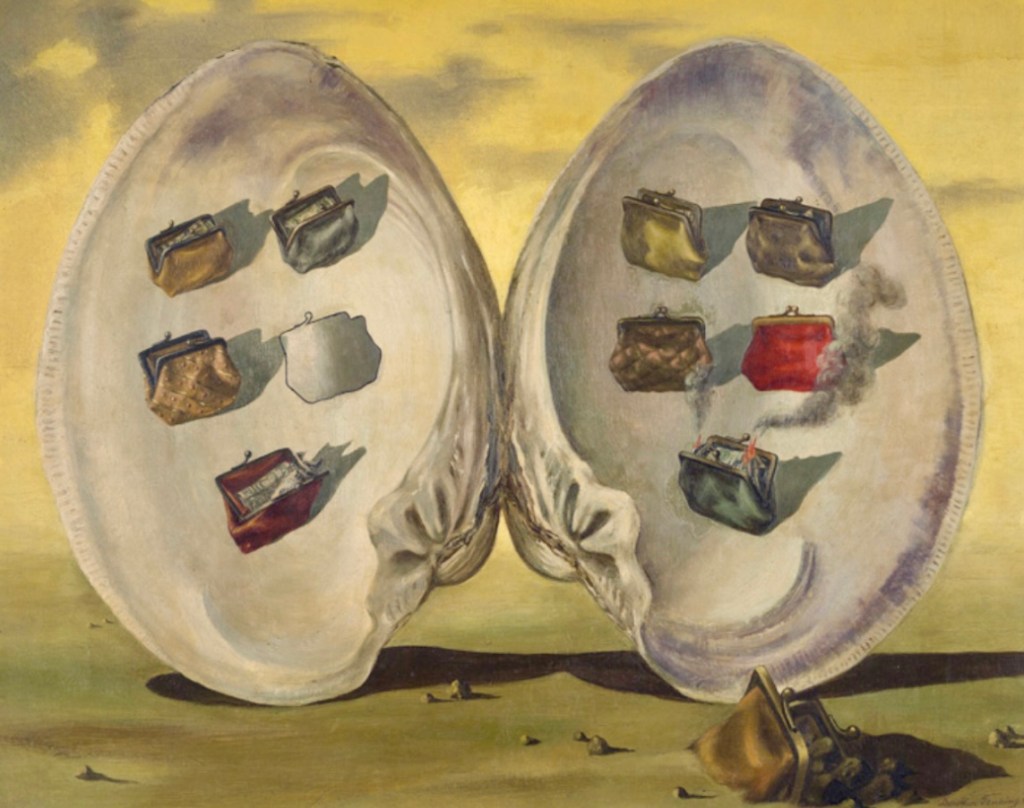
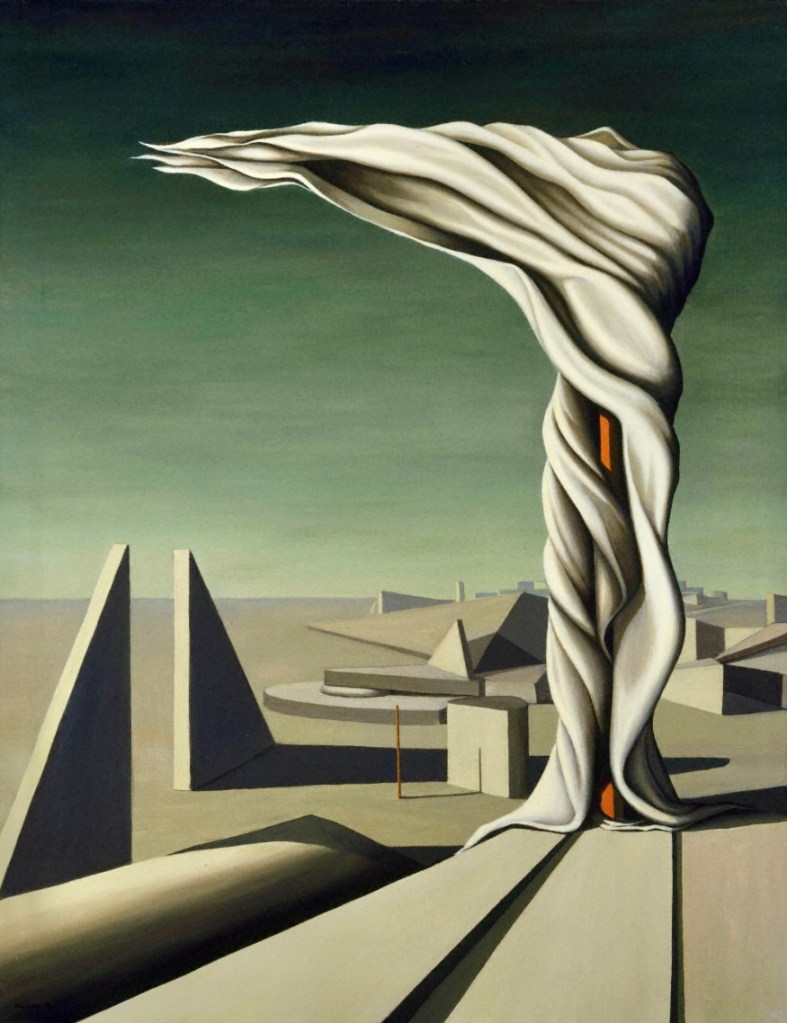
The artist I most commonly mistake Tanguy for is, of course, Salvador Dali. But gone are the teeming ants, the melting clocks, and the flaming giraffes. In this oddscape, we see a world reduced to basic geometric forms of uncertain origin and purpose (not unlike my closet) on a surface where foreground and background meld as one. And while several other artists trafficked in strange glyph-like forms (Joan Miro, Adolph Gottlieb, A. Calder, A. Masson, A. Gorky), I’ve seen only a few that resemble Tanguy’s eerie alt-world lunar-cy. And here we arrive at one of the great joys of the creative world: the personal discovery of a previously unknown artist or band or author or filmmaker who move you in some way and/or add depth to your order and understanding. So with that I give to you, and also to myself, the two female artists Kay Sage and Dorothea Tanning.

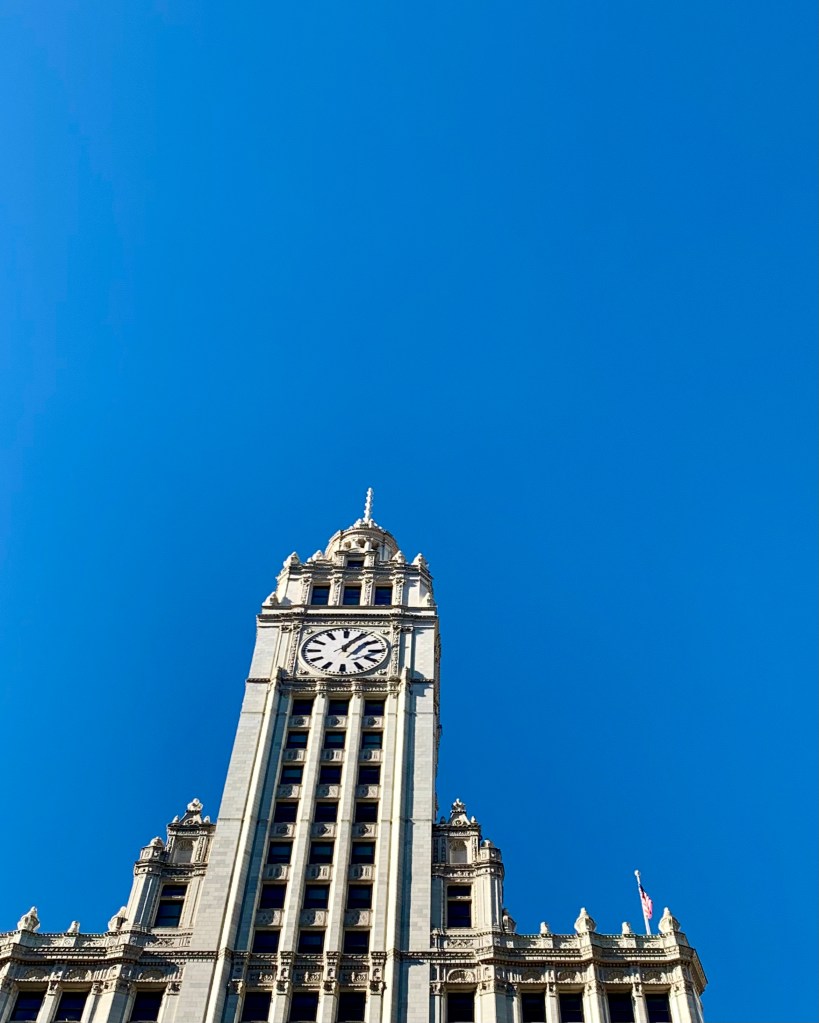
(Per Wikipedia) The Wrigley Building was constructed between 1920 and 1924. When work was begun, the Michigan Ave Bridge traversing the Chicago River due south of the building site was still under construction. It was chosen by William Wrigley, Jr for the headquarters of his chewing gum empire. In 1921, he became the principal owner of the Chicago Cubs and their playing field was renamed for him in 1926. His was the first office-building in Chicago to use air-conditioning.
Lesser known is Mr. Wrigley’s role as the developer of (Santa) Catalina Island off the coast of Long Beach, CA. In 1919, he bought a controlling stake in the Santa Catalina Island Company which also gave him ownership of the land itself. He is credited with modernizing the island’s infrastructure, adding a hotel and casino that opened in May 1929 (of note, the Great Crash of ’29 happened in Sept/Oct of that year). In keeping with the paradox of modern capitalism, he established a quarry and tile factory there while also initiating a tradition of island conservation. His son Philip K. Wrigley carried on that spirit with the Catalina Island Conservancy in 1972. It is rumored that he also founded the vaunted Catalina Wine Mixer.



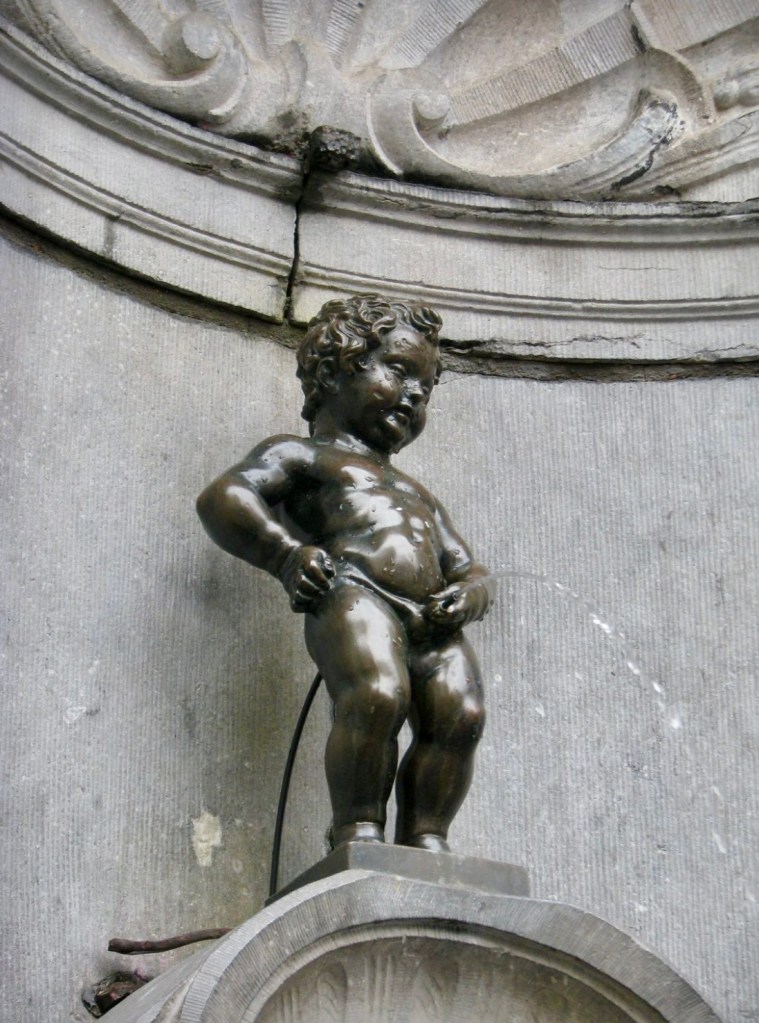
I had chance to visit Brussels some years ago and predictably, guided by Fodor’s, sought out the famed Menneken Pis. Who doesn’t love kissing and/or pissing cherubs? Yet I’m sure I’m not first to leave disappointed. It’s awkwardly situated, undersized, and the water mechanism is clumsy. To sum, the history is much more impressive than the actual. Per Wikipedia, the original was made in the mid 15th century. The bronze version dates from around 1619, which has been repeatedly damaged, stolen and reclaimed over the centuries. A bronze replica (above) was stood up in 1965 after a thief broke the original bronze off at the ankles. It turned up the next year in the Charleroi Canal following an anonymous tip and is now kept dry at the Brussels City Museum. The stone niche was added in 1770, and the statue has become a recognized symbol of Brussels/Belgium (“belgitude” = the Belgian penchant for a whizzing self-mockery). The Manneken Pis is dressed in costume several times a week (about 1000 total, so far) according to a fixed schedule, all managed by a non-profit. Designs are submitted annually and The Order of the Friends of the Manneken Pis form the selection committee. There is now a special museum to house the many outfits. And while the town of Geraardsbergen claims an older version of the statue, the prevailing view is that they don’t have a bucket to piss in.


For whatever reason, I was one day pondering the Manneken Pis — and the other peeing statues it has inspired around the world — and I wondered, “what about a shitting statue?” The Manneken Shit, as it were. The impracticality of the thing was immediately evident with the lack of predictable flow, hygiene issues, etc. But being undeterred, I hit upon a novel design idea while reading “Fleishman Is In Trouble” (see below). I would think it the first of its kind. And a real traffic stopper. Ladies and gentlemen, allow me to introduce to you the concept of the Manneken Piss-Butt! Maybe we could sell one to the Vatican. On Instagram, they’d call it “The Unholy See”…

 Great Exudations