
Semi-random musings, poems, and visual images from the journey

Right-wing journalists often use obfuscating wiggle words around Trump saying things like, “he’s the most consequential president of the modern age.” You know what’s also consequential? Cholera is consequential. And cancer. And, and… and crocodiles. Another one that Hugh Hewitt used was the sports analogy that Trump scored an historic upset win over Hillary Clinton. Yes, but with an assist from Russian intelligence (that he openly courted) and also James Comey’s idiotic meddling. Thirdly, they say, he moved the Supreme Court to the Right. True, but largely by dint of Mitch McConnell’s skullduggery followed by the untimely death of RBG and the retirement of Anthony Kennedy. To state the obvious, that only followed because of his very narrow victory. So there it is: when your ideas suck, and you constantly lie, cheat and steal, and your policies only help the rich and powerful, this is what the pundits fall back on — his hugely consequential upset victory that packed the court. Congratu-fucking-lations. It’s like winning the Masters Tournament in March. They’ve got the sharpest pencils in the game.
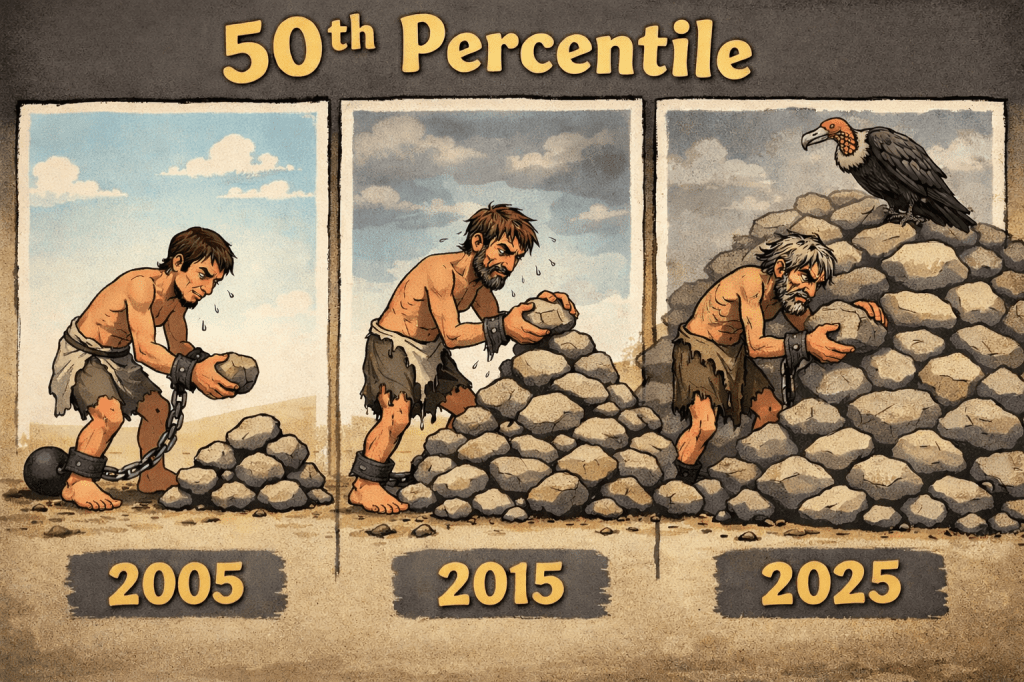
I’ve come to the opinion that business school mostly teaches people how to lie. And smile. Smile when they lie (and earn money on other people’s labor). And they never lie more than with their comparative statistics. Hospital administrators start off by placing a near zero productivity value on a clinician’s administrative tasks, all the while paying themselves quite handsomely for doing only administrative tasks. Next they adopt laser-focus on your billable work output, which is the metric that, to them, equates to your institutional value. These are your RVU’s (relative value units), which for a radiologist is how many CT’s and MRI’s you read over a given period. Mind you, that metric has absolutely nothing to do with quality or safety. Productivity and quality/safety, I like to say, are two entirely separate meetings that are held on different days and not even in the same building — never the twain shall meet. This is the foundational sleight of hand that drives the engine of hospital administration. Obsession with the former while paying grandiose lip-service to the latter.
But one there’s one thing I have never figured out. What is the key performance metric for these non-clinician pencil-pushers who take zero call, are exposed to zero risk, and are difficult to find after 4:15pm? Is it “number of e-mails sent” or “meetings attended (while simultaneously texting out your fantasy football picks)” or maybe “photos posted to social media”…??? The world may never know… But, whatever the case, I hope they are at or above the 50th percentile!


One of my self-defining characteristics is an enduring love of bread products. Bagel, roll, croissant, pita, popover, naan, you name it. Having a separate, anomalous bread stomach has allowed me to consume large quantities with any meal. No butter required. So keep your Panerai, just give me Panera.

What our high school and college curricula need is a formal training course called “How Not To Be A Douchebag.” The Douche-Dex in America is at an all-time high, jet-fueled by the performative masculinity of Trump 2.0. I used to be of the opinion that women were generally excluded from that club. Then I observed the likes of Pam Bondi, Karoline Leavitt, and Kristi Noam who not only qualify but are prime examples of D-maxxing.
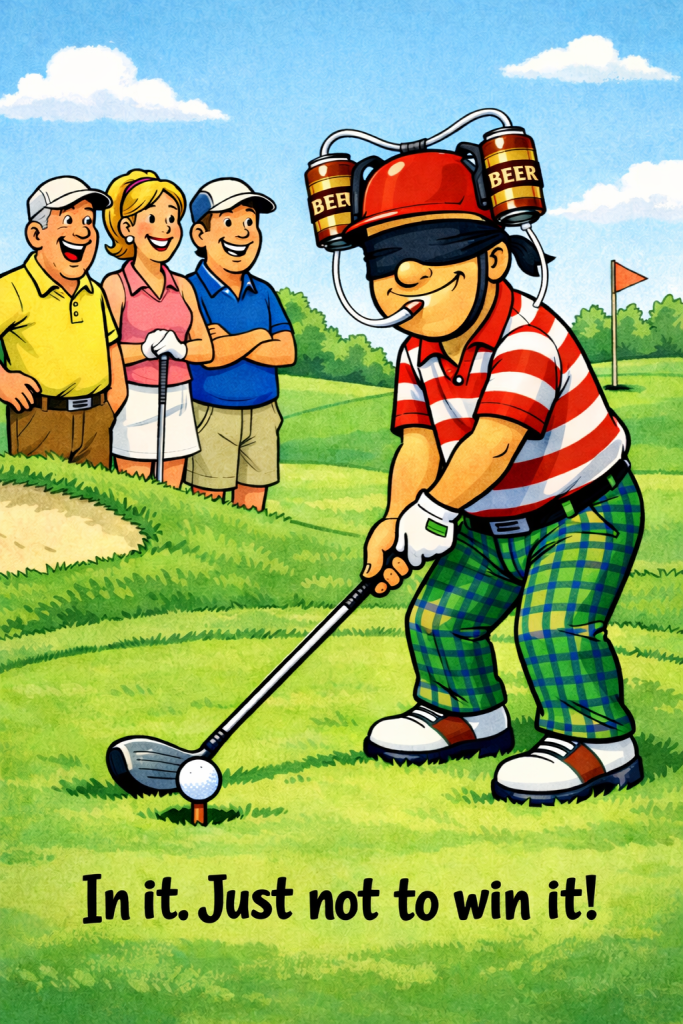
My friend JS calls it “silly season.” I’m now of the opinion that competitive endeavors should operate about at the level of non-league bowling. Because, honestly, who gives a shit what you roll or shoot or whatever? Our society is entirely too focused on score and outcomes. A “tennis ladder” ought to be those little stairs you climb to sit in the umpire chair and heckle your friends while they play using their off-hand. Lining up every two-foot putt for your Nassau bet is douchey (see above) and is ruining the game. “Good-good” is a great thing. Because at day’s end, nobody really cares. And winner buys lunch.

I’m ambivalent about this one. As above, our culture has become preoccupied with quantifiable comparison, particularly as it pertains to money. In cinema, it’s box office receipts. Awards follow but they are used, in turn, to goose the bottom line. It’s all about the ROI. In the art world, there is a hyperfocus on assigning monetary value to specific works and ranking each artist based on what they fetch at auction. One sad irony is that this value usually increases greatly after they are deceased. Vincent himself famously died poor and largely unknown. If only he could have had a bump from the Lego Van Gogh. But one might argue that any portal into art appreciation is invaluable. And while it smacks at first of commoditization, maybe it’s what’s needed to ground things again. This, however, comes at the risk of a cheapening. I feel this way about my favorite songs used in advertisements. It took seeing Sean Hayes in “Good Night, Oscar” to finally dissociate Gershwin’s “Rhapsody in Blue” from that United Airlines spot. Maybe, in the end, we each have to keep these precious things in our own unique way. Qualitatively. Block out all the noise. Forget any transactional value. And remember what it was about any given piece, or book or play or song, that moved you in the first place.

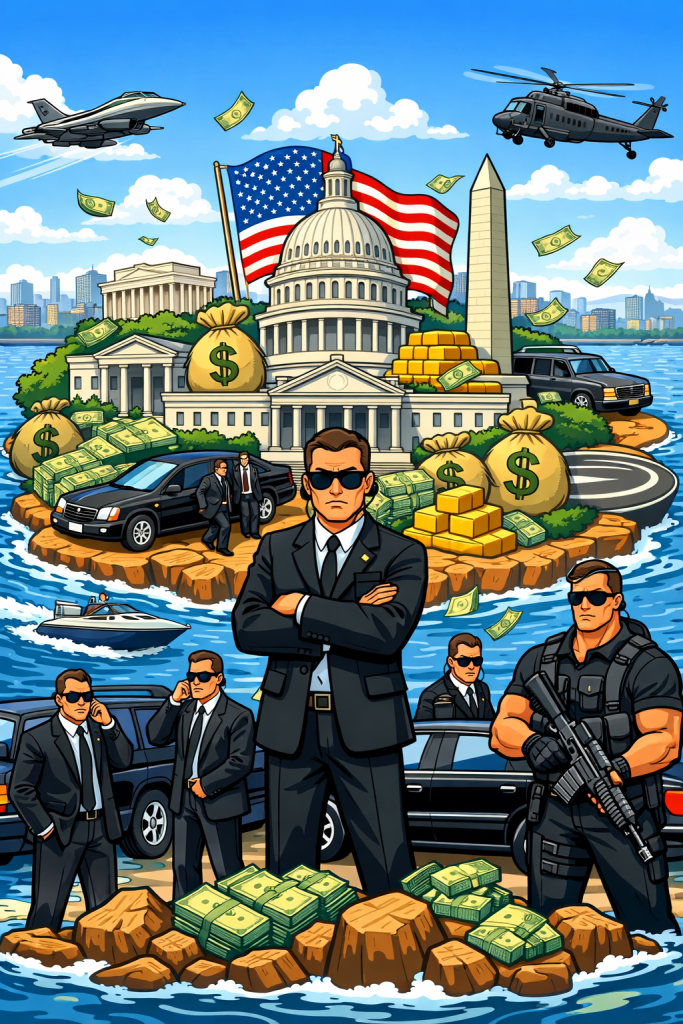
When you think about is, there are many similarities between the people and dealings on Epstein Island and those in the hallowed halls of our government in Washington, DC, particularly in the Trump 2.0 era. Let’s call the latter Trump Island. The difference is really one of emphasis. Epstein lured rich and powerful men into his intricate web with promises of sex with young women. In Washington, the main focus is on power/influence with wealth working either as the point of entry or as an aspirational rider. Sex always follows power and money, so it’s only a matter of the order of things. What is not surprising is the broad overlap of these two worlds where people like Musk and Trump, tired of the pure money game, wanted to take it to the ultimate level. And in that way sex with young women (some underage) has the limbic lure of a forbidden fruit, so, too, the adrenaline-fueled rush to flout democratic norms and to smash up federal agencies — with the bonus access to the tools of government to harass and attack political your opponents (or steal data). Two sides of the same coin, as it were. On the reverse, the sworn secrecy behind Epstein’s seedy endeavors while the obverse brazenly flaunts the tyrannical methods of destruction and intimidation. On one side, an unbridled desire for physical gratification. On the other, an unquenchable urge to exclude, deny, dominate and punish.
It’s all one game, you see. Both involve the quid pro quo long enjoyed by the rich and well-connected (plum jobs and clerkships, college admissions, club membership, etc.). Both involve innocent victims of injustice. And both help solidify our collective cynicism and distrust. Massive wealth disparity is partly to blame for these latest iterations. There must be something like a sex-drive that compels the wealthy to meddle in our politics. I guess it’s a lonely place in those gated communities and mahogany board rooms. One needs something to do, after all. It has me wondering what keeps it at bay, at least on its present scale, during most eras. Surely it’s the majority/plurality of decent people who refuse to underwrite, enable and/or cover-up these unjust actions. People who feel the constrains of conscience and see the benefit of traditions. People who strive to make things better for all, not myopically dwelling on their own narrow, short-term interests. Where’s Daniel Ellsberg when you need him?
These historical paroxysms come in many shapes, sizes, and colors. Financial, political, environmental and sexual scandals are regular menu items for the ruling class. One need only look at the last 100-odd years to see the pattern. In each case, ask yourself, “who was this helping?” On the venality side, we had the Teapot Dome Scandal in the 1920’s, the S&L Crisis of the 1980’s and the fading memory of the Enron scandal. Not to mention the countless dubious schemes of Trump, Inc. over the decades. And then there are the felonious assholes who were pardoned by Trump and relieved of their restitution requirements. Power takes what it wants. It picks winners and losers. To the rich and powerful, the rules simply don’t apply. And Trump’s self-interested backing of the crypto-bros is both utterly corrupt and reckless. As he never pays for anything and will leave us all with the gigantic bill.
On the political side, we had McCarthyism, the Vietnam/Cambodia cover-up that led into Watergate, Ronald Reagan‘s stain of Iran-Contra, the Iraq War based on falsified intelligence, and the continued fall-out of Trumpo’s great election lie, best exemplified by the Jan 6 insurrection. Again, look at who’s benefitting. It’s clearly not to the general good. But it’s not just whom it helps. Look at who gets hurt. These moves are often reactionary and target minority groups. We saw it with the Japanese internments during WWII, the vilification of Vietnamese “boat people” in the late 70’s/early 80’s, anti-Muslim sentiment post-9/11, and Trump’s open hostility to people arriving from anywhere other than the lily-whites from northern Europe or South Africa. And it can even target otherwise established citizens like the wiretappings by J. Edgar Hoover and the Nixon administration. What’s changed is that now it’s mostly out in the open… ICE, ICE, Baby!!… US citizens are being shot and killed with little to no consequence or else shipped off to some prison without due process. Agents sworn to uphold the law like Kash (Fucking) Patel and Pam (Fucking) Bondi are proudly defiant of Constitutional constraints. Both full-blown traitors and a disgrace to the rule of law. They snort and buck like pigs at the trough of power. And in their sneering obfuscations, they act with an air of open defiance and impunity — taking their cue from Trump’s textbook: “if I’m stating (or blocking) it publicly, it can’t be illegal.” The foxes are in the hen-house and they carry fucking rabies.
Over the decades, there have been oil spills, nuclear mishaps, chemical leaks, insecticide poisonings (see Rachel Carson on DDT) and water contaminations. Why? Mostly because those in charge put profits over people. Trump 2.0 has gone to warp speed in gutting environmental safeguards, declaring climate change a hoax, and undermining the firmly established science of vaccines. His recklessness know no bounds, politically, financially, environmentally, whatever. Again, it is us who will pay in the end.
Then there’s sex. The enslavement and prostitution in WWII by Germans in concentration camps and those Japanese “comfort women” might seem like forever ago, but then what about the decades-long (centuries, more like) abuse within the Catholic Church (and most others), and in the various religious cults from more recent memory. Not to mention the harassment and sexual assault experienced daily, including the one civil case proven in court against Trump himself by Jean Carroll (there were other accusers). And still we get the drip-drip-drip about his close ties to Jeffrey Epstein and bear witness to his ever-shrinking and implausible deniability. He has ZERO credibility. On ANYTHING. ZIPPO!! And any insinuation that Bill Gates or Noam Chomsky might have bitten from the very same apple helps his case not one iota. The fact that such perversion might have come from both ends of the political spectrum should surprise nobody. But also they are not the current President of the United States. They did not stoke a violent insurrection at the US Capitol. They have not lied and slandered with every other living breath. They have not used public office to enrich themselves. They have not had massive fines imposed for corporate tax fraud. And they have not been found guilty in open court of sexual assault. The breadth and depth of Trump’s corruption is truly hard to fathom. I’m not sure it will ever be fully known.

There you have it. In summary, Trump personifies that dark trifecta of abuse: greed with ill-gotten gains; corruption resulting in gross injustice; and vulgarity manifesting as sexual predation. Financial, political, environmental, and sexual scandals will continue to follow him in his sulfurous wake. Orange is the color of that broadly overlapping portion of the Venn diagram that connects our country’s polluted swamp in Washington to the tragic abuses on Epstein Island. He is the LOWEST common denominator of our national malaise. Trump is, in short, the perfect and complete asshole. Akin to the rarefied musician’s musician, he’s the ultimate asshole’s ASSHOLE!
I’ll close by modifying that monumental quote from US Army attorney Joseph Welch who famously confronted Sen. Joseph McCarthy at an open Congressional hearing in 1954 by asking, “Have you no sense of decency, sir, at long last?”…. to which I would add to Mr. Trump, “and as you so obviously have no decency, sir, would please just GO FUCK YOURSELF…!!”

Trump is a weapon of mass distraction and destruction. Everything he touches turns to shit. By dint of a stolen seat and the untimely death of RBJ, the Supreme Court has massively elevated the powers of the presidency (they also gutted voting rights and greenlit corporate take-over of elections) at a time when one of history’s great pyro-narcissists has again taken the reins. John Roberts and Mitch McConnell should be tarred and feathered as two betrayers of our democracy. Trump is sick in the mind and has little talent beyond lying, graft and evading consequences. He’s a gilded loser. His personal brand is USDA grade-A for ASSHOLE. And he would have never gotten this far without a whole lot of help from his enablers. They can all go fuck themselves!

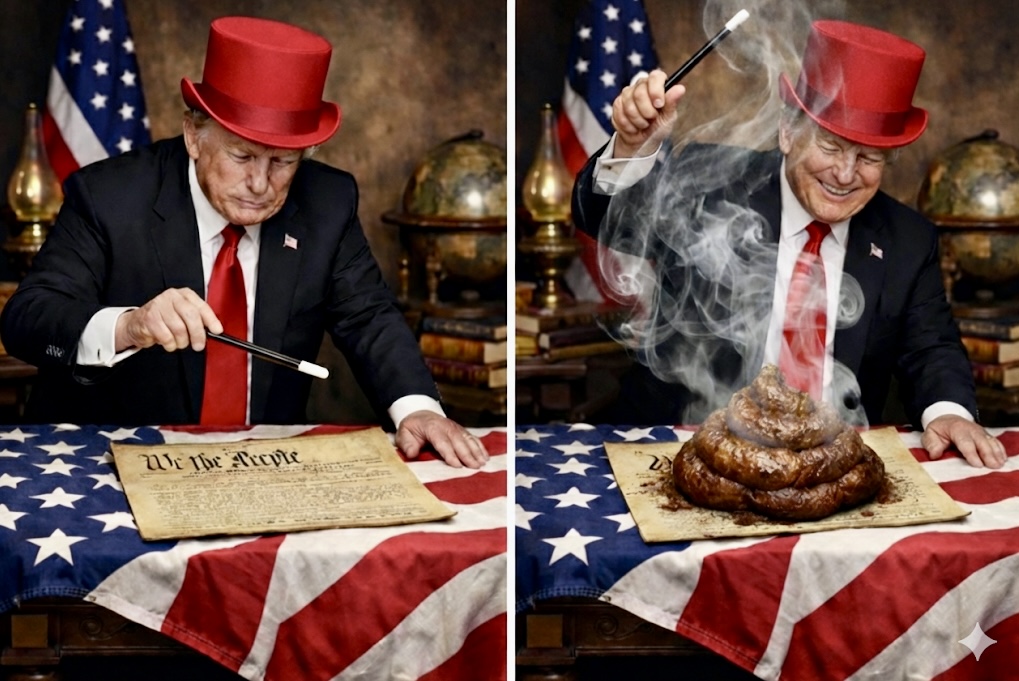
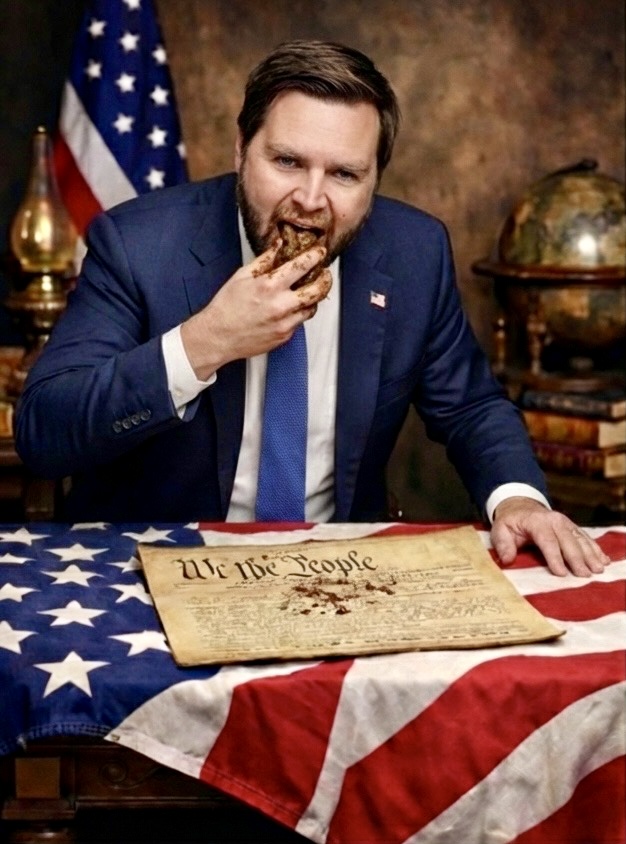

“It’s going to disappear. One day — it’s like a miracle — it will disappear. And from our shores, we — you know, it could get worse before it gets better. It could maybe go away. We’ll see what happens. Nobody really knows.”
— President Donald J. (for Jackass) Trump on COVID-19 in 2020

Ken Burns said that understanding, and perhaps more importantly, coming to grips with American history requires an embrace of its contradictions. Our nation’s past is littered with many dark periods, counterbalanced as they are by lasting victories over adversity. He says, “The binaries that we set up are the biggest trap, whether they come from the left or the right.” Dare say he’s correct. Neither side at any one moment can claim a total monopoly on the truth. And politics is simply history in real time, so it would be wise if we all could internalize some of this learned equipoise. The screenwriter Matt Bird, in his excellent book “The Secrets of Story,” describes great drama as often stemming from an irresolvable dilemma between two opposing and incompatible positions. He talks about complex characters facing simple, distilled problems (“High Noon” or “Casablanca”) as more compelling than simple characters tackling one adventure after another (“Fast and Furious” — part whatever). And that in the end there is usually a bending in one direction or the other. A temporary deflection. Not as a permanent solution, mind you, for as we know life goes on and more problems emerge after the credits roll. I think this model works well for thinking historically. It’s never really over, you see. The good guys don’t win in perpetuity (or like “Rocky” lose — though in losing, he won), otherwise you wouldn’t have sequels (“The Empire Strikes Back”). I find this useful for trying to understand why it took us 58 years to get from Plessy v. Ferguson (1896) to Brown v. Board of Education (1954), despite Justice John Marshall Harlan’s lone dissent in the former being the very foundation for the latter (Thurgood Marshall called it his “Bible”). After all, “justice delayed is justice denied,” as has often and aptly been stated.
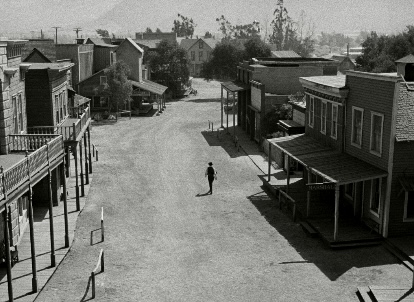
But that’s all in retrospect. Prospectively, we must fight and fight honorably! Ironically, fight hard or “we won’t have a country left” (another boomeranging Trump quote). And we must fight the hardest when the stakes are at their utmost, especially when the opposing side will give no quarter. In the classic example, compromise with Nazis was proven not feasible, just ask Neville Chamberlain. Or else ask his karmic opposite, that humorless, sodden, Red Scare-bully Joseph McCarthy. History settles up eventually, one way or the other. So when one side declares the contest a zero-sum, winner-take-all proposition and will stop at nearly nothing to prevail, then the gloves must come off. And we are living in one such period but on several fronts. Yes, it is once again “High Noon.” Putin’s Russian war machine in Ukraine has gone all-in. Similarly in Israel, Netanyahu is on a path that allows virtually no compromise with the Palestinians. He feels he can win it all (he can’t) or else he will die trying. Except for the unjust methods, they each would have some fair point to make about their own security. Alas. And here at home, Trump and his incel-goon-squad are shredding our Constitution for their own perverted ends. There’s no lie they won’t tell. No election they won’t rig or else falsely contest. No citizen they won’t smear. No opponent they won’t prosecute. No amoral hack they won’t promote to the highest level. No settled science they won’t undermine.
Trump, between terms, blocked bipartisan efforts at immigration reform. Why? Because this was his premier wedge issue. His “birther” brand. The one with which he could divide the country and provoke confrontations that fit perfectly into his long-planned overreach on executive power. In yet another spot-on characterization, with Trump “cruelty is the point” (that is, when it isn’t vanity and/or greed, though often all three in combination). But, as Matt Bird says, the full story doesn’t end there. When cruelty has become the point — as the despicable actions of ICE and the absurd obfuscations/propaganda coming from Trumpf, SS Miller, ICE Barbie, Bondi, Hegseth, et al. have proven — then they have fully lost their moral legitimacy (do they care?) and must be met with equal strength, based on those founding principles of truth and justice. In short, these lying, bullying fuck-wads must go, and, as Nick (Sheldon Leonard) in “It’s A Wonderful Life” put it, “through the door or out the window!” Via the courts. At the ballot box. In the public conscience. From the legitimate press. All of these. The ICE agents must be de-masked (and, ideally, raw-dogged). And this utter fallacy of “absolute immunity” must be thoroughly challenged. Because the Proud Boys are no longer “standing by,” they are in the streets of Minneapolis and are wreaking bloody havoc, just as they did to the cops at the US Capitol on Jan 6.


America is undoubtedly a land of major contradictions. We have the highest levels of scientific innovation yet we have crumbling infrastructure. We make billionaires seemingly by the millions (often with government grants for tech and pharma), but they don’t want to pay another dollar in taxes despite massive income disparity. We have more guns than people and we collectively mourn the frequent mass shootings, but we are somehow hog-tied by an totally warped (and recent) interpretation of the Second Amendment due to the NRA and the gun lobby. The Trump administration uses antisemitism as a bogus pretext for assailing universities, all the while harboring neo-Nazis and white nationalists under his broad umbrella of uber-douchebags. Hell, they’ve even found images and slogans on US government websites (including for ICE recruitment) like “Trust the Plan” (QAnon slogan) or “We’ll Have Our Home Again” (Proud Boys anthem). Remember the globalist cabal and the pedophile rings and George Soros and the Jewish space lasers? Yeah, these assholes eat, shit and breathe antisemitism. That fucking call is coming from inside the house. The pandering is just caked-on orange make-up and cheap cologne to cover Trump’s flagrant hypocrisy, which is fully a design feature of his operation. Oh, and never mind that numerous Jewish people worldwide, including citizens of Israel, believe that Palestinians deserve civil rights and a fair deal in Gaza and the West Bank. I’m guessing that nobody is falsely labeling them as supporters of Hamas. It’s a false binary.
We are a nation of immigrants yet somehow want to rid ourselves of immigrants. We have a supposed free press but one of our major broadcasters, in FOX News, is a reflexively dogmatic propaganda machine for the Right, and our so-called president is trying to bully and sue all truth-leaning outlets into submission. We have a beautifully articulated statement of equality in our founding document yet don’t apply it to the impoverished, people of color, women, gays, etc. We have local, state and national elections to determine our political course, but it is bastardized by extreme partisan gerrymandering. We are stuck in thrall to billionaires, lobbyists, and corporate interests. And unelected groups/persons massively influence policy with their toxic “purity tests,” like the Federalist Society or that monomaniacal dweeb Grover Norquist, the marauding tax crusader. Why the fuck is that guy deciding anything?! He looks and sounds like an assistant manager at Applebee’s and probably eats there regularly! But whether on guns, reproductive choice, climate change, tax policy, voting rights or immigration, the orangey Death Star that is Trump 2.0 — including the Roberts Court and the Vichy Congress — has run the damn tables on progressives, we must concede. But didn’t that evil-fucking-orb get blown to smithereens at the end of the movie??

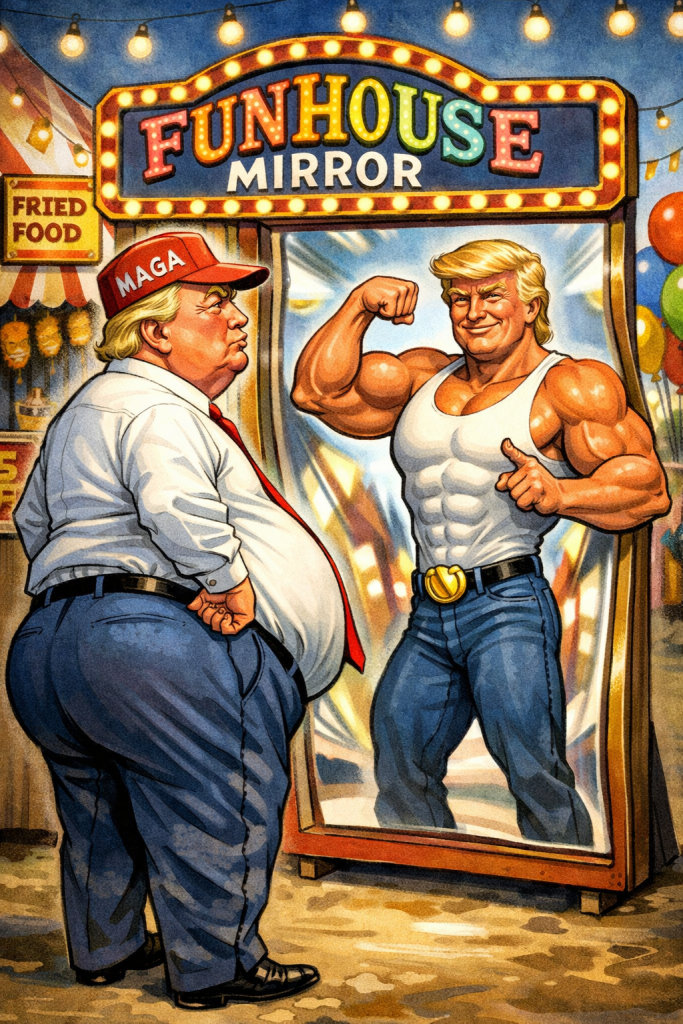
Trump is exactly like a black mirror. In him are reflected all the worst impulses of mankind. That dark triad of (malignant) narcissism, Machiavellianism, and psychopathy but with really bad skin and hair thrown in for the visuals. He’s a vulgar philistine, speaks at a 6th grade level and is utterly devoid of joy (unless you count joy in cruelty). He cares not a lick about theater or the arts, yet must slap his tired-ass name on the Kennedy Center, just to “own the libs.” Ha-ha! Stupid prick. All this as he opportunistically rides the coattails of Christianity while simultaneously shitting all over Christ’s message. He has been a pox on our body politic for ten long years now. Perhaps we have at last found a worthwhile human use for Ivermectin. Right up his fat and fascist ass!!
DUMP TRUMP 2026….!!!!!!!!!!!!!!!!!!!!!

 Great Exudations