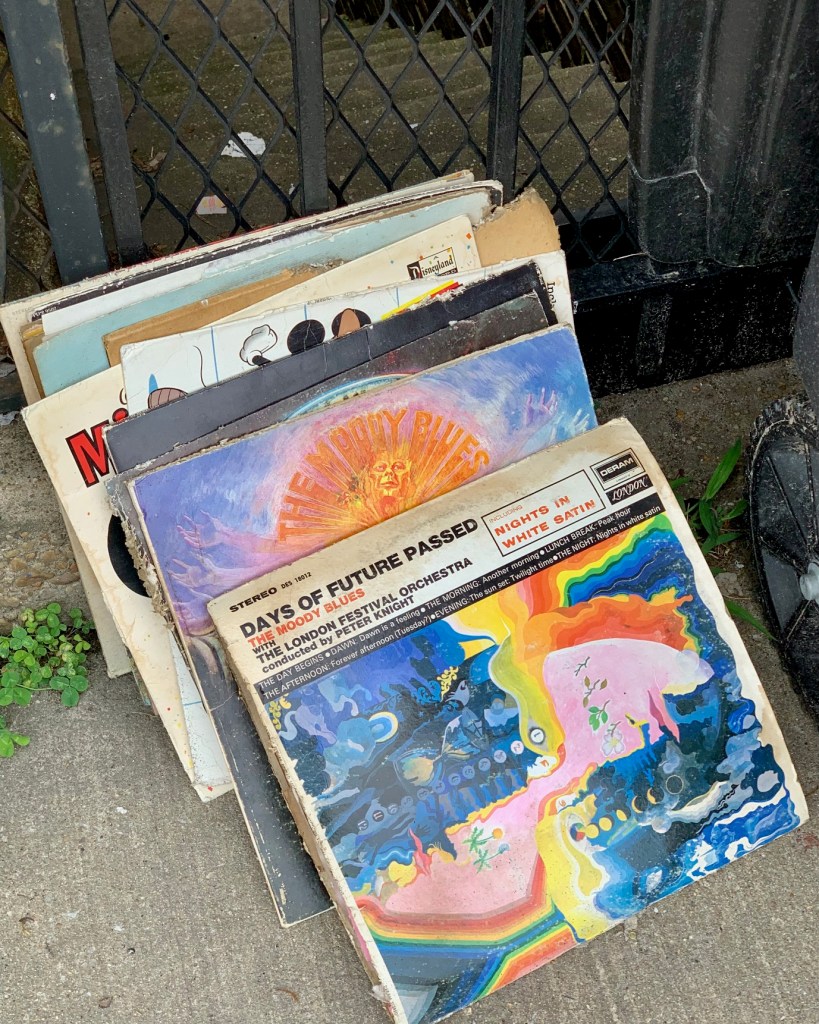
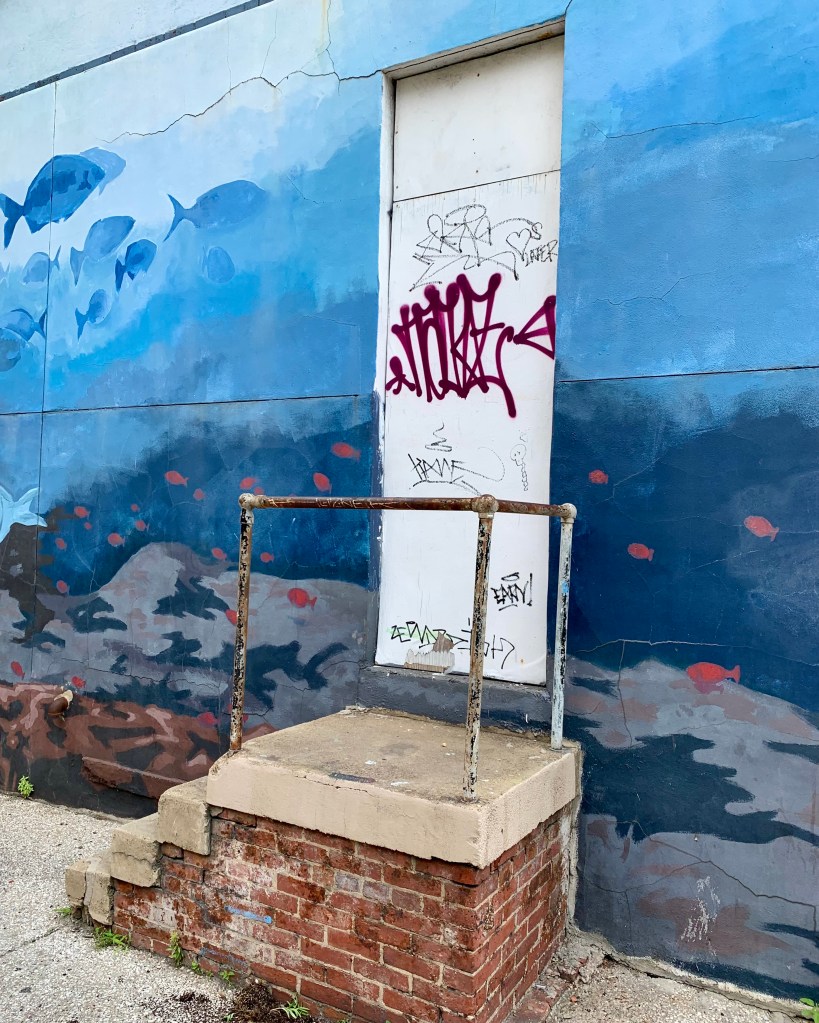
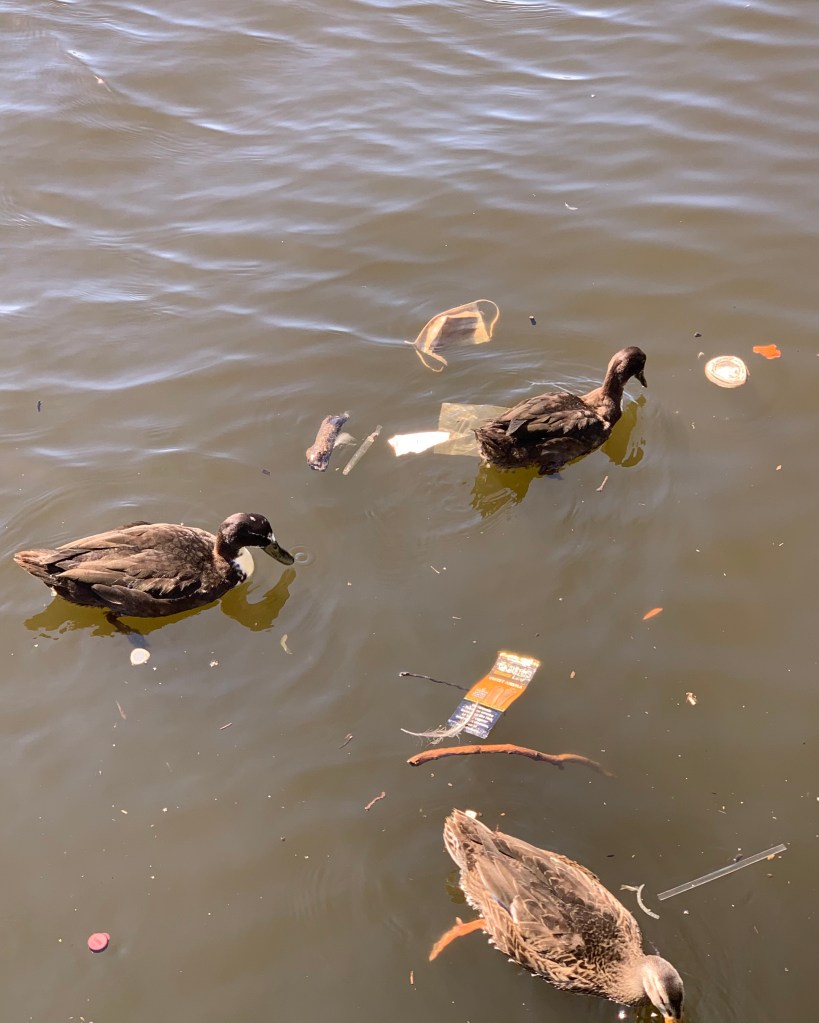

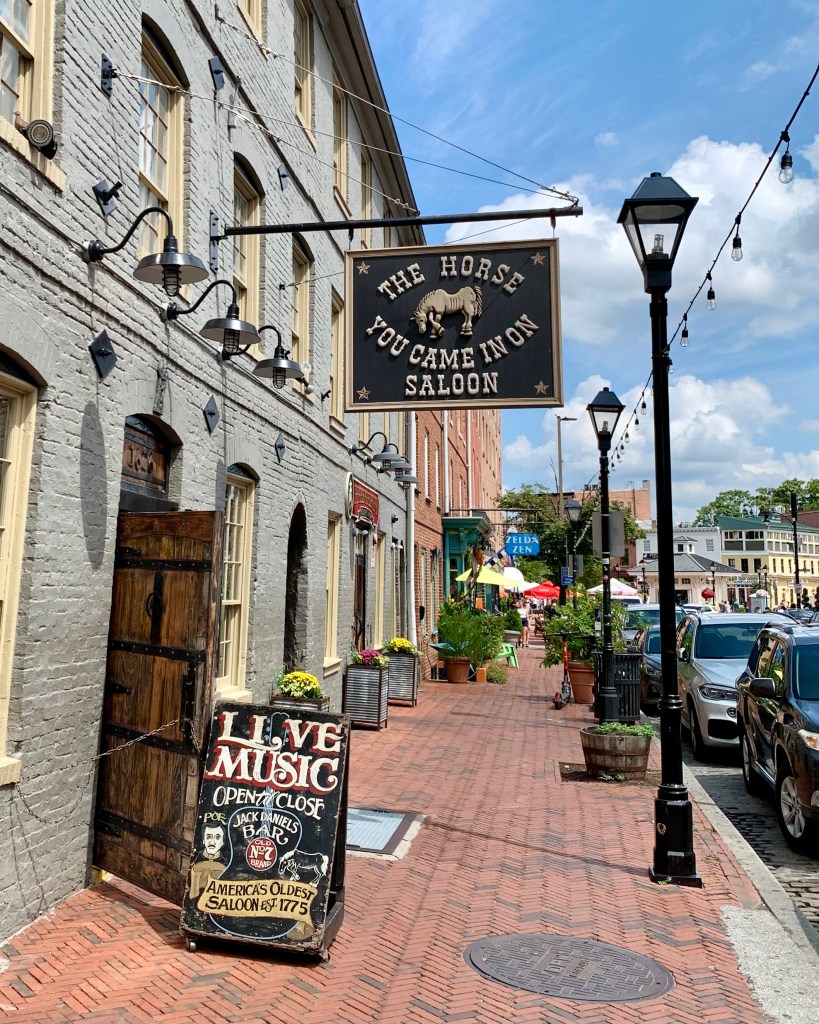
“Oh, Baltimore…”

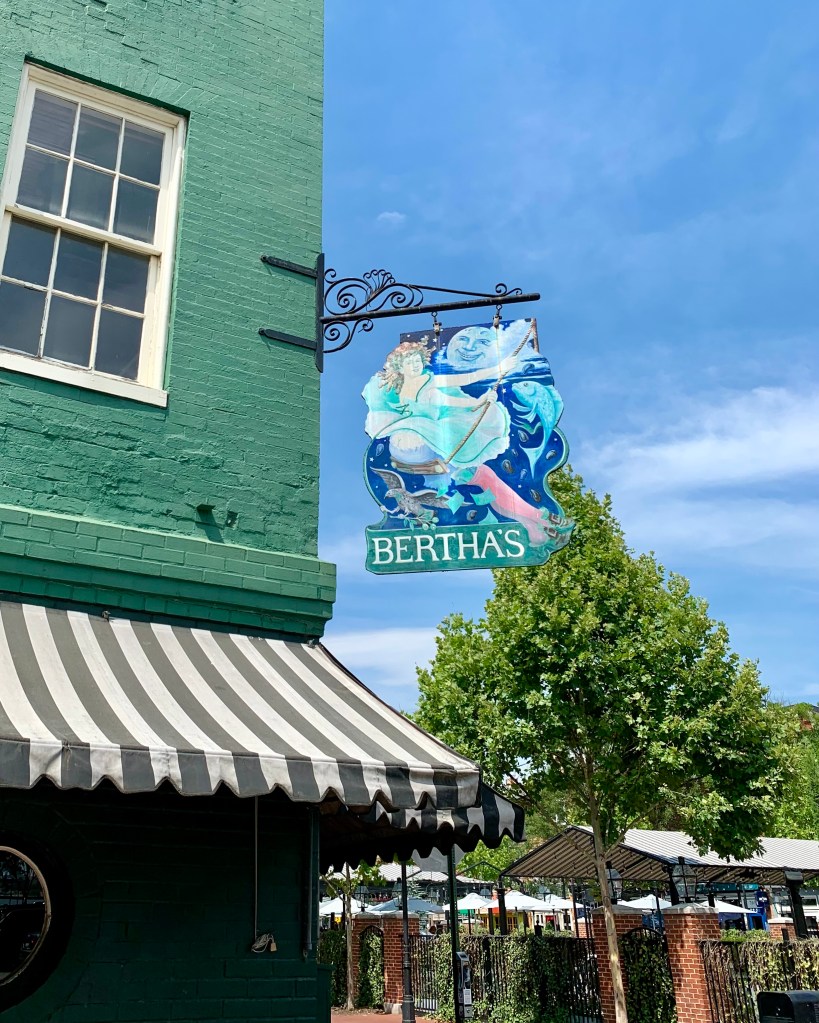
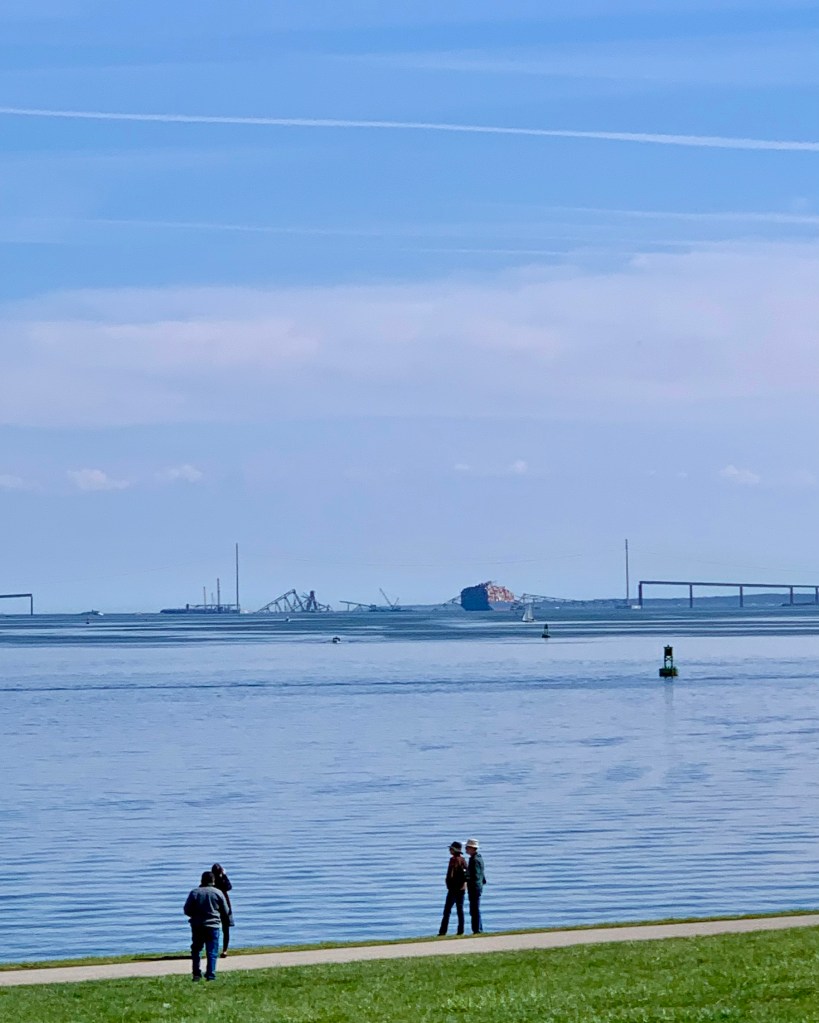
As we approach the end of our 4-year tenure in Baltimore, I am reminded of how the storied charms of the so-called Charm City remain so well-hidden. The COVID epidemic hit smaller cities hard and with less bounce-back than larger ones. As such, there is a general malaise that permeates this city in its visuals, the dilapidated infrastructure (well before the Key Bridge collapse), the smell, the crime and drug problem, the cartoonish civic dysfunction, and the overall menacing vibe. A sulfuric miasma of pessimism fills your nostrils, that if not equivalent to 70’s NYC is at least proportionate. It’s loud. It’s dirty. The “squeegee kids” (average age about 40) are a major irritation. And the drivers in the entire region are downright reckless. Dodging the ubiquitous ruts and potholes with people passing on the right (or right shoulder!) at 80mph surely takes years off your life. Things were much better here during my first stint in the 90’s, and my best city memories live there.

Not to say there isn’t still potential here. As the NE Corridor megalopolis gradually coalesces, it’s only a matter of time until Baltimore is rediscovered and surges in value. There are a few downtown cranes to offer a glimmer of hope to speculators. I wouldn’t be surprised if Newsweek calls it the comeback story of the century in 10 years. There are pockets of genuine quality — the odd restaurant, art gallery and shop — but too few to fully redeem it. And people are surlier than I remember, although that might be a universal.

Baltimore, we are pulling for you. But we are also pulling up stakes.

“Just Another Mencken Monday”

“At short intervals one hears news that the movies are about to be uplifted. Does it ever actually happen? It does not. The movies today, if the accounts of those who frequent them are to be believed, are as bad as they have ever been, and in more than one way they grow worse. Has the threat of censorship purged them of their old frank carnality? Perhaps. But in place of it there is only imbecility.”

— HL mencken in the chicago daily tribune on july 3, 1927
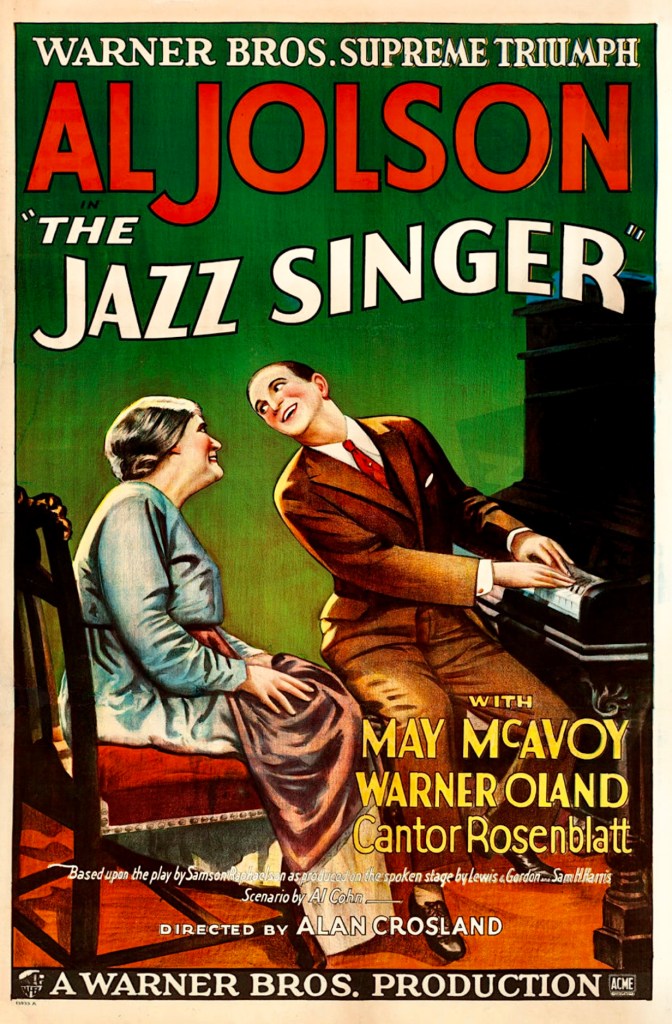
Wings (1927), directed by William Wellman, was the first film to win the Academy Award for Best Picture (then called Outstanding Picture) at the inaugural event held in 1929, which celebrated films from 1927 and 1928. The Jazz Singer starring Al Jolson was disqualified for its use of synchronized sound. Wings opened in NYC in August 1927, and it is noted that Mencken’s opinion piece is from the prior month.

“There are, to be sure, films of a better sort, but how many? Certainly not enough to give any color to the general run. In that general run one finds only fodder for half-wits… The best movie ever heard of, put beside the worst play by Bernard Shaw or the worst novel by Cabell, become sheer idiocy.”

— hl mencken in the chicago daily tribune on july 3, 1927
F. W. Murnau’s 1927 film Sunrise won the Academy Award for Unique and Artistic Picture, a category that was dropped the following year when Wings was retroactively designated as having won the highest honor.

“The movie business, starting out a generation ago on a shoe-string, quickly plunged, like all new enterprises, into an era of wildcatting… The result was a saturnalia of speculation and roguery. Patents were worth nothing to the wildcatters; copyrights were worth nothing; contracts were worth nothing. To take the word of a movie man, in those gay days, was like believing the oath of a prohibition agent… The trade today, so its leaders boast, is as sound as the steel business, and even has its code of honor…”

— hl mencken in the chicago daily tribune on july 3, 1927
The Jazz Singer (1927), now infamous for its use of blackface, effectively marked the end of the silent film era, featuring six songs performed by Al Jolson.

“… But the bookkeeper of an opera house, alas, is seldom competent to select its repertory or to rehearse its caterwaulers. The movies, today, suffer from that profound and inconvenient fact. The men who organized them as an industry now attempt to operate them as an art… And hence their vigorous, paralyzing policing of the authors, scenario writers, directors, and actors who are their slaves. The ideas of these gentry alarm them, as they would a Baptist evangelist or a policeman. They prefer their own.”

— hl mencken in the chicago daily tribune on july 3, 1927
7th Heaven (1927) was first released as a silent film and then re-released with a synchronized musical score and sound effects. It was nominated for the inaugural Outstanding Picture prize but lost out to Wings. Janet Gaynor won the first Academy Award for Best Actress and Frank Borzage took home the Best Director statue.

“Soon or late the artist must get his chance. He is halted today by a delusion borrowed from his enemy — that movies are possible only on a grand scale, that they must inflame the morons or have no being at all. This is nonsense… Someday someone with an authentic movie mind will make a cheap and simple picture that will arrest the notice of the civilized minority as it was arrested by the early plays of Eugene O’Neill. When that day comes the movies will split into two halves, just as the theater has split. There will be huge, banal, maudlin, idiotic movies for the mob, and no doubt the present movie magnates will continue to produce them. And there will be movies made by artists, and for people who can read and write.”

— hl mencken in the chicago daily tribune on july 3, 1927
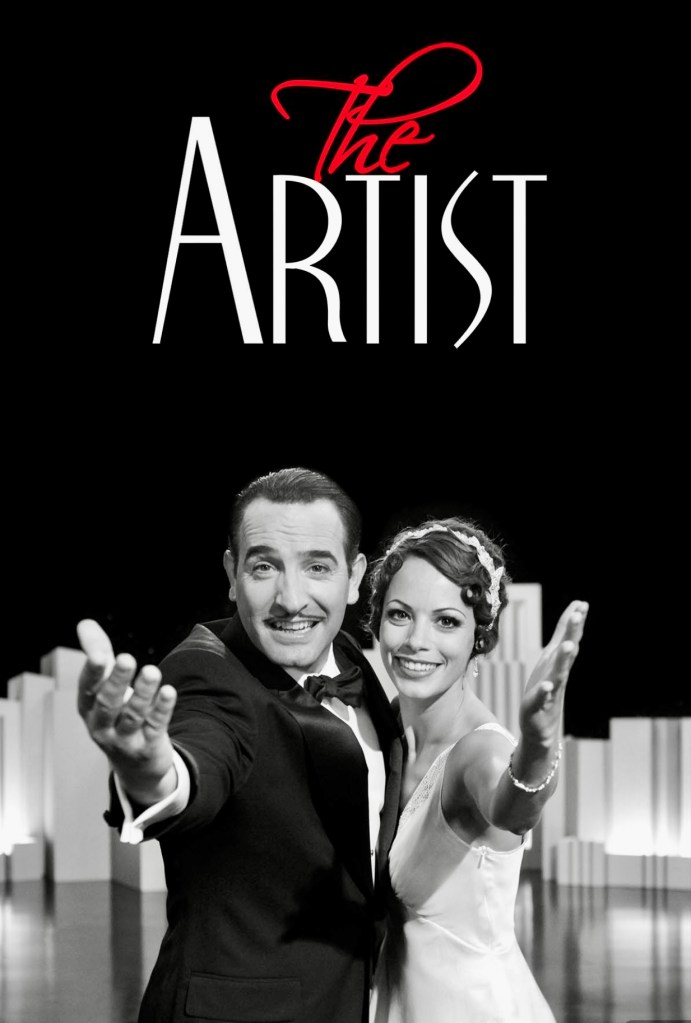
The 2011 French film The Artist paid homage to the period of transition between silent films and “talkies.” It was nominated for ten Academy Awards and took home five, including for Best Picture, Best Director (Michel Hazanavicius) and Best Actor (Jean Dujardin).

“Remember the Main!”

In residency, we had an attending who was fond of saying, “The main thing is to keep the main thing the main thing.” He was right, of course. What I didn’t know then was that he was quoting Stephen Covey‘s bestselling self-help book The 7 Habits of Highly Effective People (1989), which I still haven’t read (hence remaining highly ineffective). And I assume that notion is also true of main drains…

“The Boot & Bottle”

Baltimore is replete with odd tableaus (July 2024)

The ampersand has enjoyed a recent renaissance in the foody world. In Denver, you have Stoic & Genuine or Mercantile & Provision. In Chicago, The Girl & the Goat, Maple & Ash, Soul & Smoke, Longman & Eagle, Owen & Engine (closed), etc. These are in the old tradition of English pubs that was referenced in the Beatles song “Cry Baby Cry,” in which John Lennon sang about the “local bird and bee.” The Canadian chain restaurant Elephant & Castle plays on this same theme. And it got me thinking: what are other possible fun and interesting pub names?… Well, for one,

The Boot & Bottle

The Lick & Spittle

The Rack & Ruin

The Gawk & Shove

The Donkey & Snake (yes, a reference to the film “Couples Retreat” from 2009)

The Pluck & Shuck (featuring various poultry and mollusk offerings)

The Pig & Gristle

The Twig & Thistle (yes…)

The Shit & Shinola (The Sit & Shit is a subsidiary of paid, high-end toilets/bidets/showers for the US highway system that is currently in development)

The Puerile & Inappropriate (where you’ll find me, most days)

Other ideas? Taking callers now….

“The Hidden Mask”

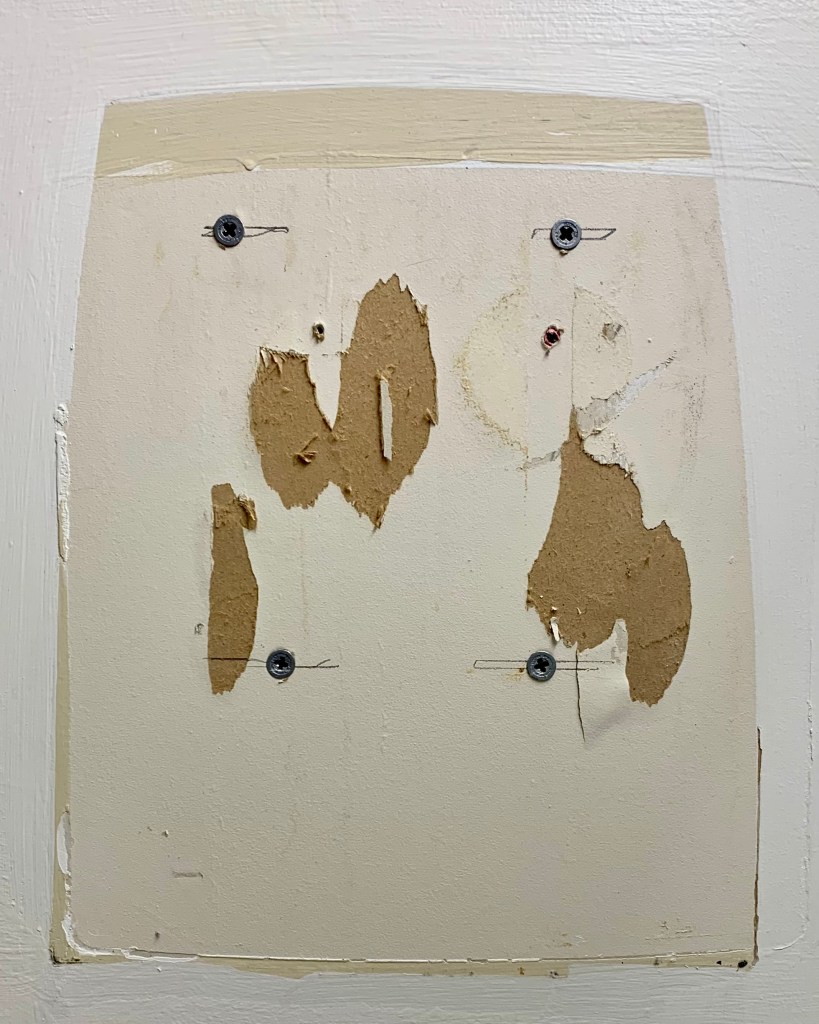
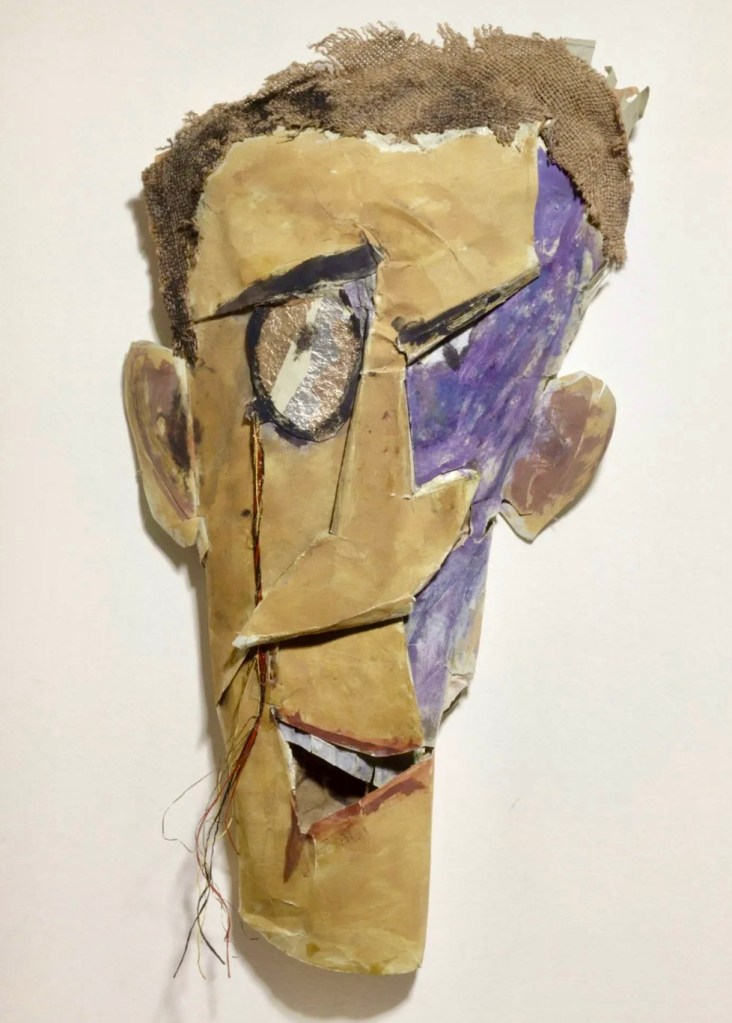
Behind the old-fashioned paper towel dispenser in a hospital bathroom lies a hidden face that is crudely evocative of early 20th century Cubist and Dadaist mask art. Makes you wonder what else might be lurking out of view. Maybe an original copy of the Declaration of Independence. Maybe a wad of gum. You just never know.
The Dadaist Marcel Janco’s mask-portrait of Tristan Tzara (1919)
The influence of traditional African masks on Picasso’s work is clear in “Les Demoiselles D’Avignon” (1907)
Chrome = Progress. I say, “out with the new, in with the auld.”
The wall repair’s palimpsest evokes the infamous work by Robert Rauschenberg called “Erased De Kooning Drawing” (1953)
Rauschenberg’s big erasure begs the question, “what’s behind it all?”

“Oh, Baltimore…”

BYOG = Bring Your Own Gloves.
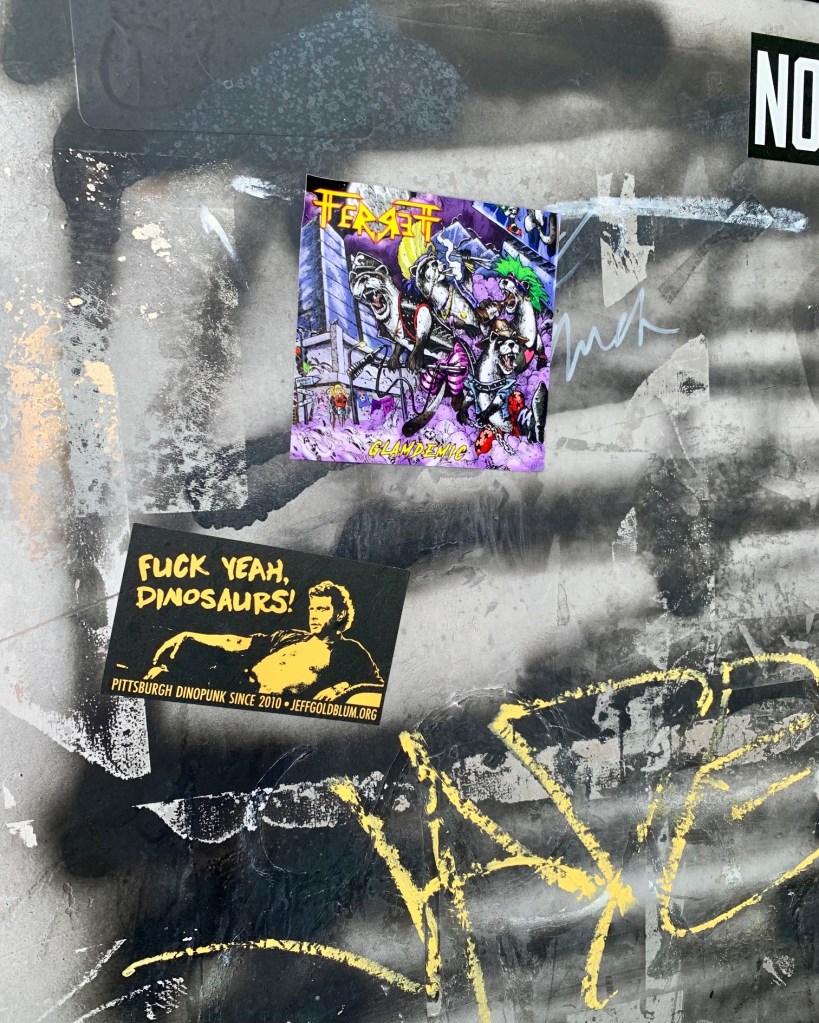
Okay, so the band FUCK YEAH, DINOSAURS! is from Pittsburgh and FERRETT is from NYC… but whatevs.

Albums by Fuck Yeah, Dinosaurs! include:

Jurassic Drunks (2018) featuring songs “TerrorDactyl,” “Raptors on Acid” and “These Are the People I Want To See (Eaten By the Dinosaurs)”

65 Million Beers Ago (2020) featuring songs “Jiggly Jello,” “Life, Uh, Finds a Way” and “Bactrim”

Albums by Ferrett include:

Glamdemic (2024) featuring songs “It’s Not Hard To Let Go,” “Hat Trick,” “Drinking Beers” and “Amber Alert”

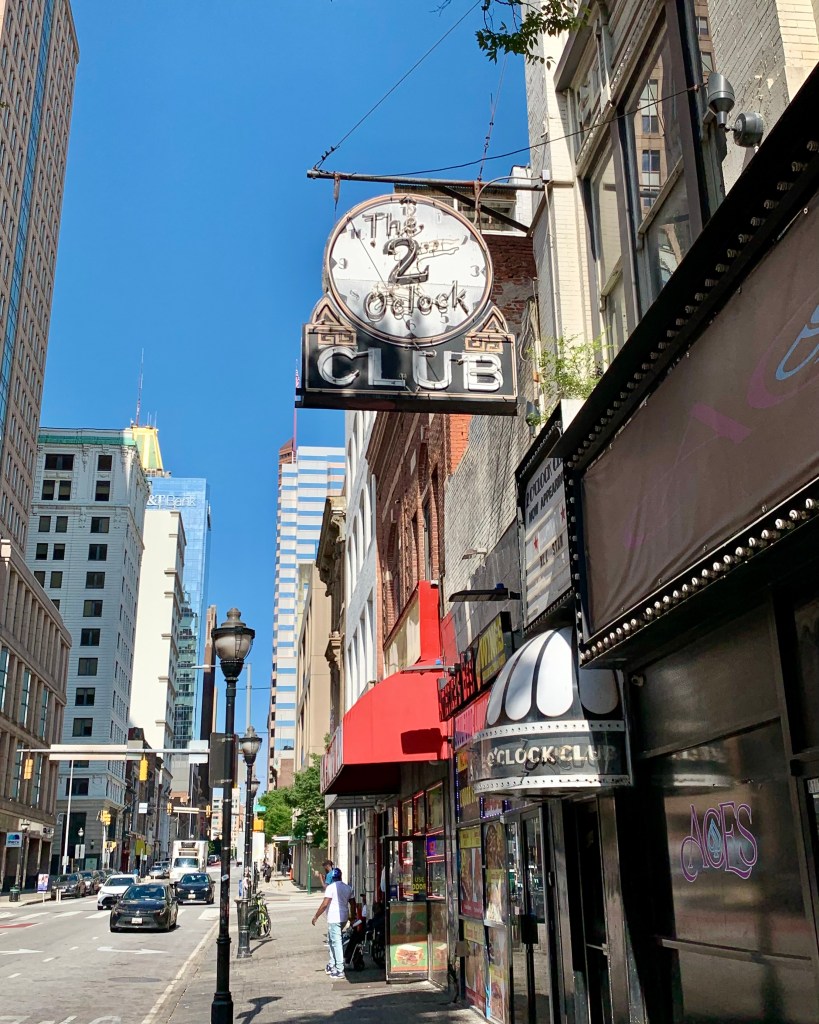
It’s always 2 O’clock somewhere.
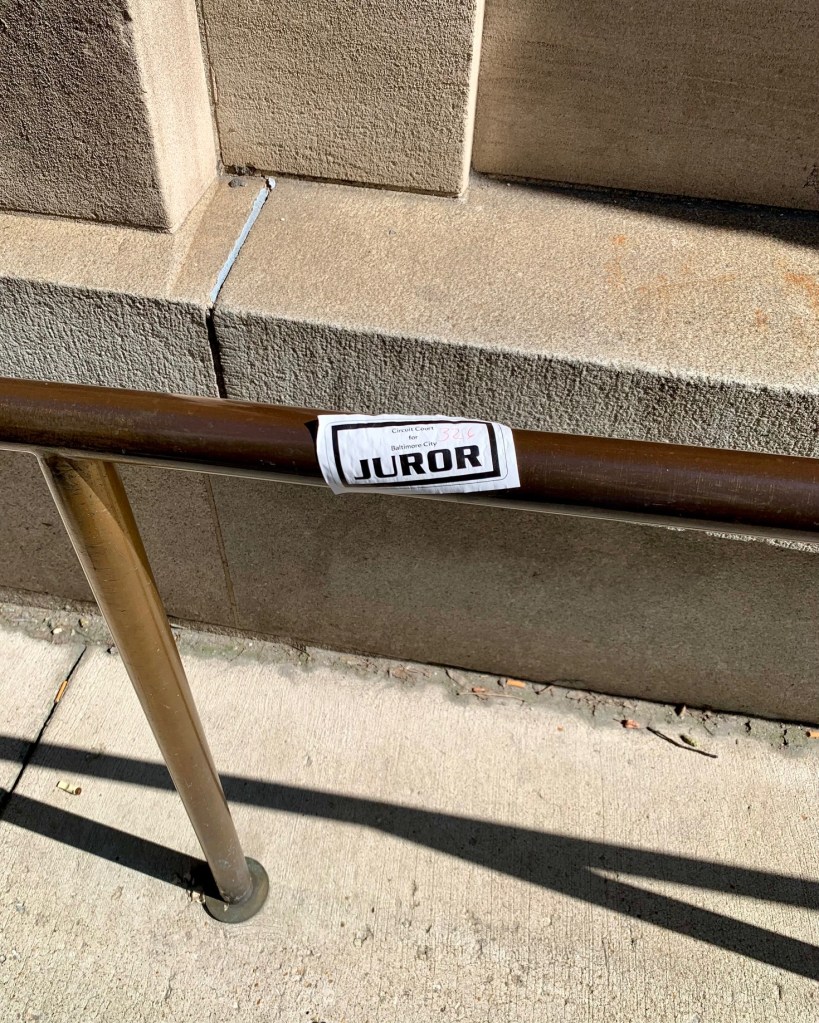
Justice: You Gotta Make It Stick!
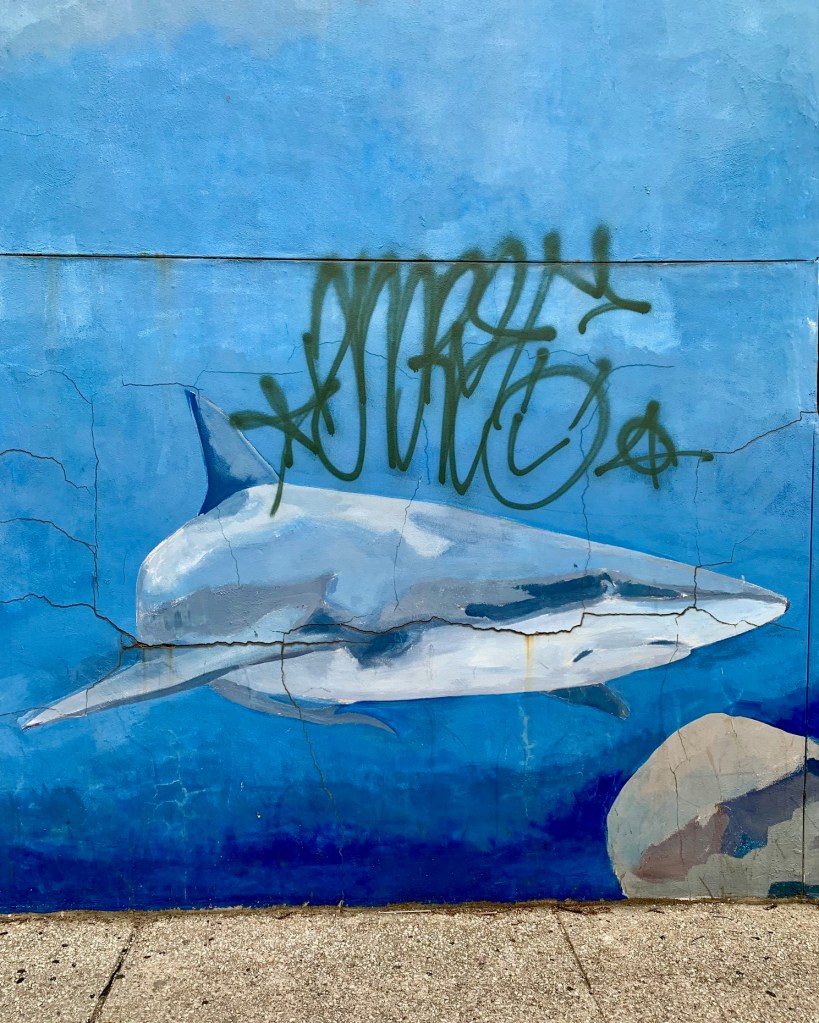
In Baltimore, we even tag sharks.
OMGesus… don’t ask me.

“Looking Up: The Guggenheim”

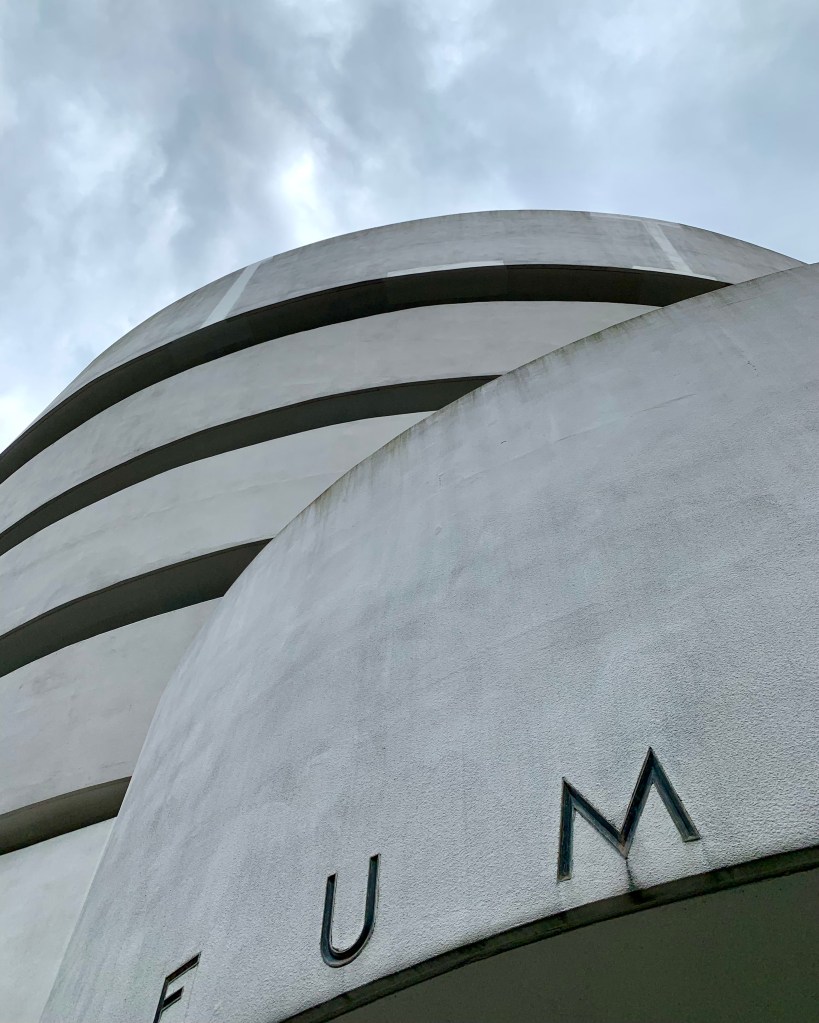
The Gugg in NYC from May 2024
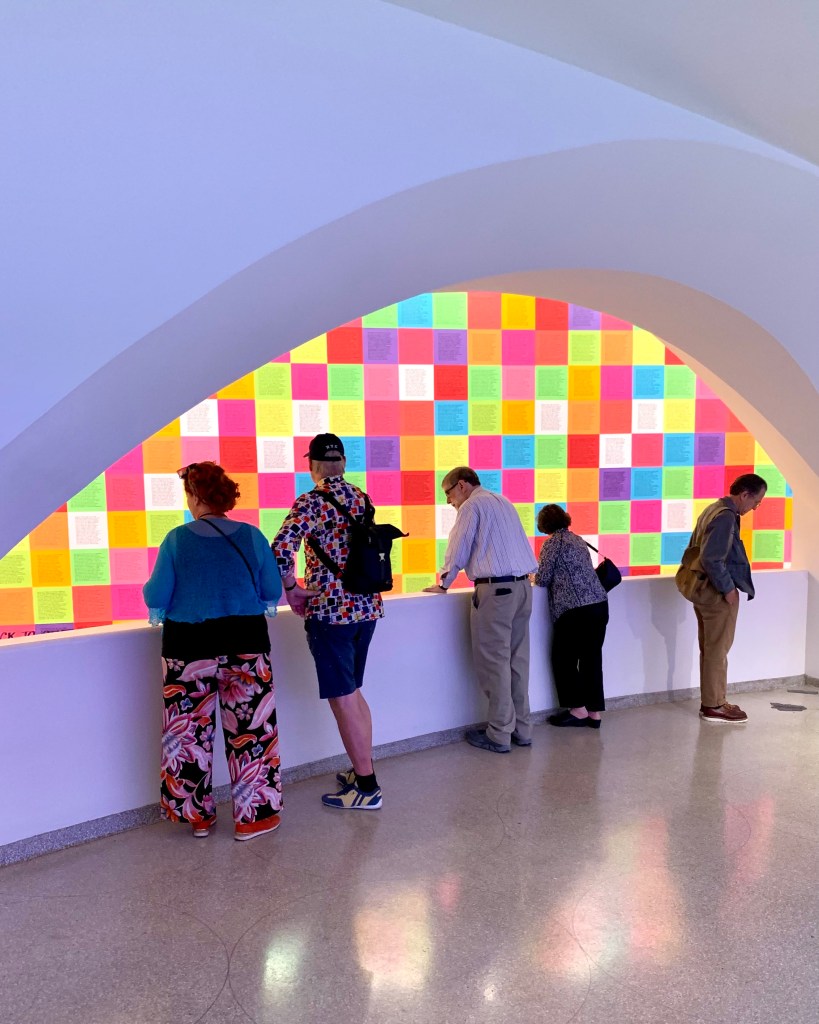
It seems to me the couple at left should swap shirts!
Jenny Holzer’s “Light Line” exhibition presents written word pieces in various formats to challenge conventional power structures. Redacted government documents and Trump tweets are just two of the devices employed in showing how language can both bind us and divide us. It may tell the truth and also obscure it. Talk is cheap, but its consequences — from lies and fabrications that led to the Iraq War or to a Trump presidency — can be quite expensive.
Some words are like music… GUILTY!!