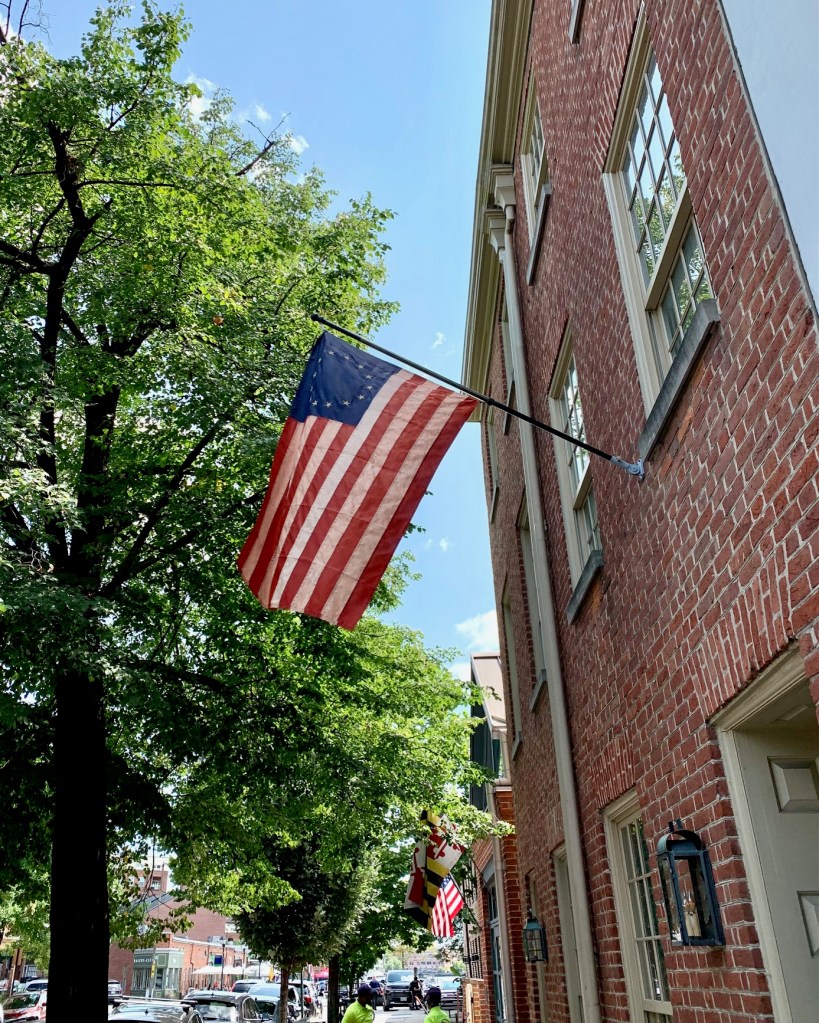
“Stuck in the Past”
Semi-random musings, poems, and visual images from the journey
“The hardened heart that’s seeking cure
— My own homage to Ogden nash
Is salved by joyful laughings.
So health insurer’s should procure
A whopping dose of Ogden’s Nash-ings.”

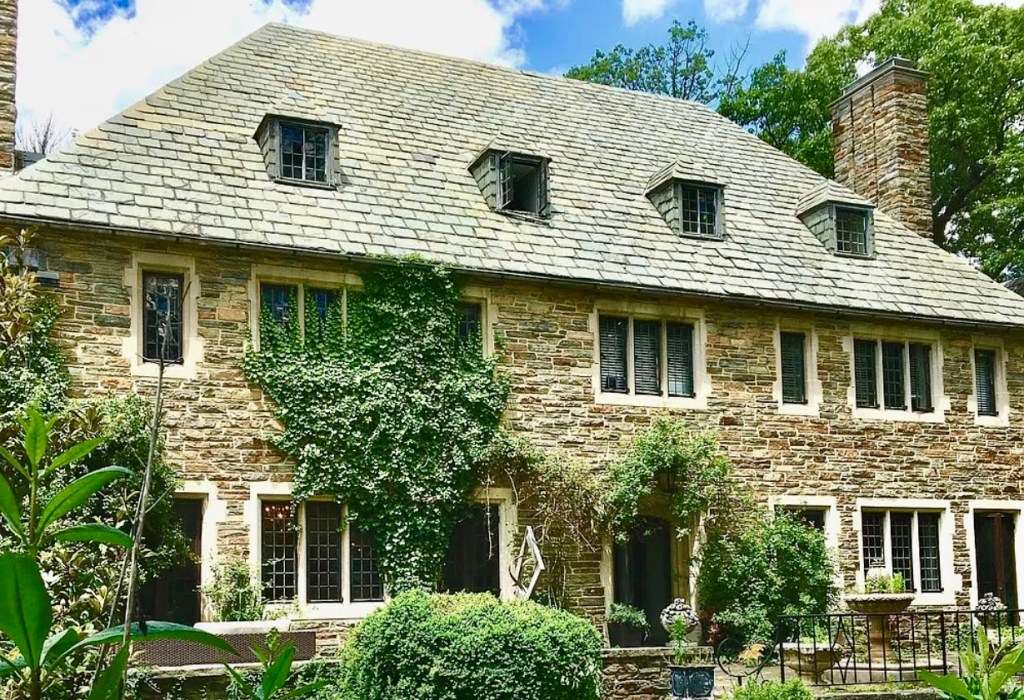
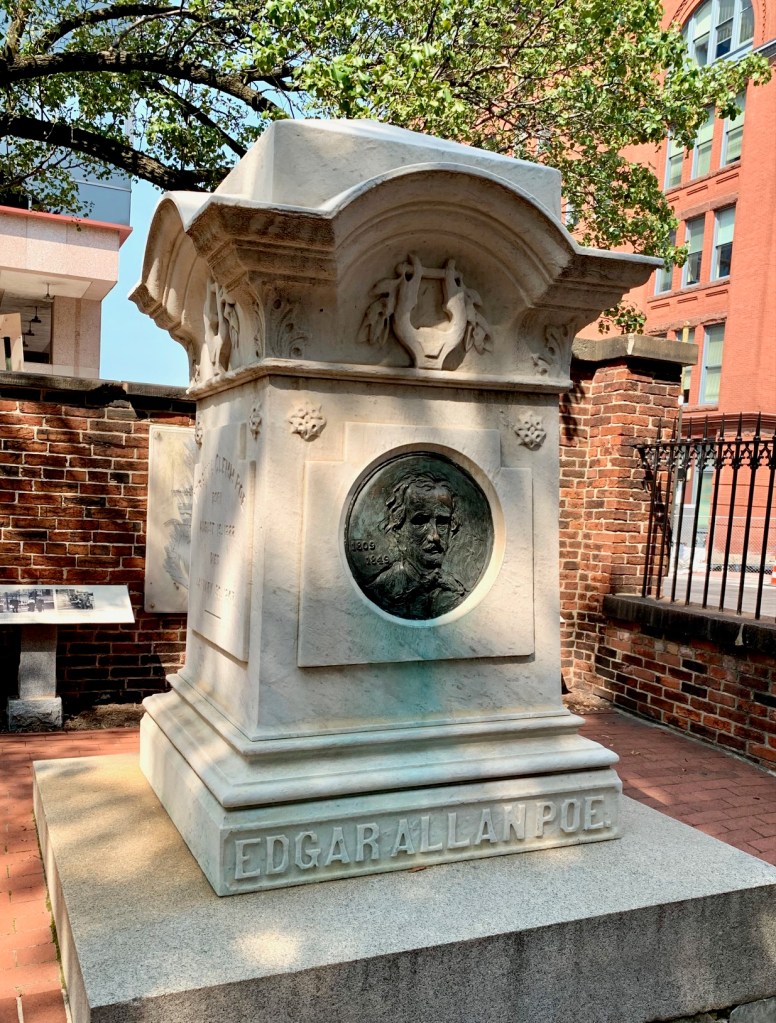
Living in Baltimore, one cannot help but fall into a nostalgia for its salient successes over the many years. I’ve watched “The Wire,” of course, and we once dined next to David Simon in DC (I successfully suppressed my desire to fanboy him). I grew up quoting “Diner” by Barry Levinson and also saw his “Tin Men,” both of which celebrated the city’s golden years. I have visited the gravesite of Edgar Allan Poe and lived to tell about it. There was always something cool and outlandish about the 1970’s Baltimore Colts with QB Burt Jones (a friend once quoted to me that his passes were like a “frozen rope”) and coach Ted Marchibroda. We used to go to Orioles games at the old Memorial Stadium (I once caught a foul ball on ricochet and gave it to a kid whose pleading face would have imploded the Eye of Sauron) that was built more for baseball anyway. I forced myself to watch John Waters’ cult-film “Pink Flamingos” (1972) and that winking butthole is indelibly etched in my cultural memory. More recently I read an anthology of articles written by HL Mencken and was utterly amazed by his writing skill and how his sociopolitical analysis, some of which has been reproduced on this blog, is still relevant today. And several years ago, we toured Ogden Nash’s old house at 4300 Rugby Road, where he did most of his writing. It had fallen into disrepair and was for sale (well out of our price range) but had retained a ghostly essence of grandeur and refinement. As is no doubt true for many, my first introduction to poetry was through light verse of Dr. Seuss, A.A. Milne, and Ogden Nash. My parents had the five-volume set of his work, and I was immediately drawn to his playful puns and funny neologisms. My favorites were his animal poems (“God in his wisdom made the fly / And then forgot to tell us why”). I prefered (and still prefer) short poems, ideally funny but also with a heart. And while some offhandedly categorize Nash’s work as cheap doggerel, in reading an anthology of his work I discovered a remarkable range of poems in length, subject matter, style, degree of introspection and often with an endearing wisdom that sustains him in my personal pantheon. I will reproduce some of my favorites here. Enjoy!
“Here’s a good rule of thumb:
— ogden nash’s “reflection on ingenuity”
Too clever is dumb.“
“This one is entering her teens,
— ogden nash on one of his daughters in “The romantic age”
Ripe for sentimental scenes,
Has picked a gangling unripe male,
Sees herself in bridal veil,
Presses lips and tosses head,
Declares she’s not too young to wed.
Informs you pertly you forget
Romeo and Juliet.
Do not argue , do not shout;
Remind her how that one turned out.”

“To keep your marriage brimming,
— ogden nash’s “a word to husbands”
With love in the loving cup,
Whenever you’re wrong admit it;
Whenever you’re right, shut up.”

“Here men walk alone
— ogden nash’s “The City”
For most of their lives,
What with hydrants for dogs,
And windows for wives.”


“Is there a Baltimore Colts fan alive
— ogden nash in life magazine dec 1968
Who’s forgotten Tom Matte in ’65?
The Colts by crippling injuries vexed,
Unitas first and Cuozzo next —
What would become of the pass attack?
Then Matte stepped in at quarterback.
He beat the Rams in a great display,
He did — and he damn near beat Green Bay.
Ask him today to plunge or block,
Tom’s the man who can roll or rock.
In Tokyo, they say karate.
In Baltimore, they call it Matte.”
“Enter, breath;
— ogden nash’s “untitled”
Breath, slip out;
Blood, be channeled,
And wind about.
O, blessed breath and blood which strive
To keep this body of mine alive!
O gallant breath and blood
Which choose
To wage the battle
They must lose!”
“London Bridge is falling down —
— fragment from Ogden nash’s “Don’t sell america short”
But stocks are going up!
Hunger shuffles through the town —
But stocks are going up!
Tell the farmer in the dell,
Tell the striker in the cell,
Zero hour and all is well —
Stocks are going up!..”

“Once more the filibuster runs amok,
— Ogden nash’s “the filibuster”
A kissin’ cousin of the jabberwock.
And what might be this fabulous filibuster?
A beast composed of blathering and bluster.
Yet when it whiffles to the Senate floor
Brave statesmen quiver at its windy roar.
Reason and decency cry out in vain,
And human rights go swirling down the drain.
Though some set forth to slay the filibuster,
It stages more and better last stands than Custer.”

“When you look life in the face
–fragment from the song “Round about” by ogden nash for the 1946 musical “sweet bye and bye”
There’s too much time, there’s too much space,
There’s too much future, too much past,
Man is so little, and the world is so vast;
You may fancy yourself as an immortal creature
But you’re just a cartoon between a double feature…”

“Time walks on and people die;
— ogden nash’s “unititled”
Other people, never I.”

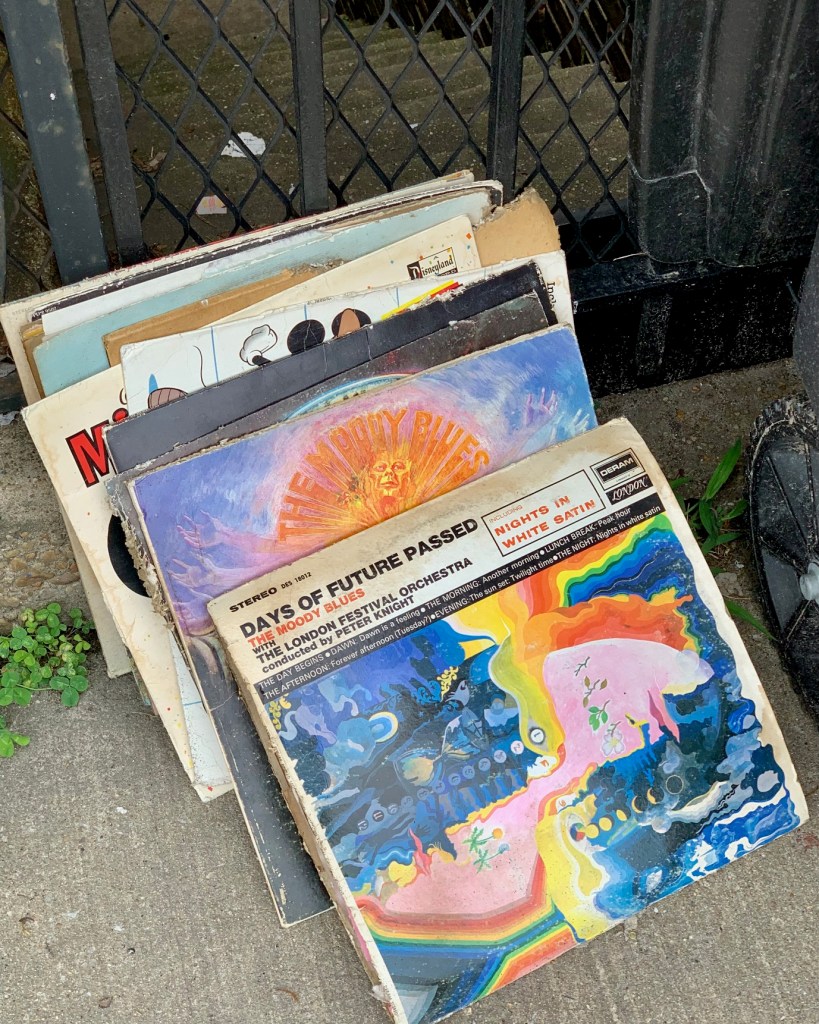

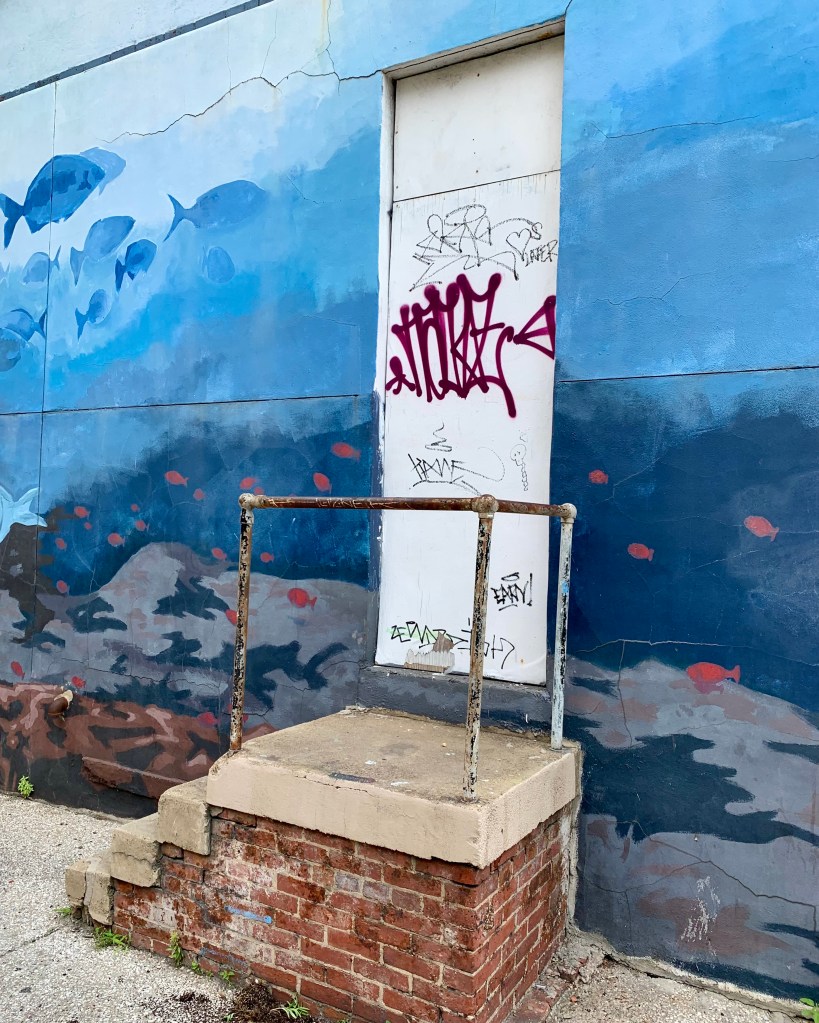
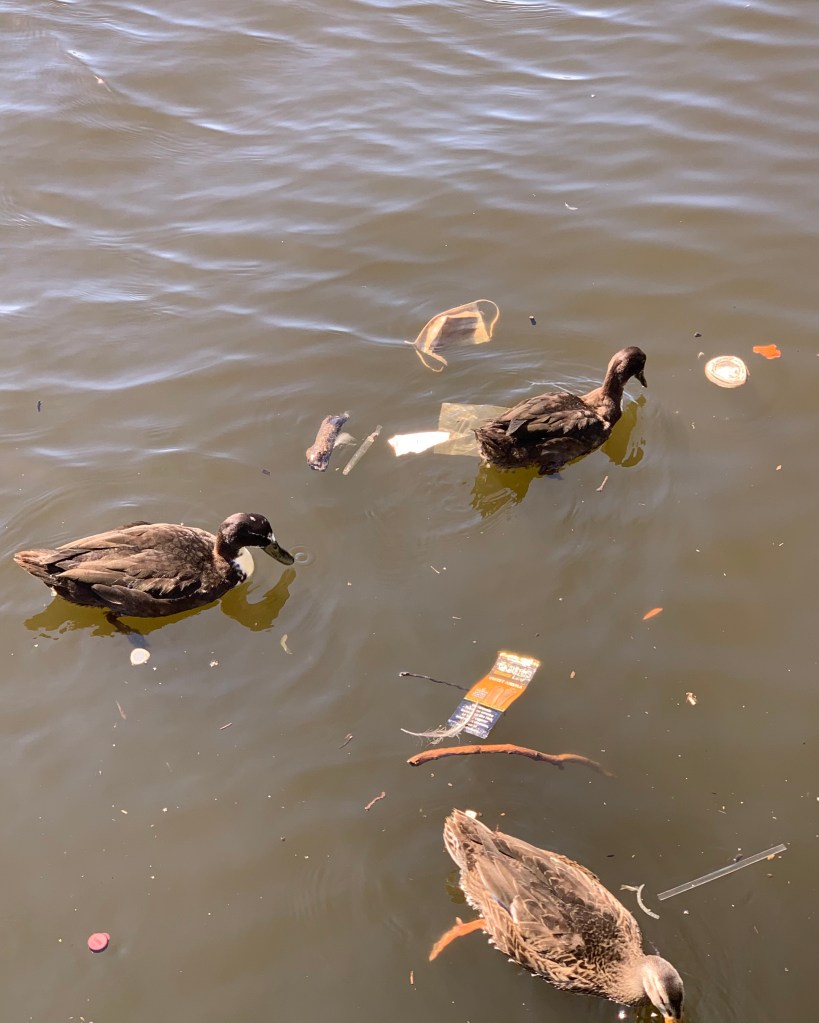



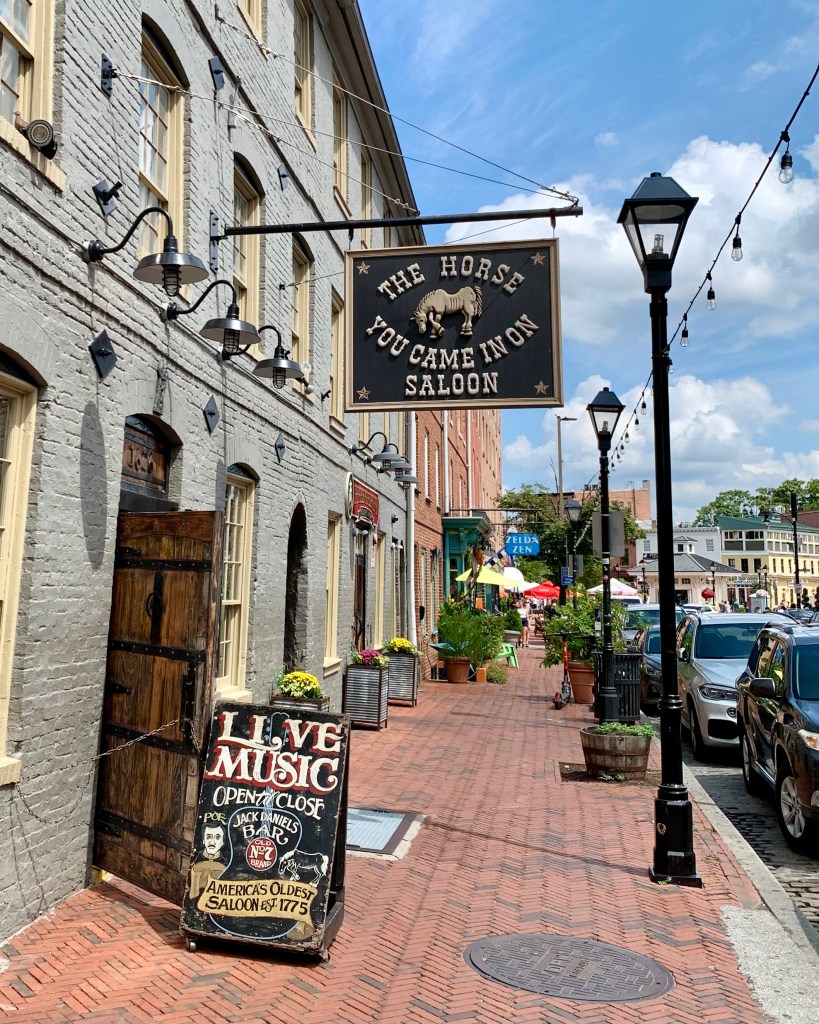


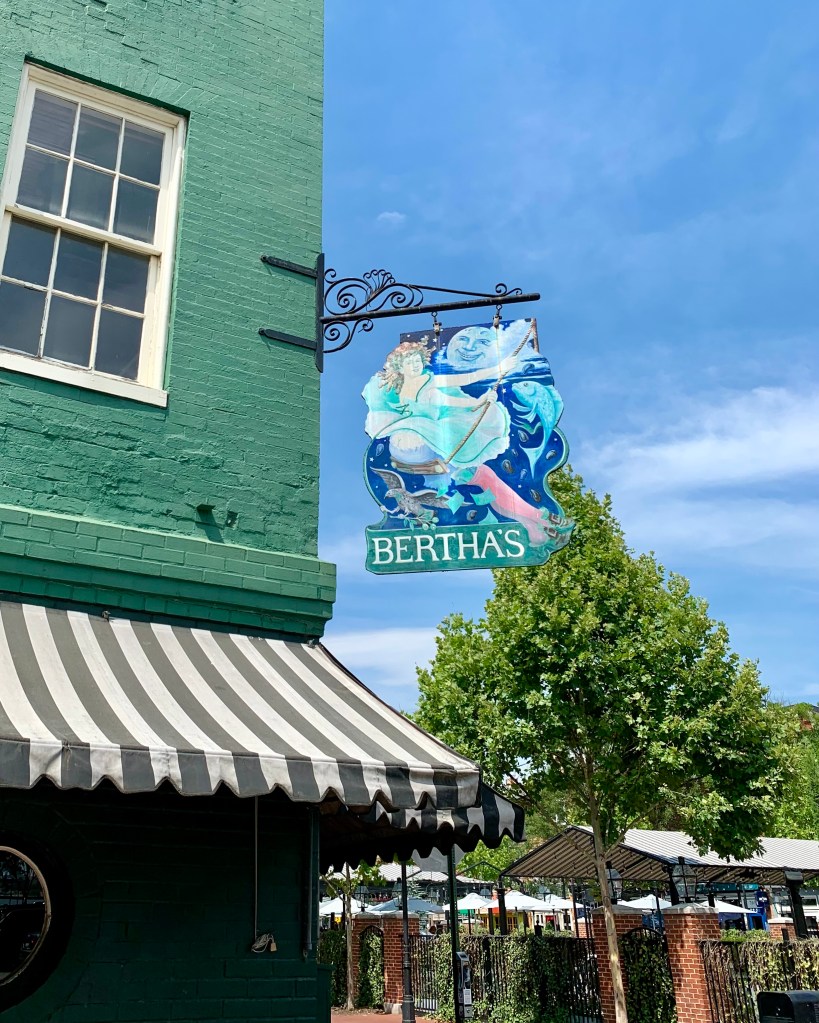
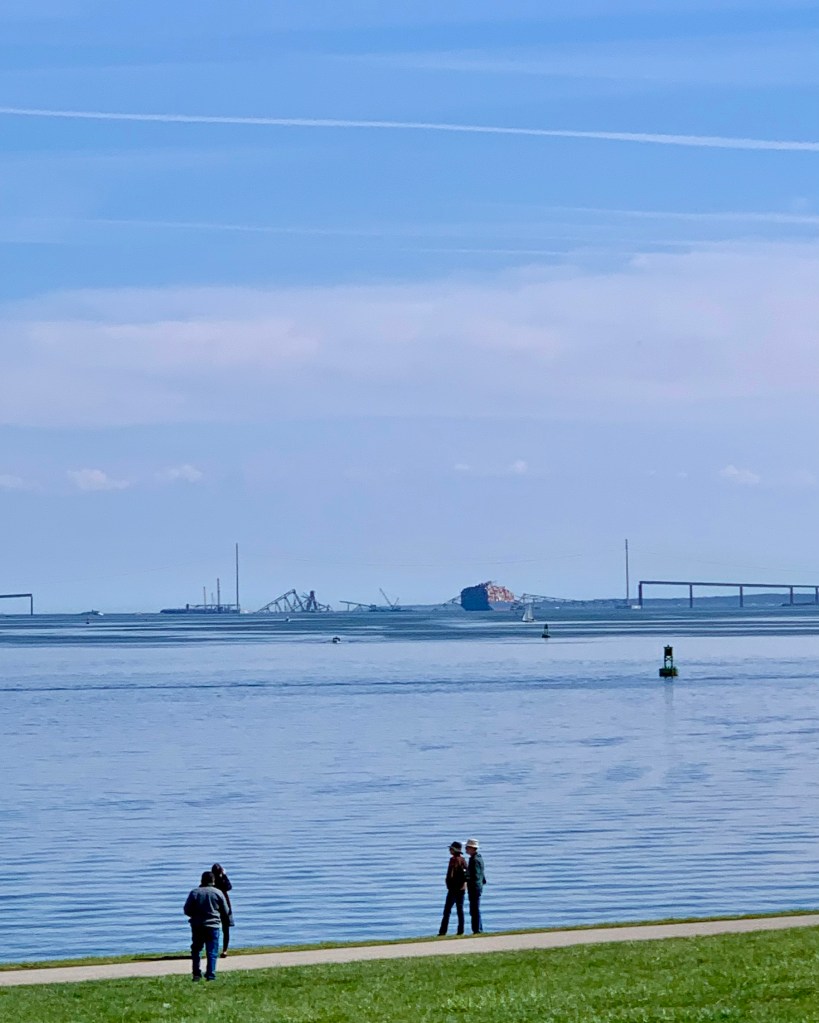
As we approach the end of our 4-year tenure in Baltimore, I am reminded of how the storied charms of the so-called Charm City remain so well-hidden. The COVID epidemic hit smaller cities hard and with less bounce-back than larger ones. As such, there is a general malaise that permeates this city in its visuals, the dilapidated infrastructure (well before the Key Bridge collapse), the smell, the crime and drug problem, the cartoonish civic dysfunction, and the overall menacing vibe. A sulfuric miasma of pessimism fills your nostrils, that if not equivalent to 70’s NYC is at least proportionate. It’s loud. It’s dirty. The “squeegee kids” (average age about 40) are a major irritation. And the drivers in the entire region are downright reckless. Dodging the ubiquitous ruts and potholes with people passing on the right (or right shoulder!) at 80mph surely takes years off your life. Things were much better here during my first stint in the 90’s, and my best city memories live there.
Not to say there isn’t still potential here. As the NE Corridor megalopolis gradually coalesces, it’s only a matter of time until Baltimore is rediscovered and surges in value. There are a few downtown cranes to offer a glimmer of hope to speculators. I wouldn’t be surprised if Newsweek calls it the comeback story of the century in 10 years. There are pockets of genuine quality — the odd restaurant, art gallery and shop — but too few to fully redeem it. And people are surlier than I remember, although that might be a universal.
Baltimore, we are pulling for you. But we are also pulling up stakes.

“At short intervals one hears news that the movies are about to be uplifted. Does it ever actually happen? It does not. The movies today, if the accounts of those who frequent them are to be believed, are as bad as they have ever been, and in more than one way they grow worse. Has the threat of censorship purged them of their old frank carnality? Perhaps. But in place of it there is only imbecility.”
— HL mencken in the chicago daily tribune on july 3, 1927

“There are, to be sure, films of a better sort, but how many? Certainly not enough to give any color to the general run. In that general run one finds only fodder for half-wits… The best movie ever heard of, put beside the worst play by Bernard Shaw or the worst novel by Cabell, become sheer idiocy.”
— hl mencken in the chicago daily tribune on july 3, 1927

“The movie business, starting out a generation ago on a shoe-string, quickly plunged, like all new enterprises, into an era of wildcatting… The result was a saturnalia of speculation and roguery. Patents were worth nothing to the wildcatters; copyrights were worth nothing; contracts were worth nothing. To take the word of a movie man, in those gay days, was like believing the oath of a prohibition agent… The trade today, so its leaders boast, is as sound as the steel business, and even has its code of honor…”
— hl mencken in the chicago daily tribune on july 3, 1927
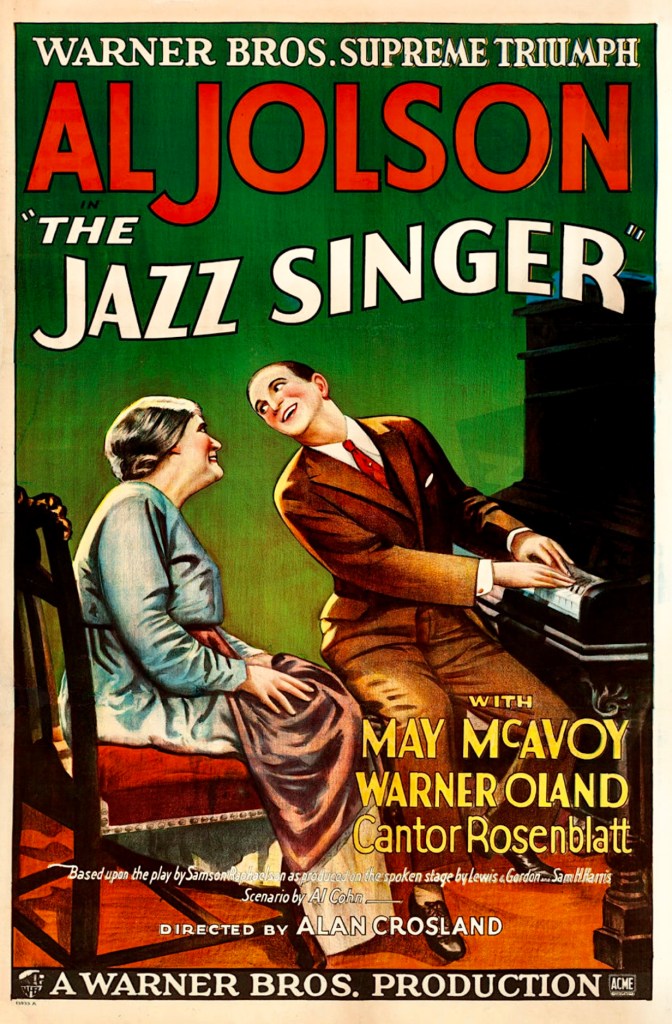
“… But the bookkeeper of an opera house, alas, is seldom competent to select its repertory or to rehearse its caterwaulers. The movies, today, suffer from that profound and inconvenient fact. The men who organized them as an industry now attempt to operate them as an art… And hence their vigorous, paralyzing policing of the authors, scenario writers, directors, and actors who are their slaves. The ideas of these gentry alarm them, as they would a Baptist evangelist or a policeman. They prefer their own.”
— hl mencken in the chicago daily tribune on july 3, 1927

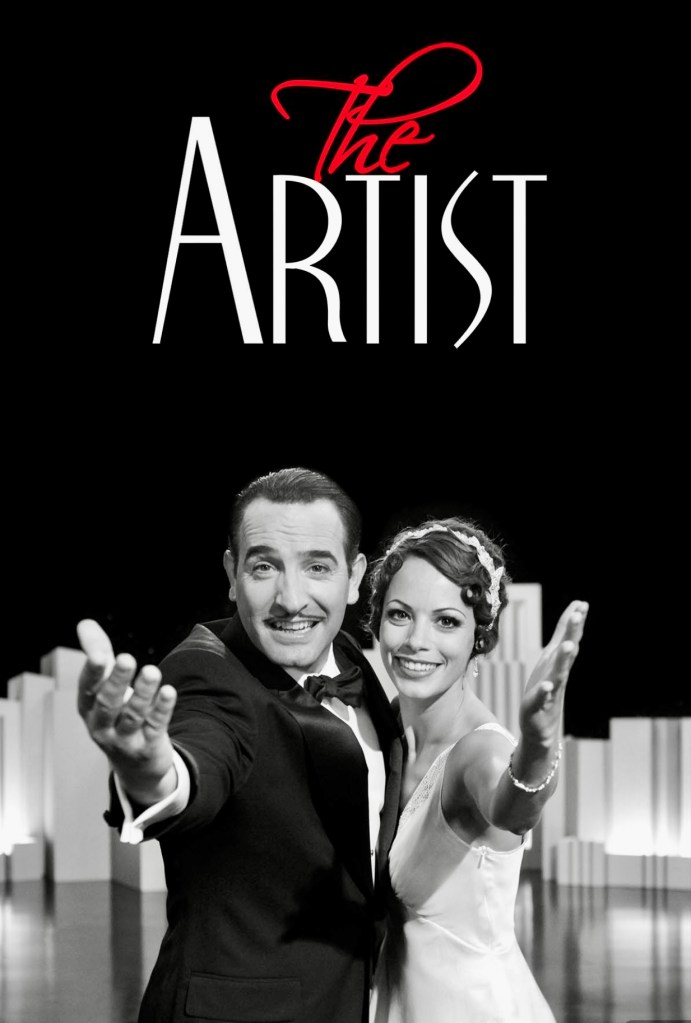
“Soon or late the artist must get his chance. He is halted today by a delusion borrowed from his enemy — that movies are possible only on a grand scale, that they must inflame the morons or have no being at all. This is nonsense… Someday someone with an authentic movie mind will make a cheap and simple picture that will arrest the notice of the civilized minority as it was arrested by the early plays of Eugene O’Neill. When that day comes the movies will split into two halves, just as the theater has split. There will be huge, banal, maudlin, idiotic movies for the mob, and no doubt the present movie magnates will continue to produce them. And there will be movies made by artists, and for people who can read and write.”
— hl mencken in the chicago daily tribune on july 3, 1927

In residency, we had an attending who was fond of saying, “The main thing is to keep the main thing the main thing.” He was right, of course. What I didn’t know then was that he was quoting Stephen Covey‘s bestselling self-help book The 7 Habits of Highly Effective People (1989), which I still haven’t read (hence remaining highly ineffective). And I assume that notion is also true of main drains…

The ampersand has enjoyed a recent renaissance in the foody world. In Denver, you have Stoic & Genuine or Mercantile & Provision. In Chicago, The Girl & the Goat, Maple & Ash, Soul & Smoke, Longman & Eagle, Owen & Engine (closed), etc. These are in the old tradition of English pubs that was referenced in the Beatles song “Cry Baby Cry,” in which John Lennon sang about the “local bird and bee.” The Canadian chain restaurant Elephant & Castle plays on this same theme. And it got me thinking: what are other possible fun and interesting pub names?… Well, for one,
The Boot & Bottle
The Lick & Spittle
The Rack & Ruin
The Gawk & Shove
The Donkey & Snake (yes, a reference to the film “Couples Retreat” from 2009)
The Pluck & Shuck (featuring various poultry and mollusk offerings)
The Pig & Gristle
The Twig & Thistle (yes…)
The Shit & Shinola (The Sit & Shit is a subsidiary of paid, high-end toilets/bidets/showers for the US highway system that is currently in development)
The Puerile & Inappropriate (where you’ll find me, most days)
Other ideas? Taking callers now….





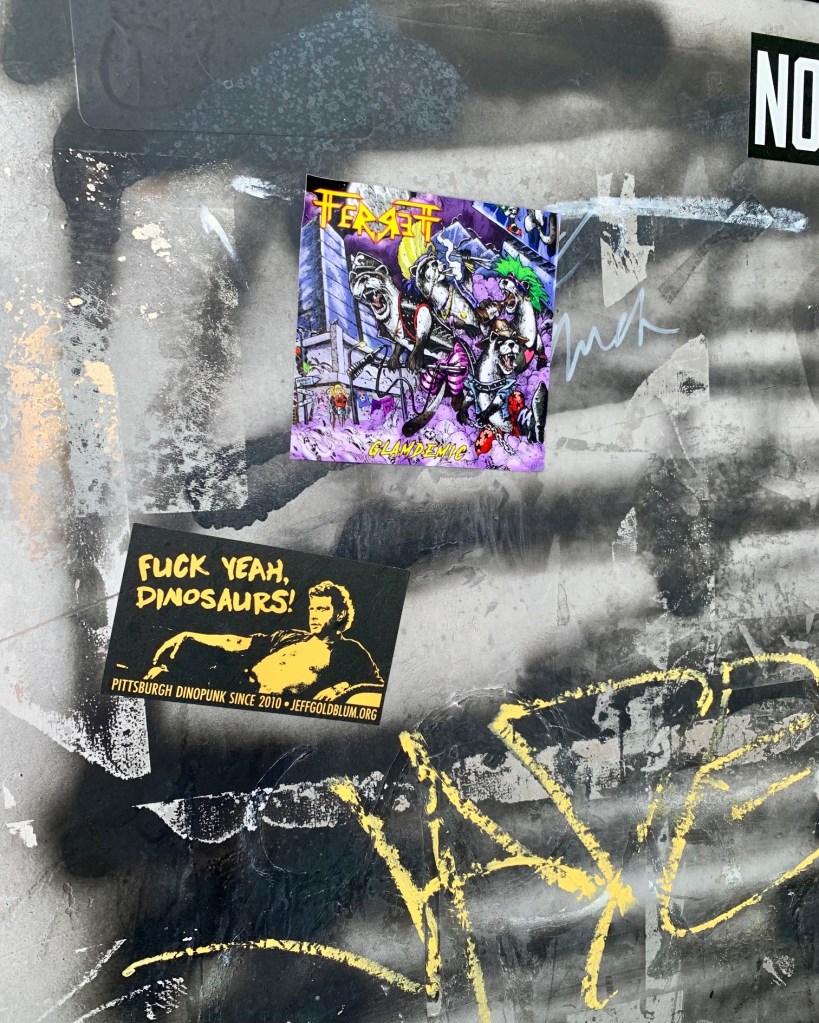
Albums by Fuck Yeah, Dinosaurs! include:
Jurassic Drunks (2018) featuring songs “TerrorDactyl,” “Raptors on Acid” and “These Are the People I Want To See (Eaten By the Dinosaurs)”
65 Million Beers Ago (2020) featuring songs “Jiggly Jello,” “Life, Uh, Finds a Way” and “Bactrim”
Albums by Ferrett include:
Glamdemic (2024) featuring songs “It’s Not Hard To Let Go,” “Hat Trick,” “Drinking Beers” and “Amber Alert”



 Great Exudations