
It’s an interesting thought experiment to ask yourself what you truly want out of life. I mean pizza, wings, beer and sports all have their place in augmenting our lives. But, then again, that depends on the pizza. Let’s be honest, most are mediocre. Many sound great in description and even look delicious to the eyes while still failing to deliver where it counts, on the tongue. But pizza does, very rarely, elevate to the level of spiritual experience (fennel sausage helps!). And which beer? Or who’s playing in this hypothetical game. I’m no fan of baseball at all, but I will fully acknowledge that despite the soul-crushing boredom of regular season games, the very same structural slowness and episodic nature actually accentuate the tension in the post-season (maybe I’ll finally tune-in for game 7 of the World Series tonight). Yet these entities remain in the top soil in terms of life’s greater meaning.

So, first question, what do we actually need for a life lived fully? Allow me to take a stab at this one and create a rough draft (one thing I like about blogging is that you can add and subtract later — and in this way it serves as a model for how me might ponder and shape our own ideas). The equally important second consideration is how we are seeking it. But first things, first. Here’s my preliminary list:
Love and friendship
Wonder and surprise
Purpose and goals
Trying to avoid a full-on Dr. Phil self-help vibe here but these couplets might be condensed to:
Connection
Discovery
Usefulness
What do you think so far? It might be a pushing off point to something, such as figuring out where aspects of your life fit in or what might be lacking. Too trite or obvious? I’m not sure. That all depends on what we do with it (like the ingredients of a pizza). Let’s take music, for example, which operates on so many levels. It certainly can connect us, not least to ourselves. Who isn’t familiar with the notion of “this is my song!” It links you to key memories. And mentally to the artist. Also to the person who turned you onto it. To the film in which it was used. “Fortunate Son” and “Run Through the Jungle” by CCR can’t help but evoke images of Vietnam, for better or worse. George Gershwin‘s “Rhapsody in Blue” was all but ruined for me by that United Airlines ad, until it was rescued by the terrific play “Good Night, Oscar.” But just as that familiarity has buoyancy, songs also evolve in their meaning as the context of your life changes. Those reflecting on loss take on higher valence when you yourself have lost. This establishes a wonderful cycle of discovery and rediscovery.

Ooh, they’re red, white and blue
And when the band plays Hail to the Chief
Ooh, they point the cannon at you, Lord“
One of the greatest joys in my life has been in the discovery of music and films and art and restaurants and cities and people. This process quickly becomes expansive with one find leading to another, and so on. Fascinating, this genealogy of treasures. I love getting recommendations about albums and shows and films, even if many don’t pan out. It’s all about the possibilities. The surprise. The hope. And isn’t something falling flat — something you had hoped would be transformative — another form of surprise? Another data point. These duds are like stray dots of paint to your personal canvas. They are the dissonant notes in jazz. We could, in a way, define ourselves by what we dislike/hate (I found the new film “A House of Dynamite” criminally boring despite the dire subject matter, which is quite a feat!)… and then, in time, somehow learn to love them and form a continuous Mobius strip of joyful absurdity (see prior post). But is any of this useful? Well, by our own standard, the music we love surely is. Plus the music we give. So, yes. And this is but a narrow slice of the bigger pie. We haven’t even considered creating things of our own. But let’s pull back and look closer at our connections.
Connection:
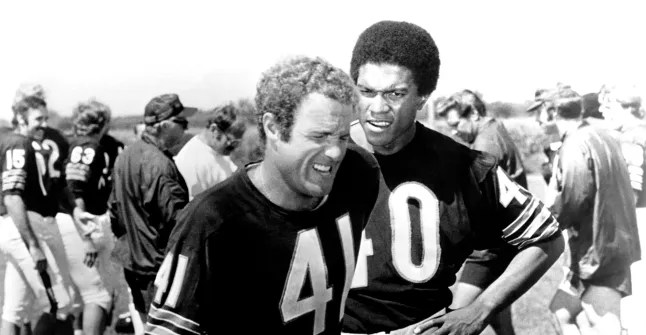
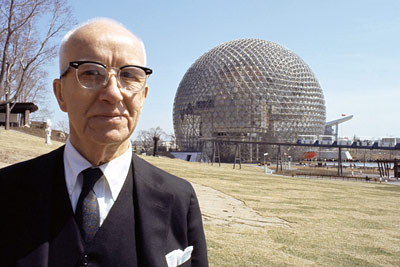
The great Chicago Bears running back Gale Sayers published his autobiography “I Am Third” in 1970 and it, in turn, inspired the made-for-TV movie “Brian’s Song” (1971). The book’s title is derived from his philosophy of humility in which he placed God first, his family second, and himself third. While I find this approach honorable and potentially useful, I propose a counter-philosophy that places oneself first. Before you throw food, allow me to explain. I don’t mean this in a solipsistic way. The point is not to justify Trump-like narcissism or a Gordon Gecko “greed is good” ethos. The kernel is that for you to meaningfully connect with others, to fully realize your ability to discover things, and to optimize your utility in the world and in the lives of others, you must connect with yourself. It all flows from there. I find misguided the notion of focusing primary energy on the external — God, your career, a marriage, the stock market, fashion, etc.. I had an actual epiphany once. Many years ago, I watched a one-man play about R. Buckminster Fuller, and somehow his philosophical discussion on the geodesic dome led me to this distillation:
The first task is to understand yourself to the best possible extent at any given stage. This will, by definition, be an evolving process. You must try to understand your motivations, your hang-ups, your tendencies, your fears, your hopes and dreams, your obligations. As you continue this assessment across time, your second objective is to, as best you can, accept and also love the person that you are. Only when you have done that can you truly offer yourself up to another person (or to the world) who has, hopefully, done similar work. They, too, accept themselves as they are, and they accept you in that same way and not some idealized version — with the mutual promise of continued positive exploration. In summary, you cannot gift yourself to someone without first knowing and accepting what is beneath your gift wrapping. And in this way , due to this giving intent, the initial focus on self is actually about connecting to others and not a purely selfish act.
Once we have developed the skills of self-discovery and acceptance, we can pivot to connecting with other people. As readers of this blog will have gleaned, I have little time for the cloth in my day-to-day life. I do, however, take inspiration from Biblical stories in the allegorical and philosophical sense. I believe there’s genuine renewal and connection in religion, so long as it isn’t limiting or isolating (Catholics mingling only with Catholics, for example, or anything to do with Scientology). In short, I’m good with God. But I keep him in my own way, more abstracted and in the background. Beyond that we have family, friends, life partners, co-workers, neighbors, and casual acquaintances that create everyday opportunities for exercising this need to meaningfully interact. But it takes time, energy, and a willingness to be open and vulnerable. This process won’t work if you’re faking it, hence the crucial step one. And it is habit-forming. Each of us have our limits, but positive interaction becomes self-reinforcing (unfortunately, so does avoidance). In parallel, it provides a feedback loop for self-awareness when you share your unfiltered beliefs and opinions. It is also an opportunity to discover knew ideas, jokes, cocktail recipes, film rec’s, etc.. In my three-man book club, we talk mostly about things other than the text, and I’m sure that’s the norm. By regularly engaging in this way, you become an important part of someone else’s life. You, in actual fact, are useful!
Discovery:
Somehow our educational institutions have managed to suck most of the joy out of learning. Nowadays it seems kids spend their entire youth trying to build a resume’ by doing activities they don’t want to do, volunteering just to volunteer, and studying just to pass the test. SAT prep begins in second grade, as do your fencing lessons and Mandarin classes. In the twenty-five years since I entered academic medicine, the CV’s have only grown more impressive, yet the depth of understanding is comparatively shallow. They struggle to answer basic questions about the research they have supposedly done. Their answers in an interview often seem stock. The degree of cultural engagement has seemingly waned and their general knowledge of literature, film, music, and art is lacking. Cultural reference points used to be a commonality. You didn’t have to love “Mannix” but you knew who he was. And you sure as shit had heard of the Velvet Underground, even if they broke up before you were of school age. To sum, there seems to be a fundamental lack of curiosity about the world beyond what will get them to the next step. This is, IMO, nothing short of tragic. I will admit they are much better traveled at a young age than my generation, with gap years and semesters abroad now de rigueur. But are they going to Barcelona just to play video games or stare at their phones? And don’t get me started in the whole influencer racket. Social media — as I blog (but not on FB or Instagram) — is the utter apotheosis of artificiality. It’s the new red dye #2. Fake, fake, fake. “Fake and Bake”. And now I sound like an old guy ranting but, hey, I’ll own it. I am ranting here. But the good old days weren’t so keen either. Much of it sucked. I had many teachers who hadn’t a clue how to actually teach. They were boring-AF and didn’t encourage a deeper learning into what wasn’t on the damn test. This stuff should be majorly fun and interesting or else you’re doing it wrong. In history classes, they somehow managed to NOT connect major events and periods that had enormous influence in their wake. Once you crammed the French Revolution, that was that and you moved on. Same with the Civil War. The Reconstruction was barely discussed and the era of Jim Crow and Plessy v Ferguson and the rise of the KKK were all given short shrift. Yet those aftershocks are still felt today. It was up to you to connect those dots (this is something that modern journalism does quite well and doesn’t get enough credit for). Missed opportunities. It seems to me that teaching in general has gone stale. I often longed for a course that would take a unified approach to a given stretch of history and delve into the music, literature, art, and media that suffused it — while also connecting things back to influential precursor events in a nodal way. These investigations could then be overlapped. This would provide an expansive view of history and show that all things are ultimately linked, rather than the dry, narrow, soulless approach that has been the tradition.

Rant ended. Suffice it to say that much of this work, extracting the meat from the crab or the juice from the pomegranate, falls to us as individuals. The upside of this is that it’s fun and invigorating. You get to make up your own syllabus! Literally, you can read whatever the fuck you want to read, watch whatever the fuck you want to watch and talk about them all with anyone who will tolerate you. The only stipulation is that you also have to listen. This is a dialogue with the world, not a one-man soliloquy. We necessarily must sometimes grow tired of our own voice (even Barbra Streisand longs occasionally to sing like Johnny Rotten). We need to, as Atticus Finch might say, walk a mile in someone else’s shoes. And when someone engages you, you can hit them with your best Travis Bickle: “you talkin’ to me?!” See if they get it. And I’m talking about trying as much of the damn buffet as you can stomach. Even poetry, for God’s sake! Because it’s all poetry. Miles Davis is poetry. Richard Linklater is poetry. Julia Child, Oscar Wilde, and Neil Young are all poetry. So was my grandmother, Mimi, who opened my eyes to art. That’s poetry run amok. And my childhood best friend, David R., who taught me this little gem: “What begins with F- and ends with -uck… FIRETRUCK!!” And if that ain’t poetry, then it doesn’t exist. So bring a sense of wonder on your daily meanderings and the world can’t help but deliver you novelty and surprise… “or your money back!”
Usefulness:
What do I mean by usefulness? Several things, it turns out, that can be small, medium, or large in scope. And as before, it begins with you and spreads outward. That’s the bargain. At the mundane level, we might look at our job and ask ourselves, “am I useful here?” or, better still, “is there I way I could be more useful (without too much compromise elsewhere in my life)?” The goal being to optimize (one can’t help but trip on management-speak in this realm) on as many fronts as possible. But I don’t mean this in a strictly utilitarian way, as in measures work output or committee service. I mean it in a soulful way — am I connecting with others and having an impact on a personal level? Am I useful to other named individuals. The key here is the specificity. My job in academic medicine affords me that chance in passing along my knowledge and experience to the next generation, which is what might be called a mutual reward. And in the era of zero-sum politics, this is a useful watchword. Ideally, what helps me also helps you. I will continue looking for clever ways to be more useful at the hospital, but it has to jibe with my overall philosophy. I spent far too much time in my early career volunteering for services that were not in that vein. It’s an easy trap that is routinely laid for young hires in all industries. As Polonius is oft quoted from Hamlet, “to thine own self be true.” But best if true in the way that is also useful to others.

We are also of utility in numerous other ways. In sharing life’s joy and surprises with family, friends and significant others, we are like the cast members of an theater ensemble. A mutual support and affirmation society results if we are engaged and not brooding in the wings. In looking back, anything great or small that involves the burnishing of happy memories falls into this category. Looking ahead, anything that opens a possibility for realizing such future memories is also in the mix. And so this mind-set holds a balance between forward and backward reflecting. It’s a constant churn and, in a sense, this alternating to-and-fro is happening simultaneously in our minds.
Other times, our purpose might be temporarily defined by life’s negative circumstances. Talking with a friend who is struggling. Helping out a stranger in a moment of need. Supporting a family member through a physical ailment. Easing someone’s financial burden from time to time, when tenable. And just showing up is more than half of it. Being present. Listening. Making someone laugh at a difficult moment. That’s being useful. So, yes, call your old friends that you’ve lost contact with. It doesn’t matter why you fell out or drifted apart. Just do it.
As regards our more creative impulses (jokes and bits, poems, songs, stories, artwork, conversation, texts, letters and e-mails), I would say that our utility works in several important ways. One is simply to entertain — make ’em laugh. Another is through emotion — make ’em feel. A third way is through our intellect — make ’em think. Still further we can inspire them to create something themselves — make ’em want to do. These things all have value. And beyond the momentary gains, they also serve as points of connection in the ongoing churn of mutual gesture and action, the exchange of ideas and feelings, and the formation of a personalized particle-collider for inspiration and creation. It begins in you and like an electrical charge it arcs to those around you and energizes their lives. This, in part, is what R. Buckminster Fuller was trying to tell us about the eventual connectivity of all things. That in the highly specific thing lives transcendent generalities about life.
But there are pitfalls, of course. Here are but a few of them:
- As in golf, you can have too many swing thoughts that prevent you from feeling loose and just letting it fly. Try to keep things simple from day-to-day.
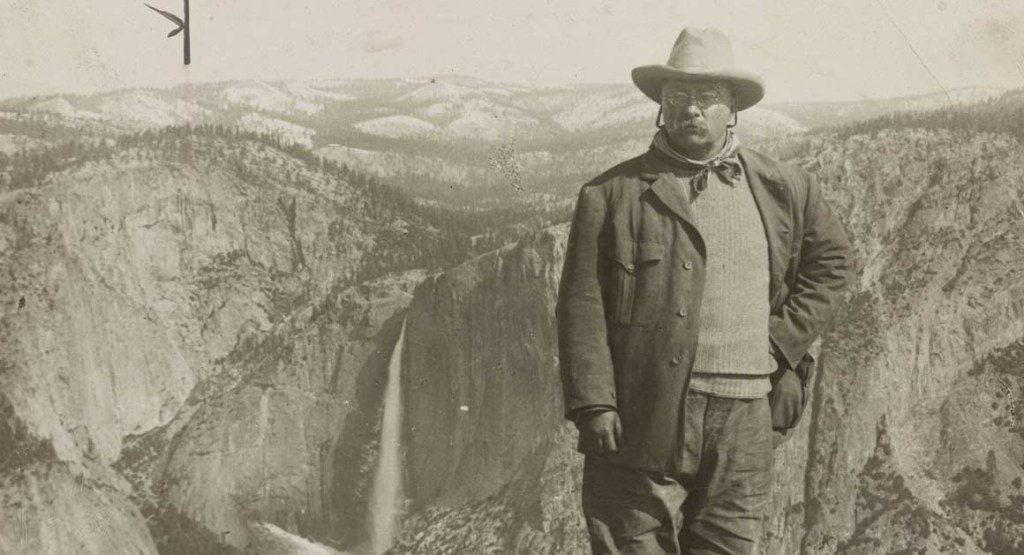
- Since we are on golf analogies, play your own ball and forget about your score or the other guy’s. As the old saying goes, often attributed to Teddy Roosevelt, “Comparison is the thief of joy.”
- On religion, beware its tendency to insularity and group-think. And also the twin evils of condescension and hypocrisy.
- On self-awareness, beware solipsism. The goal is to look inward to then extend beyond ourselves. To give back, to create, to teach, to share. I’m all for therapy, so long as it enables an expansiveness and interaction with the world. Don’t spend too much time alone.
- On interacting, try not to spread yourself too thinly. You’ll need time to recover and process. Do not overschedule.
- Small moments, including those with strangers, can be powerful. Do not overlook their importance. Great ideas and inspiration can come from anywhere at any time (even as we sleep!).
- Don’t expect perfection. If you are working on something like being a better listener, there will be set-backs. If there’s one thing Shakespeare taught us it’s that nobody is perfect, kings and cobblers alike.
- Be useful but don’t be used. Keep your eyes and ears open. Over the long haul, our relationships should be mutually beneficial, not an 80-20 scenario or worse.
- On creativity, try to maintain focus. I’m all about side projects and sudden inspiration, but it’s good to have an overarching goal.
- Get weird. Stay weird. Don’t follow the crowd.
We are getting close to the end of this marathon post. If you are still reading, what the fuck is wrong with you?! Get outside and sample the world!
Funny enough, I just stumbled into a fragment of a poem by Mary Oliver called “Sometimes” and in it she succinctly summarized all that my bloated prose was trying to convey:
Instructions for living a life:
Pay attention.
Be astonished.
Tell about it.
Had I seen that before, it would have saved us all a lot of time.
 Great Exudations