“AMANZ-ing GRACE”

Above the main entrance to the W.R. Grace Building on 42nd St in Manhattan. The facade sports a characteristic concave slope. It was completed in 1972 and, as you can see, it is AMANZING!

AMANZING (adjective): informal variation of “amazing” (causing astonishment, wonder or surprise) that attempts to blunt the dulling effect of overuse and cliche’. A wordjuvenation. A bibliosuction. The younger generation seems stuck in the A’s when picking superlatives, often settling on “amazing” or “awesome,” if not both (as a lone exception, you might also note how frequently young servers will call your food order “perfect”). My coining of “amanzing” was in gentle mocking of this and of the Netflix show “Selling Sunset” (at once self-mocking since I can name all the characters and have my clear favorites). For the uninitiated, it is a highly formulaic reality TV program centered around the upmarket LA brokerage called the Oppenheim Group, led by the two brothers Jason and Brett Oppenheim. In an endlessly looping parade, the wildly overdressed and all-female agents immodestly strut their baubles from the office to oligarchic house listings and back. When they do stop for meals, they mostly just devour each other in a ritual of cyclical back-biting and open confrontation that any fan of “The Real Housewives” franchise — The OZEMPIC Games — will find eyerollingly familiar (and strangely addictive). Friendships and alliances are as fleeting as a cucumber foam. The conversations are devoid of any political, cultural or historical infusion (surely by design), leaving us the two-item menu of real estate porn interwoven with mudslinging realtors who dress like porn stars. And yet what’s not to like? Amanza Smith is a former NFL cheerleader for the Indianapolis Colts who works as an interior decorator for The Oppenheim Group. She is actually one of the coolest and down-to-earth of the bunch, and the term “amanzing” is in honor of her contribution to the continuing and blissful contraction of my cultural horizons.

A portion of The Oppenheim Group from “Selling Sunset.” Amanza Smith is third from the right.

But our recent trip was to NYC, not LA. And when my wife and I travel to potential hotspots, we play an informal game that we now call “Celebrity Sushi” (unpublished data suggests that upscale sushi restaurants have a strong hit rate, as does 5th Ave). We spent three days in New York and, after setting the OVER/UNDER at 1.5 celebs (my wife took the OVER), we saw no less than 7! They were as follows:

Dylan Baker (on 5th Ave carrying a large book)

Jennifer Connelly and Paul Bettany (at Bondst, a sushi joint!)

John Stamos (at “Gutenberg! The Musical!” He went on stage, which was clearly pre-arranged, but we prefer to believe he was attending the show anyway)

Michael Imperioli (on 5th Ave at a crosswalk)

George Stephanopoulos (on 5th Ave at Central Park wearing large headphones)

Ubah Hassan (on 5th Ave leaving Saks Fifth Avenue)

Ubah Hassan of “The Real Housewives of NYC.” My sister says that reality TV stars don’t count, but we are too far gone to listen. She looked AMANZING! Though, frankly, I would prefer to hang out with Jenna Lyons.

“Go, Baltimore…!!”

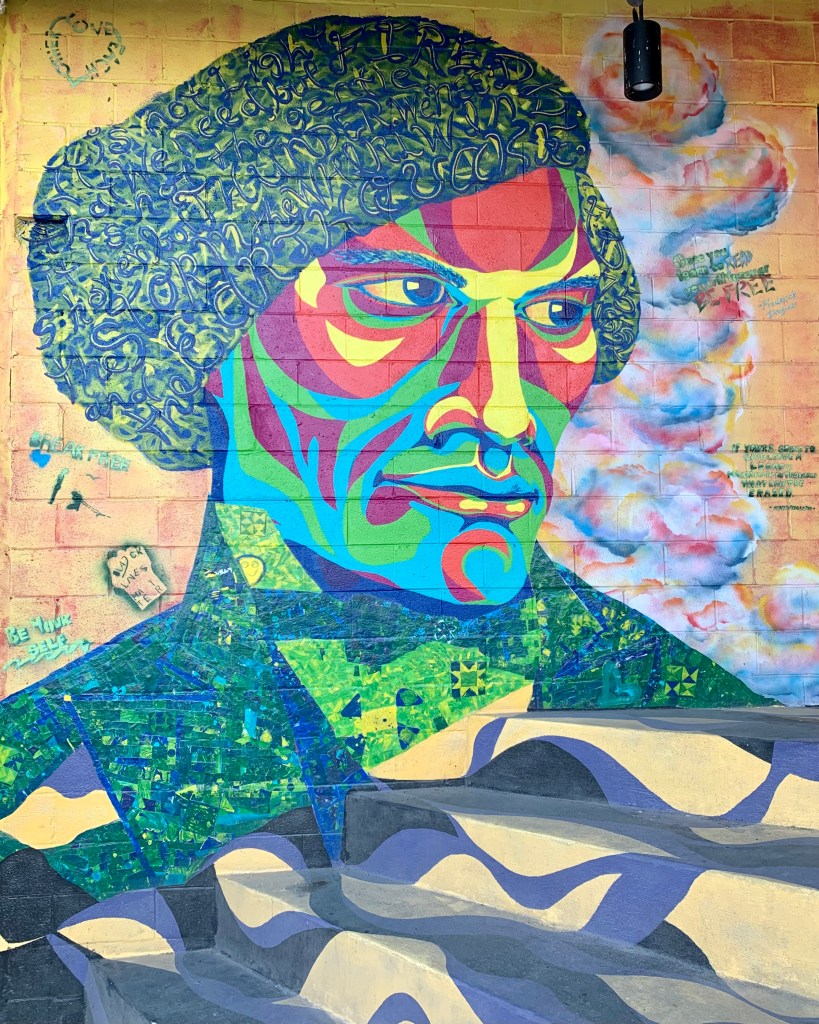
A mural of Frederick Douglass brings a rainbow of colors near Fells Point in Baltimore, MD .

(From Wikipedia) Frederick Douglass (1817-1895) was born a slave in Talbot County on the Eastern Shore of Maryland. In September 1838, he escaped slavery by boarding a northbound train in Baltimore, MD (not far from where we currently live!). It comes as little surprise that he did it all for the love of a good woman, later his wife. Anna Murray was a free black woman living in Baltimore, and she both encouraged his quest and supplied him with the necessary money and aid. The latter included the sailor’s outfit he wore while carrying the protection papers of a free black seaman. He traveled by rail and steamboat, passing through Wilmington and Philadelphia, en route to the safe house of David Ruggles (who opened the first African-American bookstore in 1834) in New York City. He later had this to say about his newfound freedom upon arrival:

I lived more in one day than in a year of my slave life. It was a time of joyous excitement which words can but tamely describe. In a letter written to a friend soon after reaching New York, I said: ‘I felt as one might feel upon escape from a den of hungry lions.’ Anguish and grief, like darkness and rain, may be depicted; but gladness and joy, like the rainbow, defy the skill of pen or pencil.”

“Oumuamua’s Tendinopathy”

Achilles tendon ossification has been shown to contain chemical elements that are alien to our solar system.
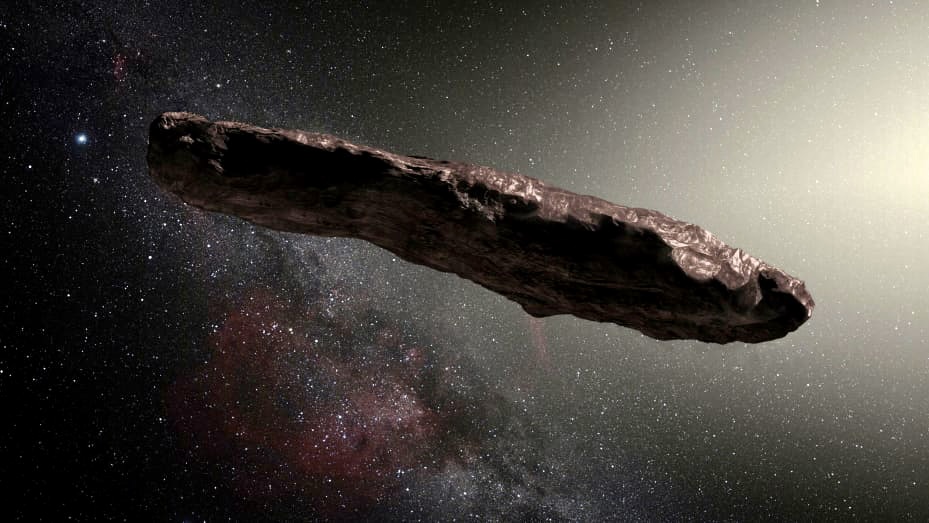
Oumuamua up close and personal. And, yes, it closely resembles a well-formed stool (or Baby Ruth candy bar).

(From Wikipedia) Oumuamua is the first interstellar object detected passing through the Solar System. It was discovered by the Haleakalā Observatory (Hawaii) in October 2017 on its egress. The planetary system of origin is unknown (perhaps it is a giant space turd born of a colossal celestial being). The name is the Hawaiian word for “a messenger from afar arriving first.” Scientists estimate it between 100 and 1000 meters in length, reddish in color, and faintly redolent of overripe cabbage.

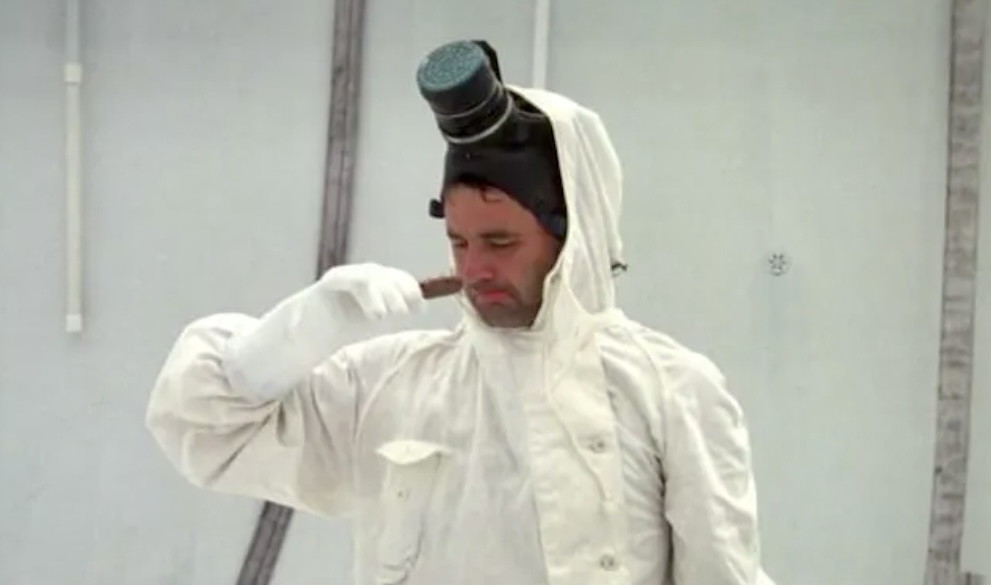
Carl Spackler (Bill Murray) heroically conducts a “sniff test.”
Baby Ruth in all her glory!

“Autumn Leaves”

The falling leaves drift by my window

The autumn leaves of red and gold

I see your lips, the summer kisses

The sun-burned hands I used to hold

Since you went away, the days grow long

And soon I’ll hear old winter’s song

But I miss you most of all, my darling

When autumn leaves start to fall

(Per Wikipedia) “Autumn Leaves” is a popular song turned jazz standard based on the French song “Les Feuilles mortes” (“The Dead Leaves”). It was composed by Hungarian-born Joseph Kosma in 1945 with French lyrics by Jacques Prévert. English lyrics were written by Johnny Mercer. He was a founding partner at Capitol Records and he chose Jo Stafford to make the first English recording in 1950. Roger Williams‘ instrumental version was #1 on the US Billboard charts in 1955. Other versions were sung by Bing Crosby, Steve Allen, Nat King Cole, Doris Day, and Frank Sinatra to name just a few. It has been recorded by over a thousand jazz musicians including Artie Shaw, Stan Getz, Erroll Garner, Duke Ellington, Cannonball Adderley, Miles Davis, Vince Guaraldi, Bill Evans, Ben Webster, and John Coltrane.