“Collect call from 1998. Will you accept the charges?”Photo from March 2024.
It’s a rare sighting these days. The pay phone. Even more so the large scale phone booth. And is it strange that my first thought went to hygiene? We used to handle that plastic receiver without a care back in the day, but now? Full HAZMAT. Hand gel. Wipes. Mask and gloves. Blame COVID, I guess. The 50 cent charge doesn’t seem so bad, considering inflation, but who carries coinage? And doesn’t the change return slot seems too small? Maybe they were being used as a drug drop-site. Was that in “The Wire”?? You have to stay one step ahead to keep from falling ten behind in that battle. But is anyone nostalgic for these relics? Cellphones are a vast improvement, to be sure. The only real loss is a cinematic one. So many movie plots hinged on the pay phone scene. “Three Days of the Condor,” “Dirty Harry,” “All the President’s Men,” and of course “Phone Booth” (a death knell). The list would be the size of the phone book…. which used to be attached! Ripping out a page was a terrific film trope. But I guess when they make movies in-retro, ever so in vogue, they still need these props. Unfortunately, they sometimes screw up the sound of the coin mechanism catching. There must be a pay phone/booth warehouse somewhere in Burbank, CA…
Pay phone in the more genteel setting of The Battery in Charleston, SC (from Oct 2018). “I declare, it is unseasonably warm this day.”
“Objects on your screen may be larger than they appear“Claes Oldenburg’s “Light Switches” (1969) at AIC in Chicago(photo from May 2018). I like how this patron’s nose matches the attitude of the light switches.
“What’s Playing”
Sometimes you must scratch that itch
Skip a class or call in sick
Tweak the dials, flip the switch
Chase high art or candy-kitsch
As if all these things were equal,
The post-modern and Medieval,
That through you run prismatic
Only risking the ecstatic
Pink Floyd’s “Dark Side of the Moon” (1973) gatefold album cover and pot sorter.
So step right up and get your fix
A silent film or foreign flick
Of any stripe, yours to pick
Big and broad or minor niche
Be it second run or sequel,
Tragedy or treacle,
From crystal clear to enigmatic
Only risking the ecstatic
Max von Sydow plays chess with Death in Ingmar Bergman’s “The Seventh Seal” (1957).Scott Walker sang of this scene in a song of the same name, as art begets art. His baroque vocal style isn’t for everyone. My wife can’t stand it while I find it both beautiful and funny. Such is the nature of these things.
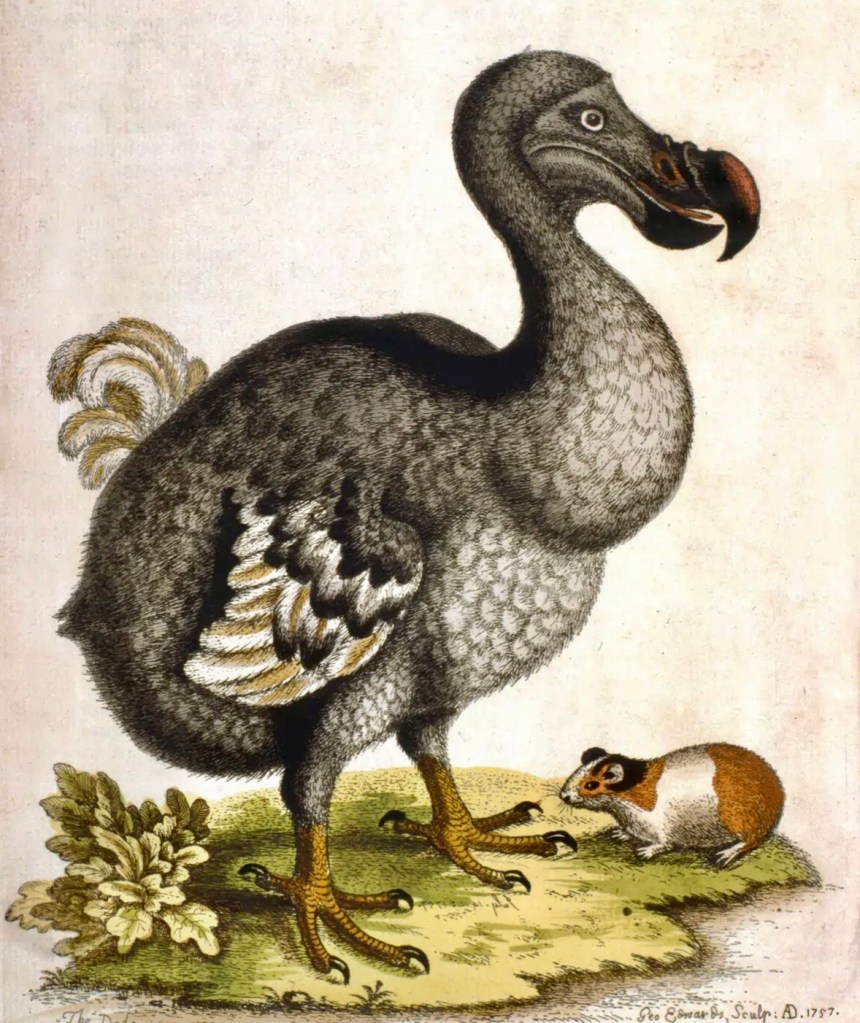
A cerebellar hypertensive hemorrhage on CT has a shape reminiscent of the Dodo bird.The flightless and now extinct Dodo bird was specific to the island of Mauritius off Madagascar.
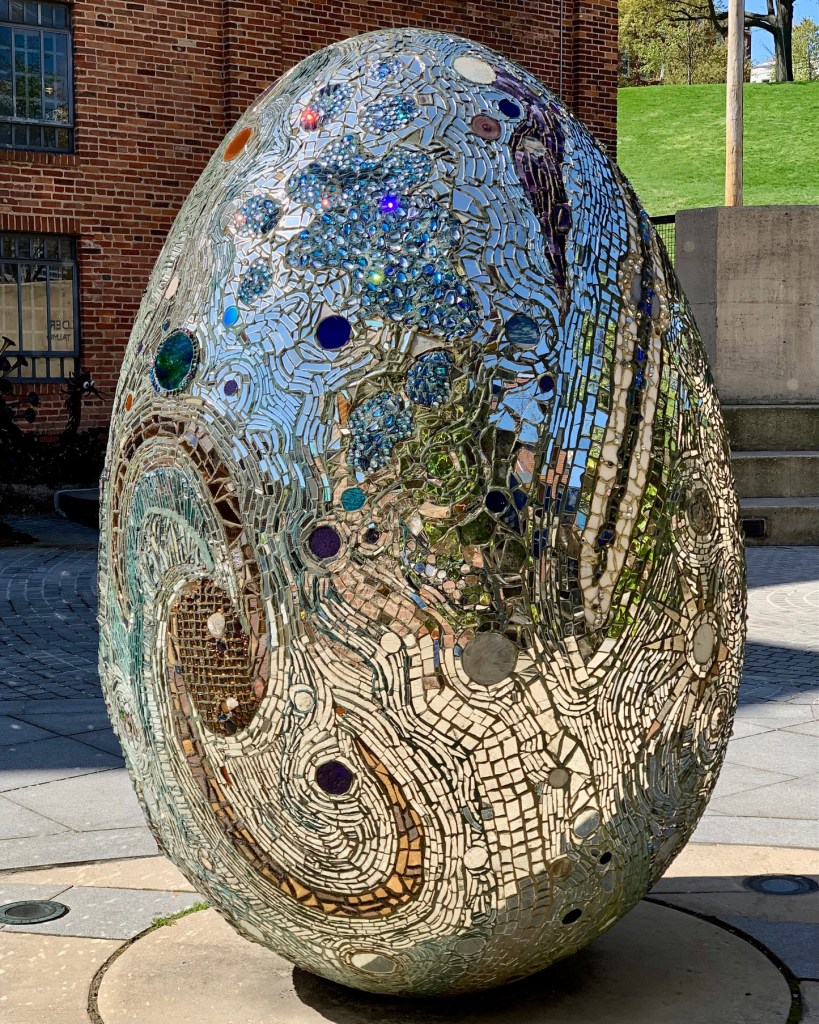
Where’s Stevo?My Uncle Bill used to call me that. I always liked it.Mirrored egg sculpture at the American Visionary Art Museum in Baltimore, MD (from April 2021)
“Three shall be the number thou shalt count, and the number of the counting shall be three…” (from “Monty Python and the Holy Grail“). Plus I can’t keep four thoughts in my head at the same time.
#1) Not many people know this but Donald Trump hails/heils from German (father’s side) and Scottish (mother’s) heritage. One of his German uncles, Claus von Trumpf, was a notoriously corrupt art merchant who often peddled stolen and forged works, almost exclusively in the classical representative style. In the 1920’s, when the avant-garde art movements were taking hold on the Continent, von Trumpf was violently opposed. He worked hard to undermine the Bauhaus school in Germany and the De Stijl movement in the Netherlands, as well as the vestiges of Dadaism and its offshoots. His feverish efforts reached their delirious fastigium with a massive negative ad campaign in pamphlet, poster, editorial and stump speeches called “STOP DE STIJL!”
Straight edges and true colors make the Trumpf family very uncomfortable (image annotation by my friend JS).Piet Mondrian’s “Lozenge Composition with Yellow, Black, Blue, Red, and Gray” (1921). Photo at AIC in Chicago from Dec 2023.
#2)Natalie Imbruglia‘s 1997 hit cover song “Torn” (original by Ednaswap) is a perfectly acceptable pop confection that I would welcome hearing in any mall or Fuddruckers in America. But my memory of her will always be affectionately wed to a novel phrase that I conjured up and rather enjoyed repeating, back in the day. And I challenge you now to say it aloud, ideally in an affected high-born British accent, without making you smile. Here it is:
“Natalie Imbruglia is embroiled in a bitter imbroglio.”
Was I right or was I right??
Natalie Imbruglia’s bitter imbroglio face.
#3) As you surely have gleaned, I am fond of a good pun. Even more so of a bad. So try this one on for size. Like me, you might enjoy the style of the French torch-song singer Edith Piaf (1915-1963). Songs like “La Vie en rose” (translating to “life in pink” or “life in happy hues”) are so evocative of the WWII and early postwar-era, and they crackle with raw emotion. If you want a fulminant retro-romantic vibe, put her disc on the old gramophone. But here’s the rub. For a little innocent but mischievous fun, refer to her in company as Edith PILAF — purposely confusing her surname with the seasoned rice dish. This triggers an eye-roll from my wife every time, which is exactly the point! People will either think they misheard you or will consider you a rube, which is even better. Better still if they correct you. Bon appetit!
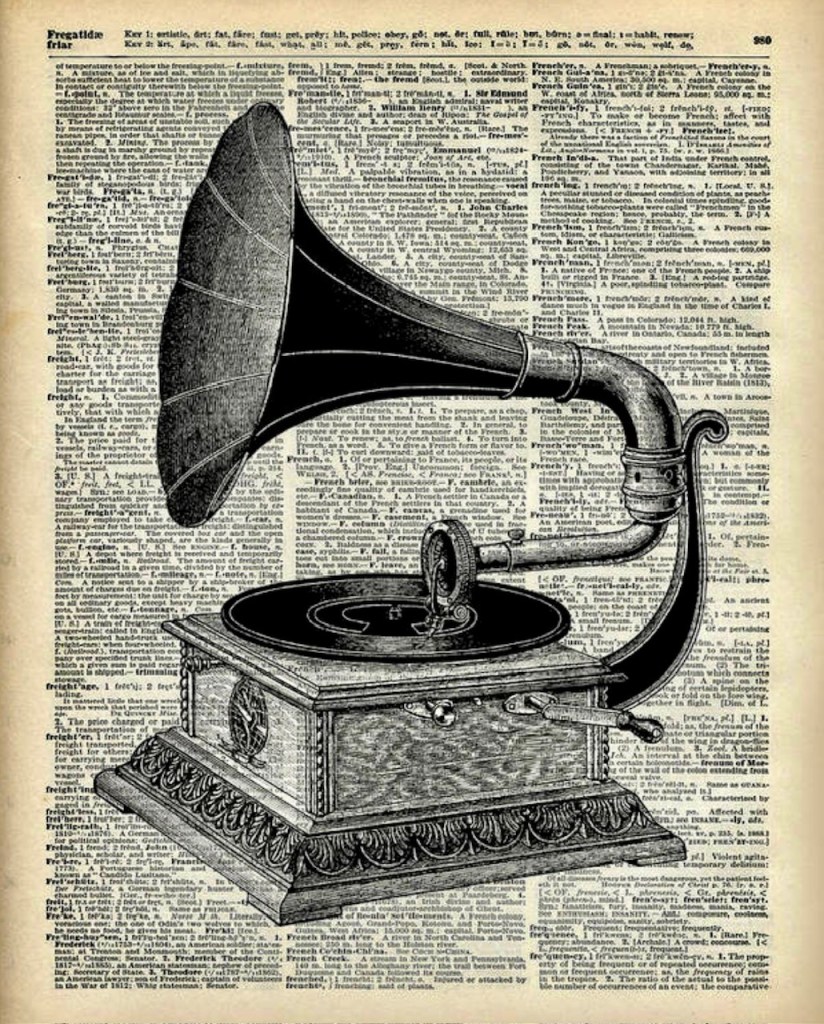
A rather dishy Edith “Rice” Pilaf.When I think of Edith Piaf, I always picture a gramophone and get hungry for rice. Her penciled eyebrows are as sharp as the stylus.
Bricolage (noun): A French loan-word that reflects improvisation in the construction or creation of a work from a diverse range of available materials; DIY. The term has been applied in many disciples ranging from art and architecture to anthropology and cultural studies to philosophy, education and computer science. This blog is a bricolage. A blog-o-lage, if you’ll allow.
Brick-o-lage (faux noun): My own groan-word that reflects any kind of shit laying atop any kind of bricks.
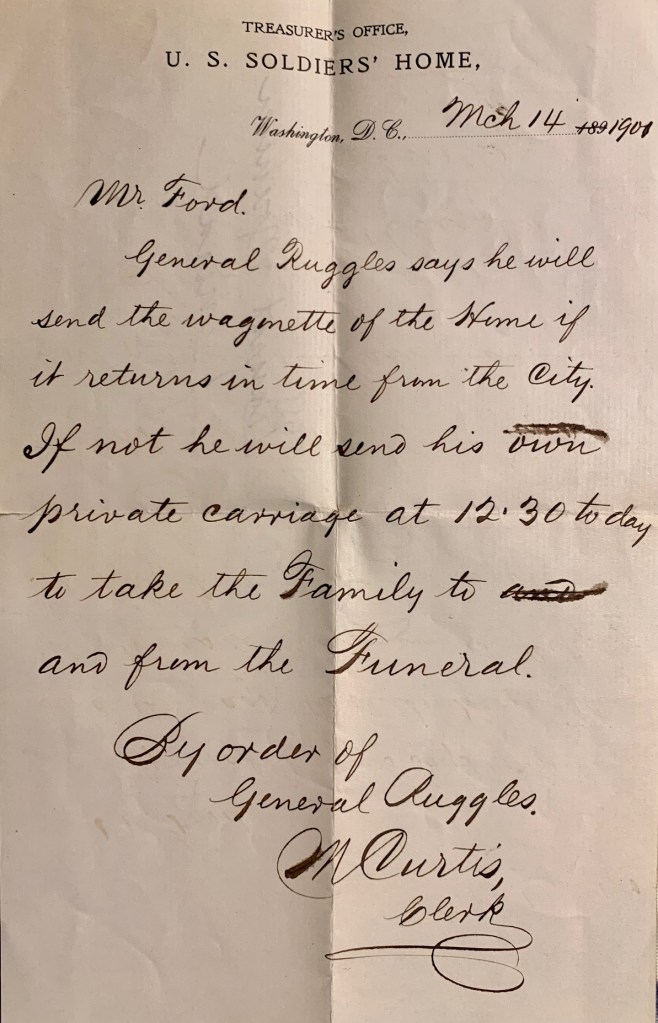
This is a family heirloom passed down through my late Uncle Jack that regards a relative with the surname of Ford, the same as my middle name. It was found in a metal lockbox and my sister miracuously found the key amidst a hoarder’s paradise of numerous books and scattered effects. We hope to learn more about this branch of the family tree and maybe even uncover a photograph or two down the road.
There are many things to love about this note:
The calligraphy-style penmanship. Even though this note is rendered less formal by the scratchings out, the flowing cursive is a wonder to behold. The clerk uses three variations on the “F” — in escalating size and ornament — with Ford, Family and Funeral. There are many things we’d do well to rediscover. In the modern era, teachers lament the loss of handwriting skills and with good reason. My own is barely discernible, even to myself. LOL.
The thriftiness. Times being what they were, are, and ever will be, the stationary of the prior decade (189_) gets continued into 1901 and likely beyond. Maybe it’s still in use today! I also like the single dot between the minutes and the hour. Time saved, so to speak. The abbreviation of March to Mch is curious, however. IMO.
The terms “wagonette” and “private carriage” are wonderfully redolent of that bygone era. This could be “Deadwood” or “The Gilded Age.” Bring your own snuff! But someday people may find quaint the terms “cell phone” and “cable TV.” FWIW.
The mystery. Whose funeral?? IDK.
The fantabulous name that is General Ruggles (see below). I don’t know why some names sound funny, but I’m so glad that they do. I have a mind to start penning letters again and to close them with the salutation “By order of General Ruggles”… keep an eye on the mail. YW.
The flourish under the signature of M. Curtis, Clerk. His name being the largest on the page. John Hancock, eat your heart out! YOLO.
Uncle Jack as a young whippersnapper. He never lost that mischievous mien.Wait, are those matches at his feet??
(Per Wikipedia) As it turns out, there were two contemporaries who went by the title of General Ruggles (Generals Ruggles?). The one referenced in the message above was General George D. Ruggles (1833-1904). Born in Newburgh, New York, he attended West Point and fought on the Union side during the Civil War. He saw action at the Second Battle of Bull Run and the Battle of Chantilly and then became chief of staff to General John Pope. After the war, he served as Adjutant General from 1865-1888 in several military districts including Department of the Platte and Department of the Dakota before retiring in 1897. In 1898, he was appointed governor of the Soldiers’ Home in Washington, DC where he remained until Jan 1903. He was buried at ArlingtonNational Cemetery.
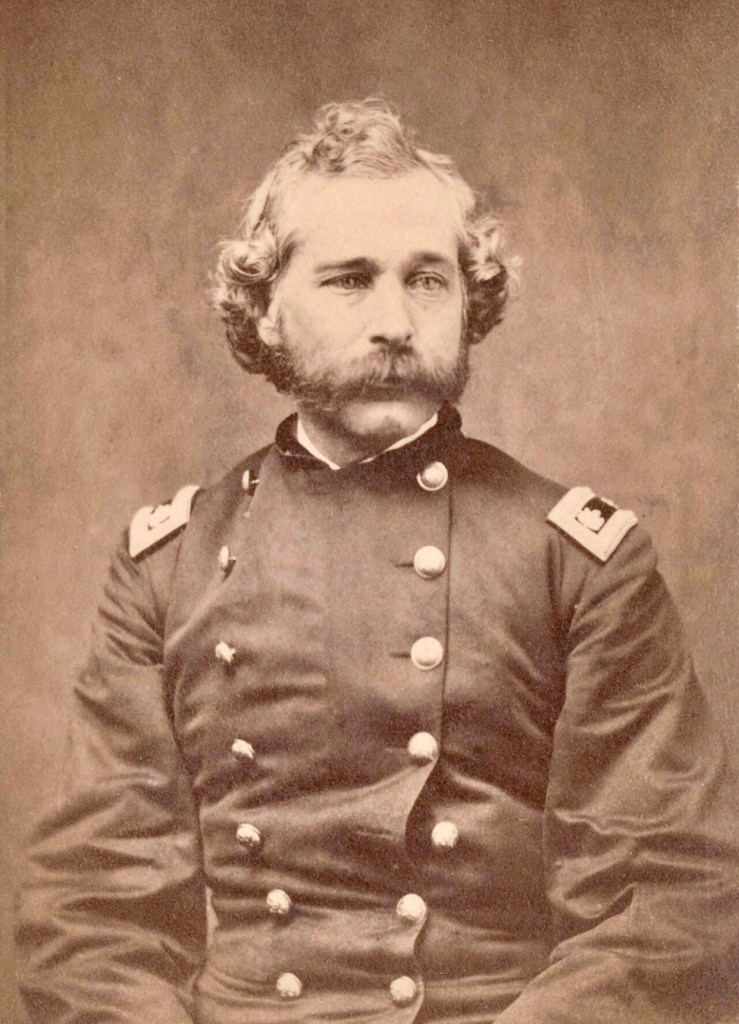
General George D. Ruggles who could have well been played by Ryan O’Neal.
The other is General Daniel Ruggles (1810-1897). He was also a West Point graduate, but, although he was born in Barre, Massachusetts, he fought for the Confederacy. He had married a woman from Virginia, which might help explain his choice. He was a division commander at the Battle of Shiloh. He acted quickly in helping to assemble a long row of cannon with 53 big-guns called “Ruggles’ Battery” that pounded the “Hornet’s Nest” during the furious back-and-forth melee. He later served in Louisiana under General John C. Breckenridge, who had also been the Vice President under Lincoln’s predecessor James Buchanan. This General Ruggles was buried at the Confederate Cemetery in Fredericksburg, VA.
General Daniel Ruggles with long gray beard and Confederate-issue mullet.
It seems apropos to close here with the opening verse/refrain of Bob Dylan‘s song “Gotta Serve Somebody” from the album Slow Train Coming (1979). These two men named Ruggles, both from abolitionist strongholds in the North, took very different roads during a critical point in our country’s history. And yet, as will all, they both ended up buried in the ground somewhere. One wonders what their respective families should think about them today. They might be venerated or held in contempt; possibly both, at once, by different branches of the same family. Complex are we and all our interwoven histories. Maybe we should ask ourselves, whom or what is it that we serve…
You may be an ambassador to England or France You may like to gamble, you might like to dance You may be the heavyweight champion of the world You might be a socialite with a long string of pearls
But you’re gonna have to serve somebody, yes indeed, You’re gonna have to serve somebody Well, it may be the Devil or it may be the Lord But you’re gonna have to serve somebody
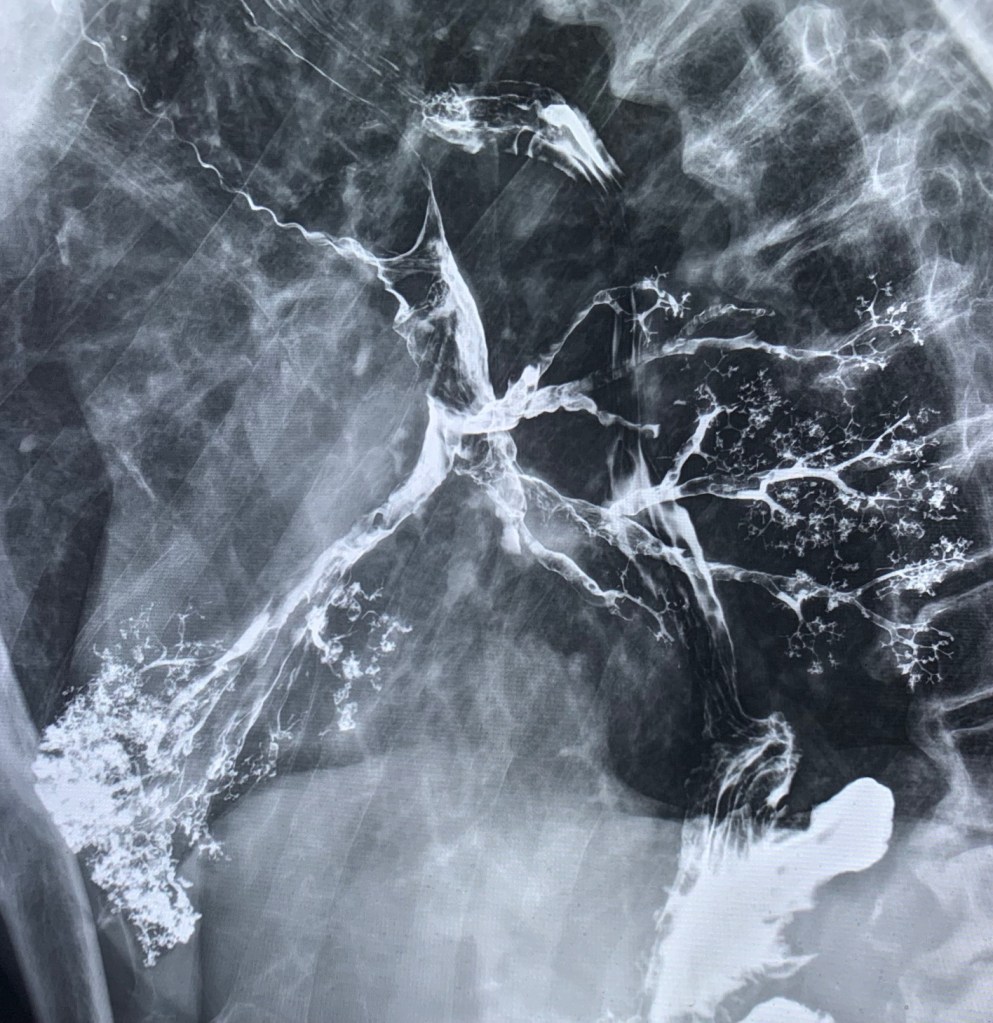
Aspirated barium during an esophagram beautifully outlines the trachea, bronchi, and alveolar acini (oblique image with all of the barium actually in right lower lung). Barium is inert and non-toxic to the lungs. In fact, it was once used as an inhaled positive contrast agent for bronchography in the pre-CT era, in addition to oil-based preparations. Having said that, this is not what you want to see on your fluoroscopy screen. And why am I suddenly hungry for something heart-healthy??A 1962 article from NEJM depicting diagnostic bronchography. And at bottom of every differential diagnosis, sitting in ambush and haunting the dreams of residents and fellows alike, is that of AMYLOIDOSIS!That has to have been uncomfortable.



















 Great Exudations