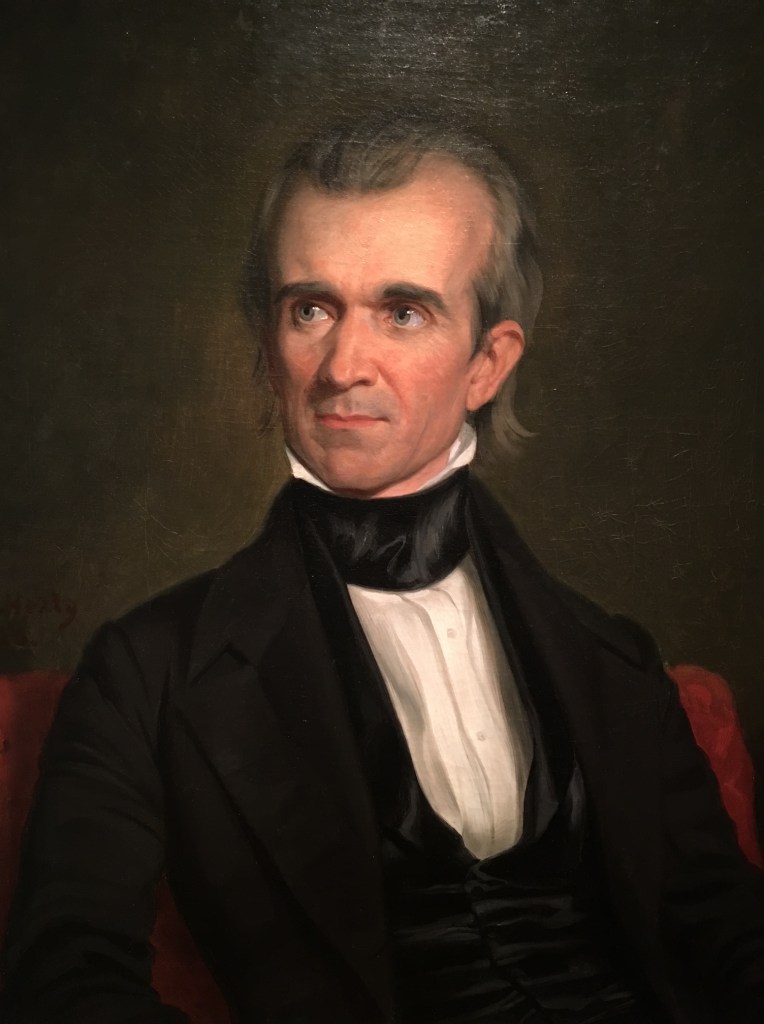
President James Polk (#11) rockin’ a pre-mullet and a neck-er-bund. Born in North Carolina and raised in Tennessee, this protege of Andrew Jackson presided over the Mexican-American War and guided the annexation of Texas and the SW territory into the Union. But, as one can glean from this portrait, it was in personal style that he left his largest historical imprint.
The National Portrait Gallery, which shares space with the Smithsonian American Art Museum, is an underrated experience for visitors of Washington, DC. For starters, it’s free. Secondly, it boasts a panoply of American artworks that include paintings by Edward Hopper, Norman Rockwell, and Grandma Moses, sculptures by Frederic Remington and Augustus Saint-Gaudens, as well as a diverse array of temporary photography and other art exhibits. But the uniquely enticing aspect of this museum is its permanent collection of presidential portraits.
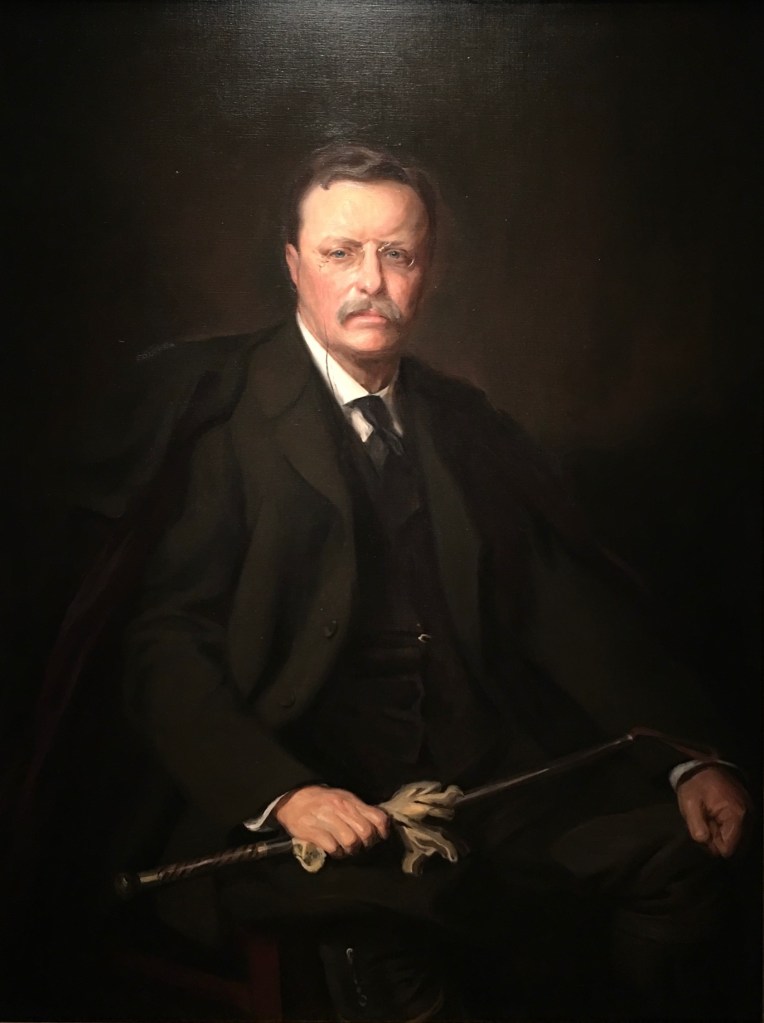
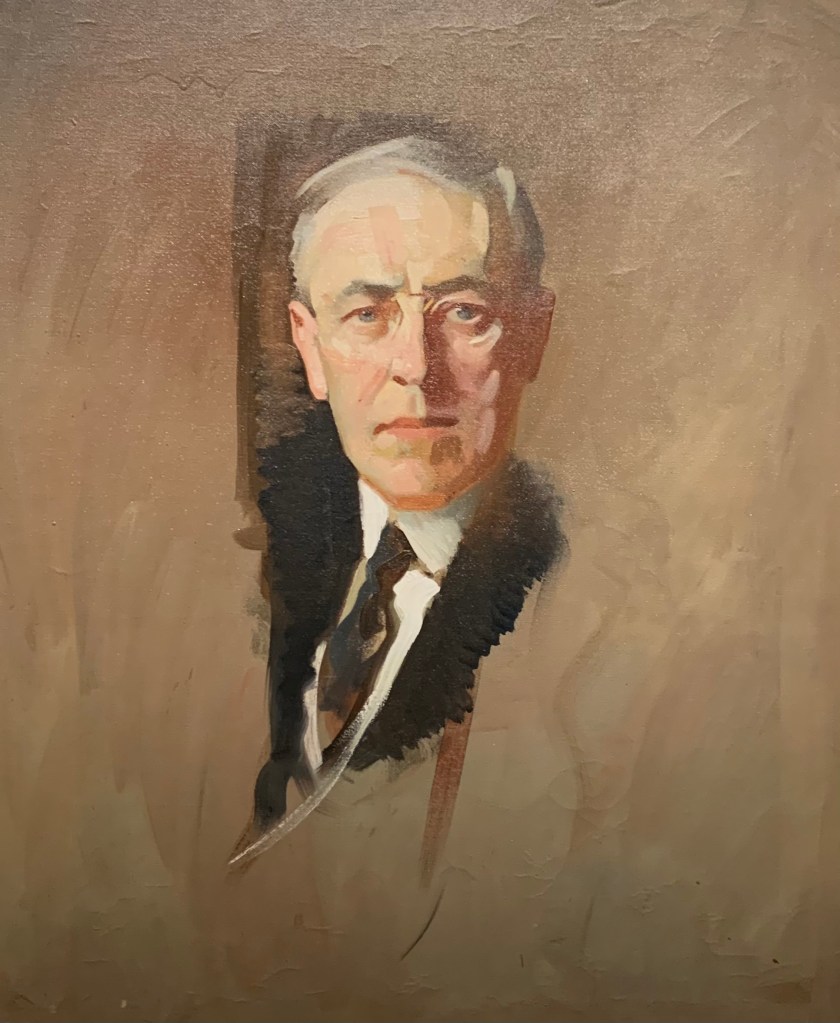
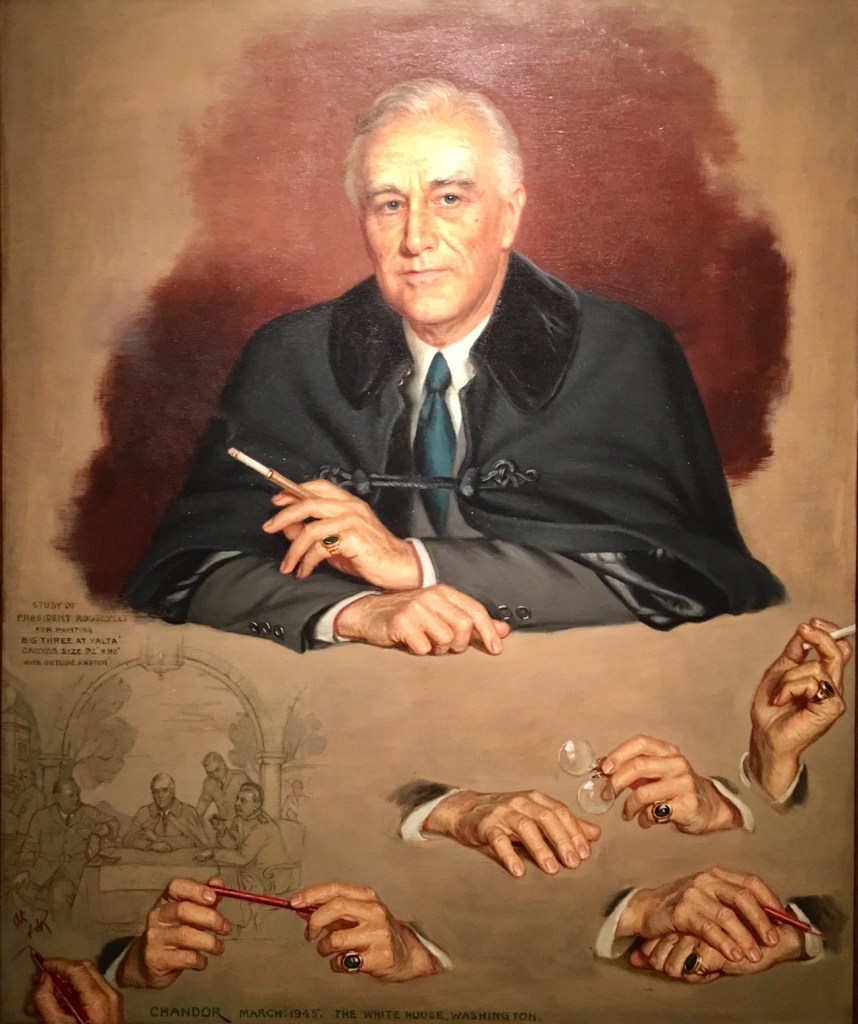
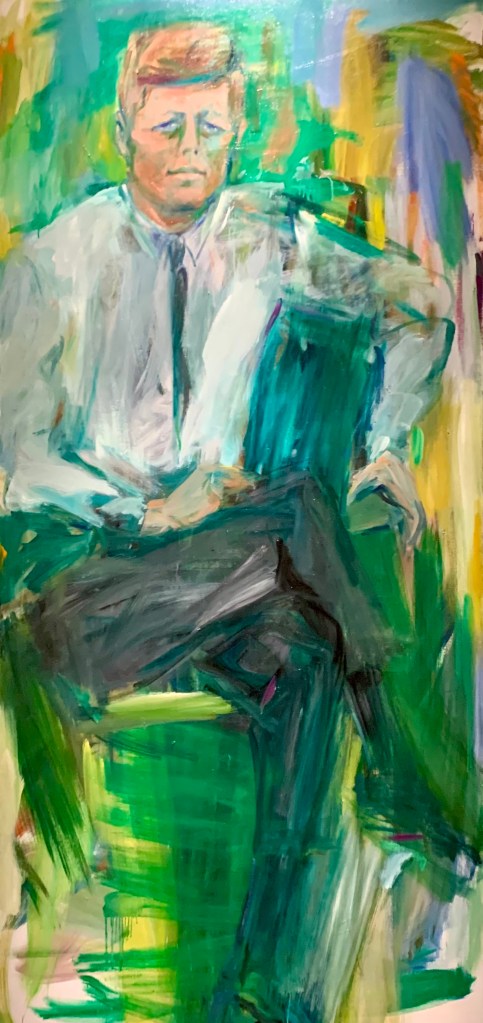
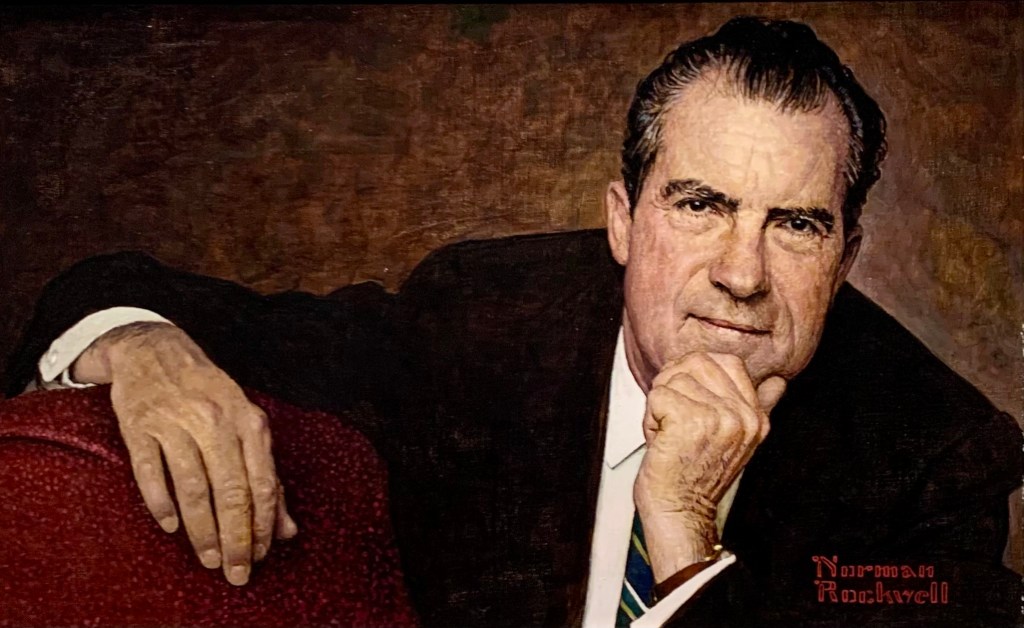
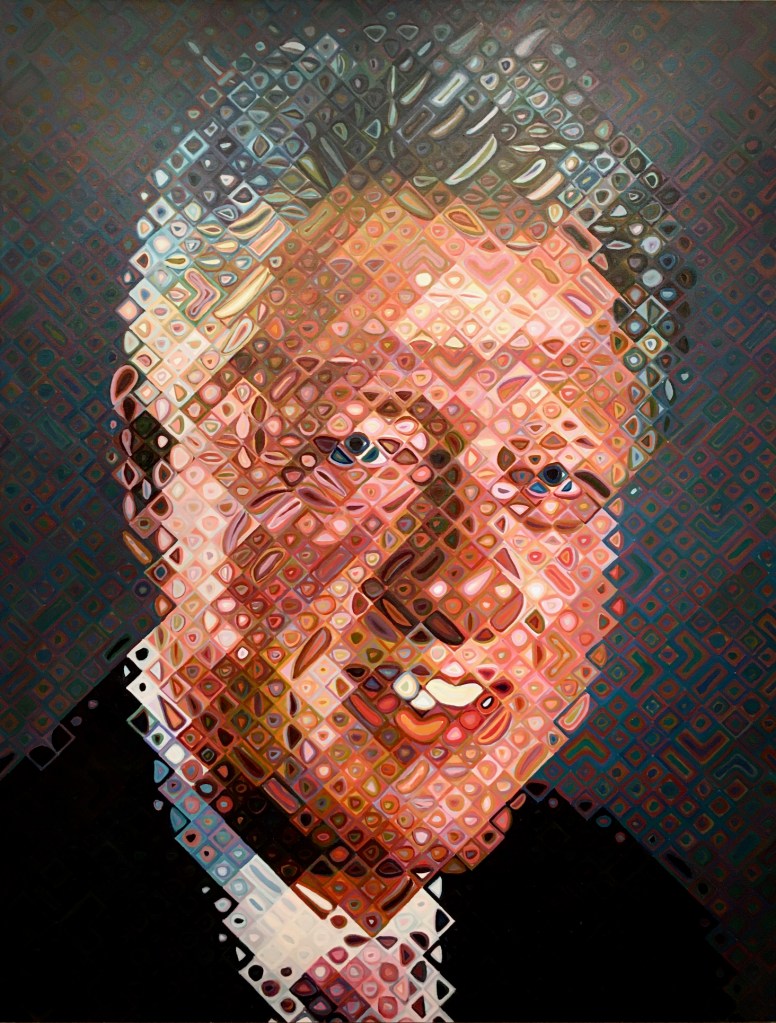
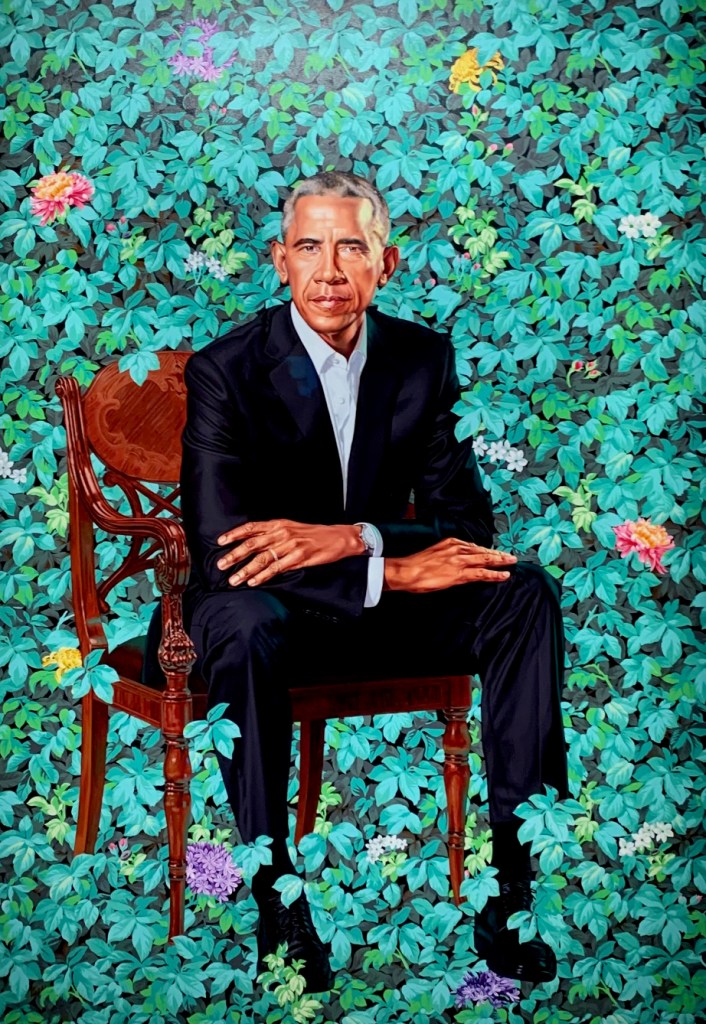
As I wandered the presidential portrait exhibit, I recalled that we had a so-called “bachelor president” who was long-rumored to be gay. Then I happened upon the canvas of James Buchanan (#15) and said to myself, “Yup.”James Garfield (#20) in more traditional wear that reflect his conservative Ohio roots.A recent Netflix series indicates that he was, contrary to popular consensus, assassinated by Tom Wambsgans.The irrepressible Teddy Roosevelt. (#26) What was it he said? Oh, yes, “Speak softly and have a really big dick!”Woodrow Wilson (#28) was always a bit, ah, rough around the edges. Here he is shown floating in space as if, ah, segregated from the others. FDR (#32) had his hands in all sorts of shit but ultimately left behind many aspects of his agenda as unfinished business.Or maybe the extra hands symbolize his unsuccessful attempt to pack the Supreme Court.IKE (#34) had more the mien of a Fortune 500 CEO, not that there’s anything wrong with that.I love this take on JFK (#35) by Elaine de Kooning (done in 1963) that befits both the man and the era.They seem to have back-up versions, like this one of JFK done by William Franklin Draper in 1966 that I spied on a different visit.Richard Nixon (#37), in the hands of Norman Rockwell, has never looked so near-normal.The coloring here comes off as flat as Jimmy Carter’s (#39) presidency. But he was no doubt dealt a shitty hand, and few could ever match his enduring humanism and optimism post-office. Also note the lack of stupid-ass, gilded-gold shit on the mantel and walls. I find the George H.W. Bush (#41) portrait interesting for the realistic detail of his face that abruptly fades into an impressionistic surround. Maybe this reflects the contrast between his buttoned-up public image and some of his shady background dealings, like those white-washed in the Iran-Contra scandal. BTW, did you hear that Oliver North and Fawn Hall finally wed after 40 years?!Chuck Close asks you to step back from Bill Clinton (#42) to get a more insightful view. This print should be in every cigar bar in America.Let’s just call this one of Obama (#44) “Mr. Cool-AF.” I would have been tempted to go tan suit but I love the spirit in it.Sadly, this unofficial portrait of the First Idiot (I’ll call it “The Dickhead With No Dick”) does not, ah, hang in the National Portrait Gallery. But I suppose his being elected twice (#45 & 47) has an upside. It gives that frisson of hope to every lying, cheating, self-dealing, bullying miscreant asshole that they, too, might one day be able to debase our highest national office, undermine our democratic institutions, and leave their shit-stains on our precious Constitution. Here’s another example of a phony president, this one from the actual National Portrait Gallery collection. It depicts Kevin Spacey as the fictitious President Frank Underwood from “House of Cards.” Oddly enough, it wasn’t on display my last time through.
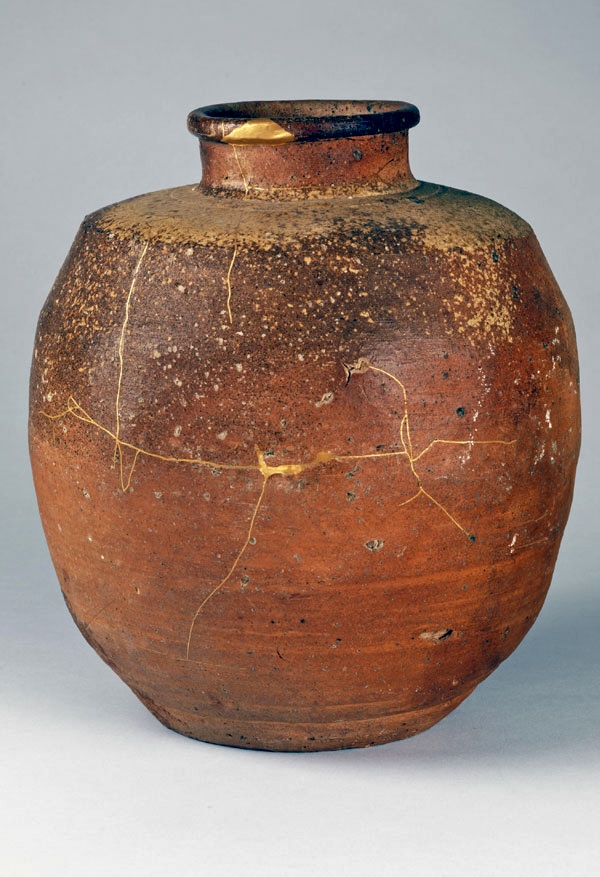
Through the years and over the centuries, the many wars and treaties, the protests and counterprotests, the progress and the reversals, we as Americans have collectively endured a vast spectrum of emotional charge and turmoil. These have ranged from extreme highs to the lowest of lows, though mostly the doldrums of the in-between. And our current trials are not fundamentally different. It could be characterized as an ongoing battle of ideas and the struggle for the very power to manifest them. Action-reaction-counterreaction. Rinse and repeat. No retreat. An unending tug-of-war where there is no winner, except for the transient advantage. And this chaos we must face with a mix of sober rationality and also hopefulness. To paraphrase Ken Burns, we should embrace our nation’s history with all its inherent contradictions and dark ironies. We cannot change the past but we can improve upon it. To Hannah Arendt, this meant “amor mundi” or “love of the world.” By that she didn’t mean in the sense of naive and sentimental acceptance of evil or injustice (or in a manipulative way like those who would callously say about a tragedy, “things happen”). She meant that we must face our circumstances rationally and with a mind towards mending, towards better beginnings. And as a lover of analogies, we can liken this to the Japanese technique called Kintsugi (“to join with gold”). In that craft, broken ceramic pieces are reunited using a gold-infused lacquer. In so doing, the pottery’s flaws are not hidden but are fully embraced as an “ugly beauty,” and a fresh and beautiful new thing is formed.
Yes, we can.
May our futures be golden (17th century piece from Kyoto).
Much of my career in radiology has been spent studying, with great fascination, the internal mechanisms of the human body. This blog is an effort to expand that view to the outside world and also to map my own experiences engaging with it.
View more posts








 Great Exudations