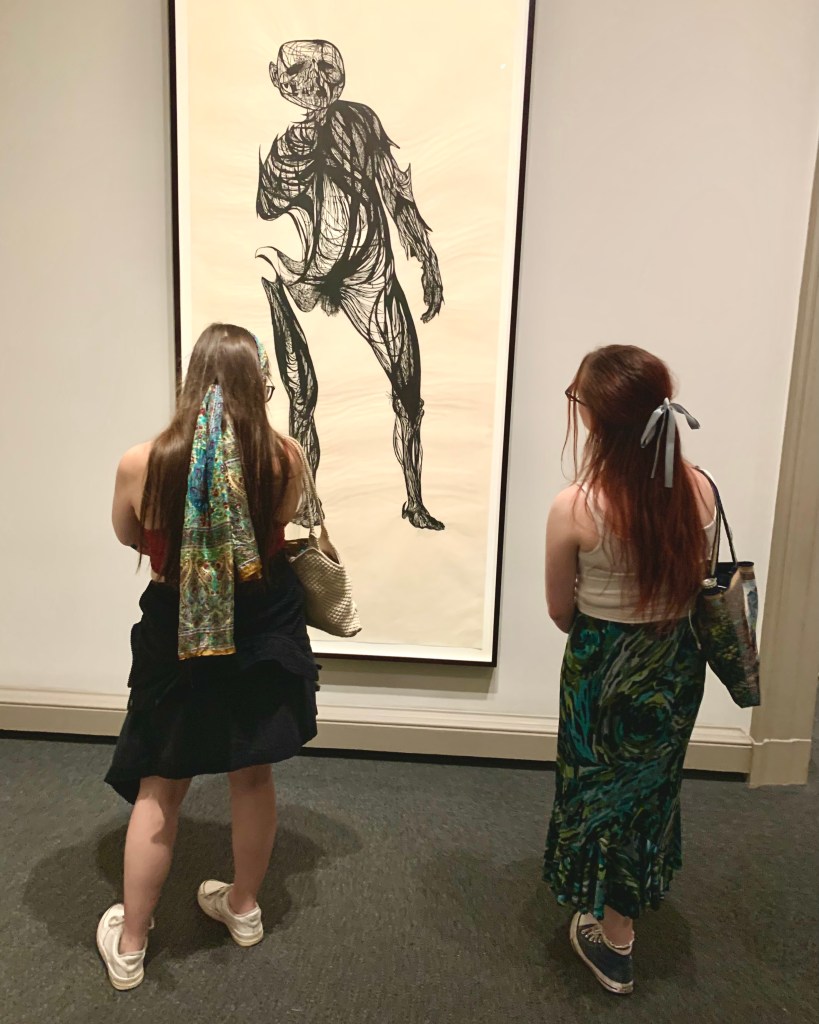
MoMA Gallery Label (from website):
“In 1954, the Castle Bravo hydrogen bomb—the most powerful nuclear device ever detonated by the United States—was tested at Bikini Atoll in the Marshall Islands. That year, Baskin, who often explored the effects of mortality and destruction on the human form in his sculptures and works on paper, produced a monumental woodcut in response to this action, which generated vast and unanticipated radioactive contamination. The Hydrogen Man is an imposing figure that is, at the same time, mutilated and misshapen, composed of partial limbs and exposed blood vessels. Indeed, for Baskin, the human body was at once magnificent and deformed: ‘Our human frame, our gutted mansion, our enveloping sack of beef and ash is yet a glory.'”
 Great Exudations