
This is the roundabout story of how I came to discover and love “Baltimore,” one of Randy Newman’s deeper cuts. I, of course, can remember his popular song “Short People” (from the 1977 album “Little Criminals” that also contains “Baltimore”). It was the first major hit for Newman and peaked at No. 2 for three weeks on the Billboard Hot 100 (held off at the goal line by Player’s “Baby Come Back” and the Bee Gees’ “Stayin’ Alive”). But I also recall it wasn’t a hit with everyone, including several family members and friends who took it somewhat personally. There was serious public backlash, as well, including threats to the artist, radio boycotts, etc. And in 1978, the Maryland delegate Isaiah Dixon unsuccessfully tried to introduce legislation that would have banned the song from airplay (a notion far more toxic than the lyrics, even in their misinterpretation). But what seems obvious in retrospect, and the artist himself affirms in several interviews, is that the song is simply ironic. He is holding the mirror up to bigotry and the judgment of people based on appearances. The song’s bridge clearly gives the thematic counterpoint with “short people are just the same as you and I/ it’s a wonderful world.” And Newman did a similar songwriting trick with point-of-view on “Rednecks,” which has the irony cutting both ways. But I digress. This story is about the song and the city of Baltimore….

….and also it’s about the 1970’s revival that took place in the 1990’s. I had come of age in the 70’s and still regard that era as producing some of the best and most eclectic music to this day. The late 60’s and early 70’s was the heyday of the freeform radio format (progressive radio), in which DJ’s had wide latitude over what they played. I turned eight in 1972 and fondly recall the bacchanalia of music streaming from my clock-radio in those wonder years. “Angie” by the Stones followed “Me and Mrs. Jones” by Billy Paul. “The Streak” by Ray Stevens into “Ramblin’ Man” by the Allman Brothers. “Touch Me in the Morning” by Diana Ross versus “The Morning After” by Maureen McGovern. They stacked Skynyrd, the Spinners, and Edgar Winter. And, man, the Stylistics! The Doobie Brothers atop the Brothers Johnson. Paul McCartney’s “My Love” against Mary MacGregor’s “Torn Between Two Lovers.” And on and on (and “On and On” by Stephen Bishop!). It’s a lot like my current iTunes playlists, come to think about it….
So I was in medical school in Baltimore from 1987-1991. I had taken an elective course in psychiatry and one perk was a summer externship at Guy’s Hospital in London during the summer of ’88. Five of us traveled and we considered it more of a cultural exchange than anything medical. Now, keep in mind that the medical students in UK are four years younger than in the States. They take their A-levels toward end of our equivalent high school years and then go straight into professional school. But despite their tender age (we were all of 23 or 24), they could party like pros and once or twice a month on Fridays they hosted “inflamm’s” (the walls and windows would bead up with condensation, hence the name, short for “inflammation”). These which sweaty, beery affairs set to the music of the Smiths, the Housemartins, New Order, etc. but also with a healthy dose of good old 70’s pop. It wasn’t lost on me at the time that the ones that got us dancing with pure abandon were songs like “Rock the Boat” by the Hues Corporation, as well as the hits of Michael Jackson, the Bee Gees, and ABBA. It was like a massive do-over. The songs you wanted to let-go dance-to back in the day but just couldn’t for fear or lack of opportunity (in my case, braces and a bad haircut). We were “born again” in the best, and maybe only good, sense of the term. These “inflamm’s” were fantastic! When one of us slipped and broke his scaphoid (wrist bone), it was all deemed well worth it, even by him…
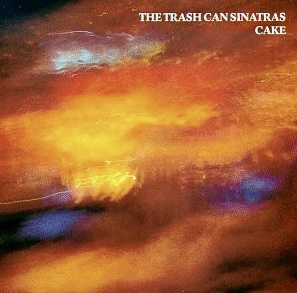
But now fast forward to winter of ’90-91 when we are veterans of the med school game and headlong toward graduation. This is the eye of the storm, a brief period of relaxation before we launched for internship followed by residency, each step further differentiating us along the pathway of our chosen medical specialty. Around this time I was invited by a classmate to see a hip band from Scotland called the Trashcan Sinatras (their album “Cake” from that era holds up quite well). They played Max’s on Broadway in Baltimore that winter and the place was jammed. I recall waiting with curious anticipation since I really didn’t know their music. And then it happened. The song that introduced them to the stage and brought the crowd to an early peak came booming through the PA. It was a perfect musical moment. Instantly recognizable was the opening piano salvo to “Dancing Queen” by ABBA, and I was floored. First off, I love the song and always have (though loath to admit it back in the day). It’s a flawless pop tune exquisitely packaged. Delicately balanced are the saccharine sweetness, the rich cheesy goodness, and a dash of melancholy — in saying that all songs, dances, concerts, good times come to an end. And the place went nuts for it! They put on an amazing show and I will always love them for that kick-off. And it reinforced that deep and powerful pull of nostalgia, same as we had felt during those UK “inflamm’s.” It started the gears turning and not long after we resolved to have a pre-graduation 70’s party for Spring 1991…

In preparation for the big event, I took charge of the music. At the time we boasted a CD player, turntable and cassette deck. Since I didn’t want to have to play active DJ, and certainly didn’t want people changing records or discs mid song, I felt it best to pre-tape the whole party soundtrack onto a series of cassettes with a built-in ebb and flow (kids these days have it so easy!). The source material was a little tricky and came from different quarters. Rhino Records were a big help in that they had reissued compilations from the 70’s, as had Billboard with collections of songs by year. I purchased a handful of greatest hits CD’s by Neil Diamond, Queen, and the Bee Gees. I’m sure I already owned ABBA, Bread and the Carpenters (the ABC’s of any real party!). My cousin Mark actually hand-delivered a vinyl copy of “Saturday Night Fever,” which I still cherish to this day. But for some of the more nuanced songs, I hit a few record stores looking for 45’s. This landed me “Spiders and Snakes” by Jim Stafford, “The Streak” by Ray Stevens, “Drift Away” by Dobie Gray, “Nobody Does It Better” by Carly Simon, and finally “Short People” by Randy Newman. I spent many hours planning the song order and recording the songs, which was a joy unto itself. I’m not sure the modern generation will ever understand the combined tension and thrill of committing to the tracks on a mixed tape. The songs were a statement about yourself, a mile marker of your tastes and musical progress. Back in high school you could play it safe, sure, with the Stones, Zeppelin, Springsteen, Pink Floyd, CCR, etc. You could edge out a little with Little Feat, Joe Jackson, the B-52’s, and Blondie. Or you could go way out there, which I was essentially deaf and blind to at the time, being full-rutted in classic rock. But looking back it might have been Tom Waits, the Stooges, MC-5, Patti Smith, Joy Division, the Minutemen, the Feelies, or Gary Numan. I missed most of that on first pass but started catching up in medical school with the Smiths, the Cure, etc. and then got turned on to more chill contemporary sounds like Morphine, Mazzy Star and Massive Attack in the 90’s. Beyond that my tastes continued to evolve as I was turned on to the Flaming Lips, Thievery Corp, the Eels, Sparklehorse, Mark Lanegan, Nick Cave, PJ Harvey, Neko Case, Wilco, the Streets, Sufjan Stevens, Madlib, the White Stripes, Joe Henry, Gillian Welch & Dave Rawlings, Old Crow Medicine Show, Amy Winehouse, Air, etc. (the tide of new music for me went out around 2012 after buying a fine album by Tame Impala… you just lose touch at some point). But it’s telling that two of my all-time favorite songs are “Daniel” by Elton John and “Dreams” by Fleetwood Mac. Those, of course, were massive radio hits, and yet so much depended in those early days on the opinions of your siblings and friends, the crowd you ran around with, the radio stations in your area (WHFS), etc. And many of my friends who married young seem fixed in amber when it comes to their musical habits. You can hear the highwater mark in their playlists and cultural references. I was lucky to find out that there is life after John Cougar Mellencamp and R.E.M (after “Out of Time” was released in 1991, I walked into a sparse dive-bar in Baltimore’s Pigtown… and as I approached the jukebox, a slightly older and grittier dude pre-empted me with, “I’ll give you five bucks NOT to play ‘Shiny Happy People’!!”)…

…but, again, I digress. When I went to record “Short People” from the store bought 45, I noticed on the flip side a song I had never heard before. It was called “Baltimore.” I gave it a spin and it was struck by how different the vibe was from the pop-novelty song opposite. It begins with a little syncopated piano motif that runs throughout the whole song, in some variation, and steadily builds to a chorus that thumps in straight-time as Newman sings, “Ohhh, Baltimore, man it’s hard just to live…. just to live.” And in it he captures a melancholy that is at the soul of Baltimore since the 1960’s, call it the pre-“Wire” era. There’s a documentary about Sun Ra called “A Joyful Noise” from 1980 that has several performances and scenes filmed in Baltimore. It’s well worth the time as a nice time capsule on both the composer and the city. There’s something about the light, a bit harsh, and the skyline (as Mr. Ra looks out from a rooftop one afternoon), a little sad, that helps to plot the decline. Erosion by degrees. A burst of investment and growth was to come in the late 80’s and 90’s followed by more sideways-down, punctuated most emphatically by the death of Freddie Gray in 2015. Oh, Baltimore. Man, it’s hard just to live. And it feels as if Randy Newman saw it coming, all the way from LA…

But it turns out that, despite his also penning a number of major hits for Disney-Pixar films like “Toy Story” and “Monsters, Inc.,” Randy Newman has a history of courting controversy. In this case, his sin was in writing a dark and somewhat judgmental song about a city he had never visited. Without getting too much into the ethics of songwriting (since John Fogarty wrote “Proud Mary” without ever seeing a riverboat… and Springsteen never went “racing in the streets”), it is perhaps more permissible to write a hopeful song or paean to a city with which you are only vaguely familiar. In an interview, he confessed that he had only traveled through Baltimore on a train and read an article in “National Geographic” (funny, especially if not true!) and felt that the good people of Baltimore had sound reason to be upset. So, he owned it. But here’s the thing. I don’t think he really had to. First, his controversial songs are often veiled-satirical (see “All in the Family” for a TV show analogy to his “Yellow Man” song). He takes on the voice of certain narrow-minded characters to hold the mirror up to bigotry but also to armchair liberal hypocrisy (in other words, we all suck!). He should be congratulated for having the stones to take all that on and, often enough, pulling it off. Secondly, and more importantly, he was fucking RIGHT about Baltimore all along despite (and maybe because of) his distance. The bittersweet taste of time’s vindication is his for the slow-drinking. Now, don’t get me wrong. There is much to love about Baltimore, past and present. And I, as many do, have hope for its return to some sort of glory. So much history and kitsch-tory is to be found among all the potholes and littered side streets, if you close your eyes and know where to look. In many ways, I prefer it to the stuffy, stratified, self-important, and stupidly expensive Washington, DC (where I grew up). But just as Elizabeth Kubler-Ross gave us the five stages of grief ending with acceptance (of death), so does the 12-step program begin with admitting/accepting that you have a problem prior to recovery (in rebirth). Randy Newman isn’t long on solutions, I’ll admit, but he does seem to have a knack for our collective diagnosis. The song rings utterly true in 2022.

And in the end, the 70’s party (circa 1991) was a resounding success. I bought a cheesy, nautically-themed polyester shirt in a consignment shop that smelled like fish when you sweated. Somehow that seems fitting. If I find the picture, I’ll post it. Sadly though, it’s not in scratch-n-sniff.

 Great Exudations